Composting in winter UK: keep your bin working

Composting in winter UK slows down. Cover and insulate the bin, save dry leaves, turn less often, and see what an accelerator can and cannot do in January.
On this page
A compost bin that seemed busy in September can look almost unchanged in January. Composting in winter UK normally slows down, so the useful response is not to keep buying products or repeatedly turn the contents. Protect the bin, manage the seasonal flood of leaves and kitchen peelings, and accept that colder months call for maintenance rather than speed. These notes follow Royal Horticultural Society advice, Edinburgh home-composting guidance and Love Essex, plus the amazon.co.uk listing for the top pick below. We have not run a laboratory trial. A qualifying purchase through our links can earn us a commission at no extra cost to you.
In short
Keep adding suitable material through winter, but balance wet kitchen scraps with drier material and expect decomposition to take longer. Cover and insulate the bin, save surplus leaves for leaf mould, and turn less often so you do not release retained heat. An accelerator is optional and cannot compensate for a cold, exposed or poorly balanced bin.
Expect it to slow down
Winter slowdown is a normal change in pace, not proof that the compost has died. The composting process depends on the conditions inside the heap, and lower temperatures mean that visible breakdown can become much less dramatic. Edinburgh's home-composting guidance notes that the process continues slowly, which is a better expectation for January than the rapid change you might hope to see in warmer months.
You can continue adding peelings and other suitable compostable material. A household may produce a steady supply of wet kitchen scraps while the garden produces fewer dry stems and prunings. Keep dry material available so that each new layer of wetter scraps does not turn the bin into a dense, air-poor mass. There is no need to chase one rigid ratio; the practical aim is a varied mixture. The greens and browns guide sets out how UK sources describe that mix.
Judge progress across the season, not after one frosty week. A bin may remain quiet through the coldest period and become more active when the weather warms. Between November and March, avoid a preventable moisture, balance or exposure problem while that slowdown runs its course.
Cover, insulate and site the bin
A cover is the first line of winter protection. It helps shield the contents from the wettest weather and makes the environment inside the bin less exposed. The aim is not to seal the compost into an artificial hot chamber, but to stop winter conditions changing it more than necessary. Check that the existing lid is in place before adding extra products.
The RHS suggests insulating a winter heap with straw or bagged leaves. Both options create a protective layer around the compost without a specialist purchase. Bagged leaves are particularly practical in autumn because they use a material you are likely to have in abundance. Arrange insulation so that you can still reach the bin safely and replace the cover after feeding it.
Insulation preserves warmth; it does not manufacture it. A small, inactive mass in prolonged cold weather may still work very slowly even when wrapped. That is not a reason to pile on more insulation or to expect hot compost in January. Position also matters. RHS advice recommends a sheltered location in partial or full shade so that conditions remain steadier. An exposed bin loses the benefit of whatever warmth it retains.
Manage leaves and kitchen scraps
Autumn leaves are useful, but tipping every sack into a mixed bin can slow it down. The RHS advises that fresh leaves can impede a mixed heap and suggests bagging them to make leaf mould instead. That gives you two useful streams: a manageable supply of drier leaves for balancing kitchen additions, and a separate batch that can break down as leaf mould without crowding the main bin.
Keep some dry leaves close to the bin in a covered bag. When you add a wet load of peelings, add enough dry material to prevent those scraps settling into one compact layer. This is a practical judgement rather than a demand for exact measuring. Look for variety through the contents and avoid repeatedly adding wet material with nothing drier between additions.
Continue feeding the bin if you have suitable material. The process is slower, so the level may not sink as quickly as it did in summer. Replace the cover promptly after each addition and avoid leaving a thick cap of fresh peelings on top. If the bin is filling faster than the contents settle, reduce what you add rather than forcing the lid. Love Essex also presents trench composting as a separate winter option for suitable material. Treat it as another route, not a quick fix inside the container.
Turn less and check moisture
Winter is not the season for automatic weekly turning. The RHS indicates that turning several times a year can be sufficient, and its winter advice warns against losing heat through unnecessary disturbance. Every full turn exposes material from the warmer centre to colder air, so movement should have a reason behind it rather than being a habit. The turning schedule sets out how that differs for a slow bin, a hot heap and a tumbler.
Leave a balanced, covered bin alone when the only symptom is slow progress. Turn or adjust it when you are correcting a recognisable condition, such as a mass of wet scraps that needs drier material worked through it. Even then, make the smallest useful intervention, replace the insulation and secure the cover.
Moisture needs judgement because cold and wet are not the only combination. Edinburgh's guidance notes that a heap which is not warming may be too dry, so do not treat every quiet bin as waterlogged. A visibly dry mixture calls for a different response from a soggy, compacted one. If the compost remains cold after cover, siting, insulation, moisture and balance are in place, ambient conditions may be setting the pace. The cold compost guide is the place to investigate a persistent problem.
What an accelerator can and cannot do
A bought accelerator is not the foundation of winter compost care. It cannot shelter an exposed bin, correct a container full of wet peelings or put back heat that is lost through repeated turning. Deal with cover, insulation, balance and moisture first.
Marketing language can make the seasonal question look simpler than it is. BritishBasics describes its accelerator as suitable from autumn to spring, yet one UK review reported that it did nothing noticeable in cooler weather. Those two pieces of information do not prove that the product always works or never works. They show why you should treat a seasonal claim as a claim, not a guarantee of a restarted January heap.
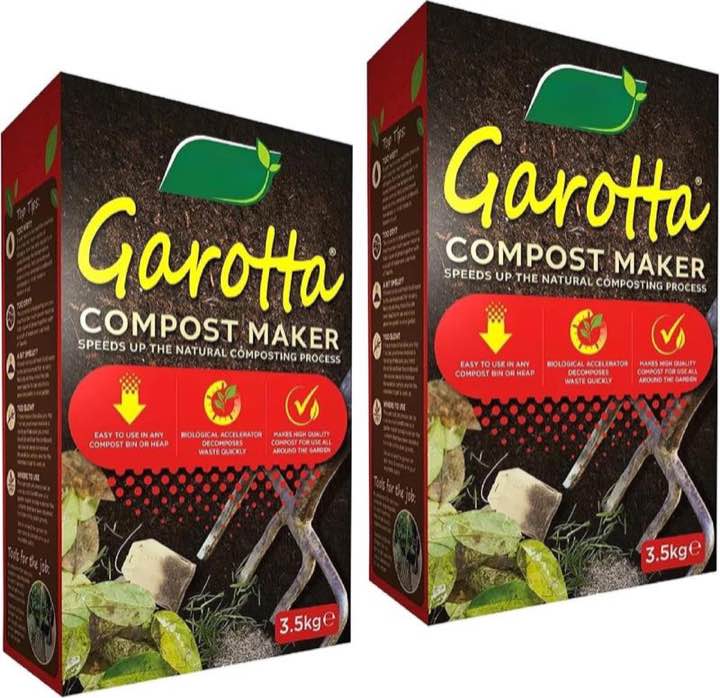
If you are considering a tub, decide what problem you expect it to solve. A slow but otherwise balanced winter bin may simply need patience. A wet or exposed bin needs a practical correction. The top pick on our compost accelerator comparison is Topline Garotta, two 3.5 kg boxes at about £17.99, with 4.5 from 151 amazon.co.uk reviews. Buyers often describe a warmer or faster heap, the listing prints no gram dose, and the powder is aimed at a brown, moist outdoor heap. Cooler conditions can still limit the result you see, so do not buy another tub before checking the bin you already have.
A practical winter checklist
Use this short routine from November to March.
- Replace and secure the cover. Protect the contents after every addition rather than leaving the bin open while you collect more material.
- Add simple insulation. Use straw or bagged leaves around the bin while keeping access safe and convenient.
- Store dry leaves separately. Keep some for balancing wet scraps and bag the surplus for leaf mould.
- Feed a varied mixture. Continue adding suitable material, but do not let kitchen peelings become one thick, compact layer.
- Turn only for a reason. Avoid routine disturbance that releases warmth; intervene when you need to correct a clear imbalance.
- Check the material before changing moisture. A quiet heap can be too dry as well as too wet, so respond to what you observe.
- Treat accelerators as optional. Compare a product only after cover, balance, insulation and patience have been addressed.
This checklist cannot force summer-speed decomposition through a British winter, and it does not attach a fixed date to renewed activity.
Common questions
Do I stop composting in winter?
How do I keep a compost bin warm in winter?
Should I put all autumn leaves in the compost bin?
Should I turn compost during winter?
Will compost accelerator restart a cold bin in January?
Where should a compost bin sit?
When will a winter compost bin become active again?

Peter F. is the editor for DIY & tools at productscompared.co.uk. Comparisons in this category are checked against amazon.co.uk listings, review evidence and public UK sources.
Related articles

How often to turn compost: a practical schedule
A slow bin, a hot heap and a tumbler do not share one turning week. In winter, opening the heap releases the warmth you were trying to keep.

Compost bin smells: wet greens, no air, leave the tub
Work out whether wet greens or poor airflow are behind an unpleasant compost-bin smell.

Greens and browns compost: three UK mixes in buckets
Learn how to balance kitchen scraps and dry garden material without relying on one rigid ratio.