Compost bin smells: wet greens, no air, leave the tub
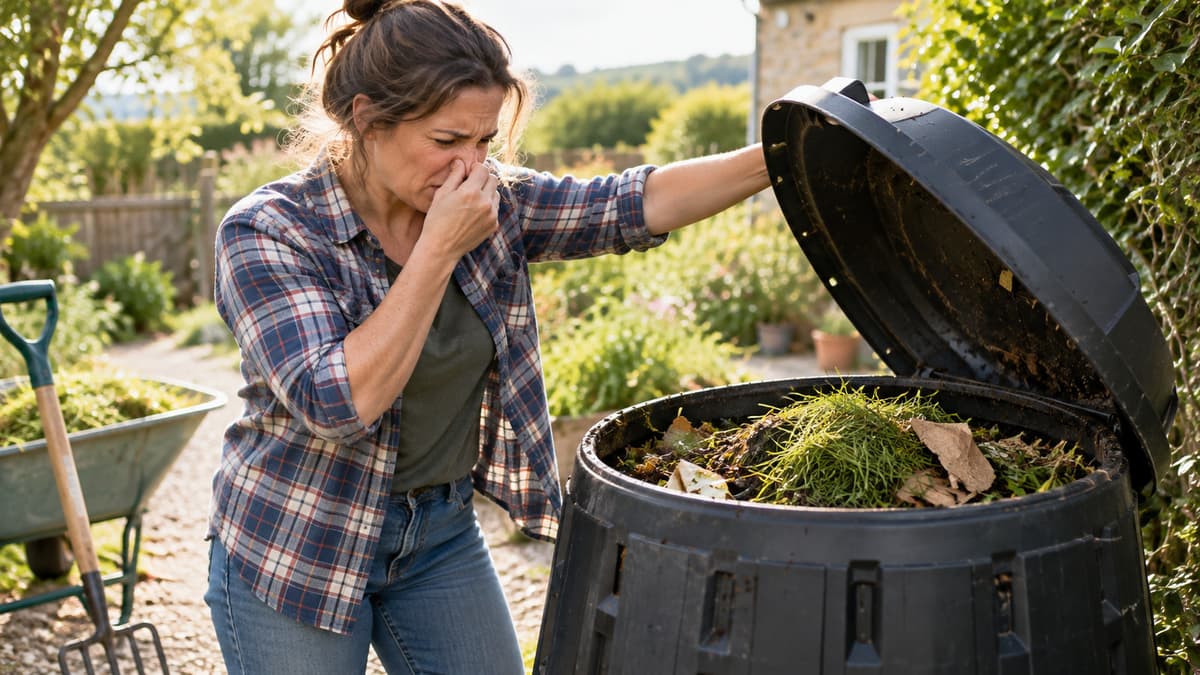
Ammonia means too many greens. Rotten eggs mean a wet, airless compost bin. Turn it this week, add dry browns, and leave lime and a fresh tub on the shelf.
On this page
You lift the lid and the smell reaches the path before the fork is in your hand. A smelly dalek bin often gets that way after a run of mowing and kitchen scraps, and a compost bin smells of ammonia or of rotten eggs for a reason you can match to what went in. Ammonia means too many greens, and rotten eggs mean the heap is wet and short of air.
Recycle for Greater Manchester, Warwickshire County Council, Edinburgh Council, and Surrey Environment Partnership publish the lines below, with the Royal Horticultural Society on grass and on lime. We did not run a heap trial or time how fast a smell fades. The price further down is from the amazon.co.uk listing. A qualifying purchase through our links can earn us a commission at no extra cost to you.
In short
A compost bin smells of ammonia when greens outweigh browns, and of rotten eggs when the heap is wet and short of air. Turn it and add dry browns, such as torn cardboard, at about two to three parts brown to one part green. Leave garden lime in the shed, and leave a new tub of accelerator until the mix is already moist, open, and short of green material.
Match the smell to the fault
If your compost smells of ammonia, Recycle for Greater Manchester's reading is too many greens. If the compost smells of rotten eggs, the same guide's reading is too little air. The mix they give is two to three parts brown material to one part green. Both smells together usually mean a wet mat of clippings that has gone airless, so the browns and the turning belong in one session.
Name it while the lid is still up. A sharp smell, close to a nappy bucket, is ammonia, and a drain smell or bad eggs is the airless one. A sweet, rotting-meat smell after plate scrapings is a food problem, and it belongs with the flies and rats further down.
Count the ratio in buckets. One bucket of grass or peelings wants two or three buckets of torn card, dry leaves, or chopped stems. A sheet of newspaper on a full mower box misses that volume. Once the contents are slime, break the mat.
A wet compost bin and grass clippings
A compost smells after adding grass clippings when they went in as one thick layer. The Royal Horticultural Society says grass on its own becomes slime, and Warwickshire County Council tells you to mix that grass with cardboard. The layer shuts out air and holds water, so a wet compost bin smells of rotten eggs as well as ammonia. Surrey Environment Partnership's reply to a slimy bin is torn cardboard, small enough to mix through. Whole boxes laid flat become shelves, and the clippings slide off and seal underneath.
Dry leaves and short stems do the same work as the card. Long brambles bridge the slime, so leave them out. Edinburgh Council's test, once cooked food is already out, is plain: if it still smells, it is too wet, so turn it and add dry browns. A turn with no new browns only slides the slime across the dalek. These pages give no day count, so look again after the next dry spell and turn again if the eggs remain.
Warwickshire wants the lid back on against rain, because a wet week soaks an open bin. A shut lid still fails when the contents stay packed, because air has to get in as well. If the dalek is too heavy to fork, a drum rolls the mix without a tip onto the path. The drum composter comparison is that tool, and wet grass inside it still slimes until the browns go in.
What not to add
Garden lime is the bag people reach for, and it misses the fault. The Royal Horticultural Society says lime brings no benefit to a compost heap. Edinburgh Council says adding lime can drive nitrogen off as ammonia, so tipping a bag in can sharpen the smell you already have. Save garden lime for a soil test that asked for it.
Peelings are more greens on a bin that already has too many. Anything you add this week goes under torn card, or it waits, because Warwickshire's flies start with food left on top. Edinburgh Council says keep cooked food out. What a home heap may take differs by nation, which is the food scraps and UK compost rules page.
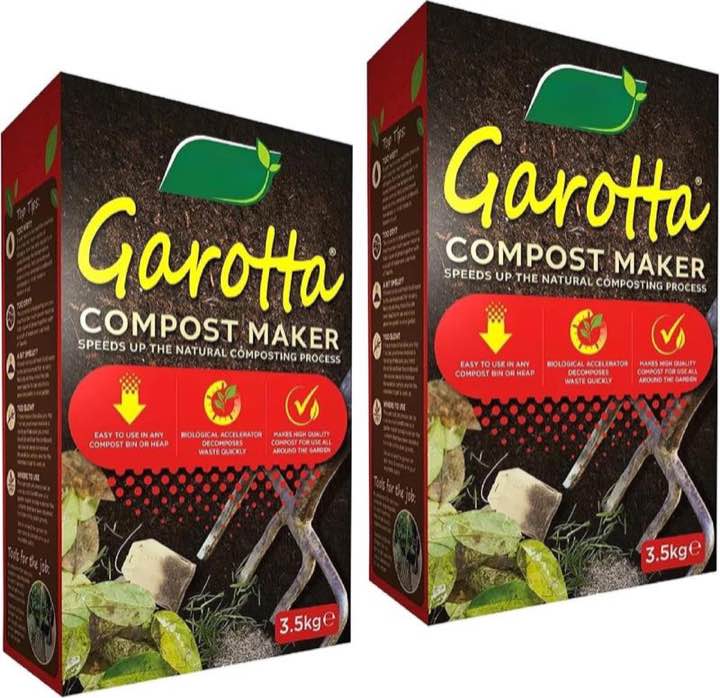
Edinburgh Council also says activators are not necessary. Powder on slime adds no cardboard and opens no mat. Keep a bought maker for a heap that is already moist, aired, and short of greens, such as woody prunings and no lawn. On amazon.co.uk, Topline Garotta, two 3.5 kg boxes, is about £17.99: 4.5 from 151 reviews, no printed dose, and leaks mentioned in reviews. The compost accelerator comparison sets that powder beside liquids and bran, and the dose sits on the how to use page once the mix is right.
Compost bin flies and food on the surface
Compost bin flies usually mean food sitting in the light. Warwickshire County Council lists food on top and flies together, and wants the lid on so rain does not wash that food into a wet cap. Bury raw peelings under torn card, or under compost you have already made, whenever you empty the caddy. On a grass mat that card only roofs the slime, so break the mat first.
Cooked food, meat, and oily scrapings are a different fault from ammonia or eggs. Edinburgh Council says keep cooked food out, and meat comes off with it, because those scraps draw rats. Lift fresh pieces off the top if you can reach them. If rats are already visiting, phone your council's pest line. The number is local, and lime or a new tub leaves the food where the animals found it.
Plate scrapings you still want at home go in a sealed bokashi bucket with bran, a different container from this dalek. The bucket's output is still not finished compost, and tipping it onto a wet grass mat brings the smell straight back. The bokashi and heap page keeps the two jobs apart. Empty the bucket only onto a heap that has already lost the ammonia and the eggs.
Put the bin right this week
Use one session of about twenty minutes, a fork, and a stack of torn card. For ammonia, or a pale grass mat, break the mat and fold in about two to three buckets of brown for each bucket of green you disturb. For rotten eggs and a mix that squelches, turn what you can reach and add the same browns. A gardener's rule of thumb, separate from those pages, is the handful: dripping is too wet, and a clump like a wrung cloth is moist enough.
Put the lid on against the rain, and leave fresh scraps, lime, and any new tub out this week. Open it again on the next dry weekend. If the smell has dropped and the mat is broken, go back to the same brown-heavy mix, and fold each grass box into card. If the smell is unchanged, turn deeper, because the core is still airless.
An open heap has no lid, so Warwickshire's lid line applies to a bin that has one. Rain on an open bay still calls for dry browns and a turn, with cooked food and meat kept off it. Keep the smelly material where it is, because mulching with it carries the wet mix onto the bed. Wait until the ammonia and the eggs have gone and the remainder is dark and crumbly. The raised bed compost comparison is for compost that has got there, and the fill-month is not that test.
Common questions
Why does my compost smell of ammonia?
Why does my compost smell of rotten eggs?
Will a compost accelerator stop the smell?
Should I add lime to a smelly heap?
What should I do with a mat of grass clippings?
Why are there flies around my compost bin?
Can I use compost that still smells?
When is the smell a rat problem instead?

Peter F. is the editor for DIY & tools at productscompared.co.uk. Comparisons in this category are checked against amazon.co.uk listings, review evidence and public UK sources.
Related articles

Greens and browns compost: three UK mixes in buckets
Greater Manchester uses two to three parts brown to one part green. A smelly bin is often short of those browns.

How often to turn compost: a practical schedule
A rotten-egg smell means the heap needs air. Turning helps once you add dry browns, and a lid keeps the next rain out.

Composting in winter UK: keep your bin working
Keep a UK compost bin working through winter with insulation, leaves, feeding, turning, and realistic January expectations.