Greens and browns compost: three UK mixes in buckets

RHS, Garden Organic, and Greater Manchester each publish a greens and browns compost mix. Measure one in buckets, and keep grass from taking over the heap.
On this page
You are at the bin with a mower box of clippings and a flattened cereal box, and the lid shuts on both once you know which one the heap is short of. Greens and browns compost, in the Royal Horticultural Society, Garden Organic, and Recycle for Greater Manchester guides, comes as three volume rules. Pick one and measure it in buckets. A single carbon-to-nitrogen figure is absent from all three.
Peter F. edits DIY & tools at productscompared.co.uk. We did not run a heap trial. The price further down is the amazon.co.uk figure captured for this batch on 15 October 2026, in GBP. A qualifying purchase through our links can earn us a commission at no extra cost to you.
In short
Greens are the soft, leafy side, and browns are the woody, dry side, including paper and card. Garden Organic uses equal volumes, the Royal Horticultural Society uses about 25–50 per cent soft green and 50–75 per cent chopped brown, and Greater Manchester uses two to three parts brown to one part green. Keep grass from taking over, and leave a bought accelerator until the heap is already moist, aired, and still too brown.
What are browns in compost, and what are greens
The Royal Horticultural Society describes greens as soft and leafy, and browns as woody and dry, including paper. Peelings, fresh grass, and other soft waste sit with the greens. Chopped stems, dry leaves, woody prunings, cardboard, and paper sit with the browns. A torn cereal box or a chopped stem is enough brown to stop a week of peelings turning to sludge.
Garden Organic's tables put manure from herbivores with the greens, so horse or rabbit manure counts beside the peelings. Cat litter and dog faeces stay out. Pet waste is a different material, and a dry bag does not make it a brown. It belongs in the rubbish.
Meat and dairy stay off an ordinary heap unless you run a sealed hot system, and cooked food needs that system too. A dalek with a lid is still an ordinary heap. The legal split sits on the food scraps and UK compost rules page. Pull tape and plastic windows off the card before it counts, and keep glossy inserts in the recycling.
A greens and browns compost ratio, three ways
Garden Organic's rule of thumb is equal volumes, one green bucket with one brown bucket. The Royal Horticultural Society uses about 25–50 per cent soft green and 50–75 per cent chopped brown. Recycle for Greater Manchester uses two to three parts brown to one part green. Half and half is the greener edge of the Society's band. Two parts brown to one part green is about one third green, and three to one is about one quarter green, the brown edge.
In a bucket, that band is one to three parts chopped brown for each part soft green. Greater Manchester is the browner half, and Garden Organic is the greener end. These guides publish no single carbon nitrogen compost figure, so there is no C:N value to hit. Wet grass is heavy and torn card is light, which is why the unit is the bucket. Chop stems short, because a whole branch across the top is still unmixed. A mower box with no brown beside it misses every range. Use the browner end on a wet bin, and equal volumes when peelings are scarce, then keep that choice for the month.
Grass clippings, cardboard, and a heap that stalls
The Royal Horticultural Society says not to let grass dominate. One mower box is a large green. Equal volumes wants about the same amount of chopped brown before the lid goes back, and Greater Manchester wants two or three times that in torn card, dry leaves, or short stems. A handful of newspaper on a full box is too little, so tip the clippings into the bucket and look at the shortfall.
Surrey Environment Partnership uses torn cardboard for a wet bin. Pieces about palm size mix through, while a whole box becomes a shelf and the grass seals under it. Take off plastic tape, plastic windows, and the inner bag from a cereal box. Two minutes beside the kitchen bin beats a Sunday of picking tape out of the dalek.
Pull a shredded wad apart, or it stops air the way a grass mat does. Fork card through a wet layer, and add more paper to dry sticks only if you also have a green to match. Soft waste comes first on a woody heap, and a nitrogen maker waits until that heap is moist and aired. A mat that already smells is covered on why a compost bin smells, and pet waste, meat, and dairy stay out either way.
Tea, coffee, eggshells, and what stays out
Coffee grounds and loose tea leaves are soft and wet, so they count as greens. A cafetière is a small part of the day's green bucket beside a mower box. A week of grounds from one kitchen can be less than a bucket, and a bay of prunings stays brown-heavy until more soft waste arrives.
Compost a tea bag with the leaves when the packet says the bag is plastic-free. Otherwise compost the leaves and put the bag in the rubbish. Plastic mesh is still in the heap when everything else has gone dark.
Eggshells fill neither side of the ratio. Crush them if you add them, and leave them out of the bucket count. A week of shells is about a handful, too small to dry a wet bin or to stand in for grass. Card, leaves, or chopped stems still have to match Sunday's mower box. Cooked food, meat, and dairy belong in Garden Organic's sealed hot system, and no ratio on this page moves them into the dalek.
Layers are a measuring trick, not a law
Garden Organic says to balance each bucket, and to skip perfect stripes. Add the green, add the brown your rule asks for, and shut the lid. Rain will slump the lines by the next day. The ratio was in the buckets, and the slump means the pieces are touching.
A sheet of card over a slab of grass leaves that slab short of air. Chop the brown, and mix Greater Manchester's two or three parts through the green. An autumn leaf pile is brown you already have, so mix it at your chosen volume even when the heap looks untidy.
If the bucket in your hand is only grass, the next one or two buckets are brown, depending on the rule you picked. Look under the lid for card or leaves among the clippings. Fork torn card through a wet mat before you add more grass. These guides do not ask for a daily turn of the whole bay. On a heavy dalek, work the top you can reach, and hold the next cut until that top shows brown.
When a nitrogen maker still earns its place
Buy an accelerator only when the heap is already moist, air can move, and the mix is still too brown: prunings, dry leaves, paper, and almost no lawn. Grass, peelings, or herbivore manure already supply nitrogen once you have mixed them in. Powder on a grass mat adds neither card nor air. Keep the tub sealed while a handful from the middle still drips.
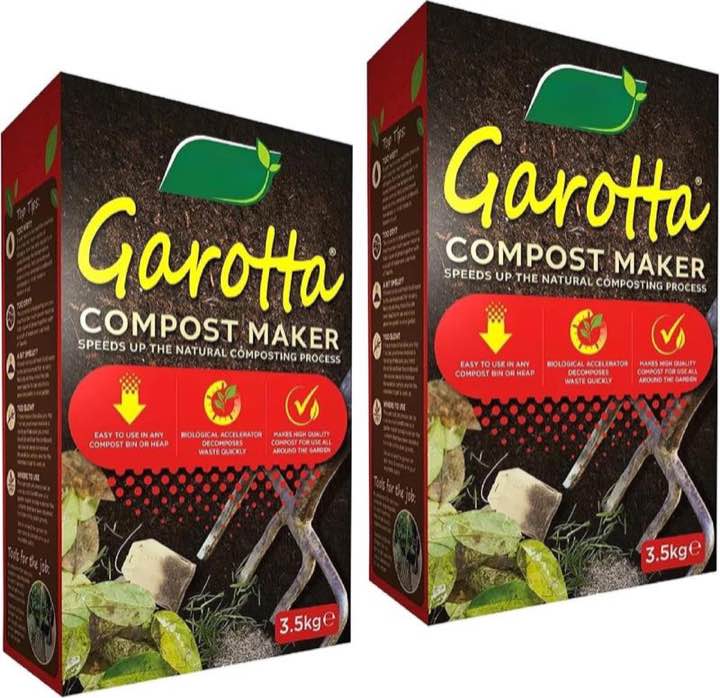
The top pick for that moist, aired heap is Topline Garotta, two 3.5 kg boxes at about £17.99 on amazon.co.uk on 15 October 2026, rated 4.5 from 151 reviews. The listing prints no dose, and some reviews mention split boxes and leaks, so sweep a spill and make no pet-safety claim for the powder. The compost accelerator comparison and the buying guide separate this powder from liquids and from bran, which belongs in a sealed bucket.
Follow the grams printed on the pack. Dose and layer depth sit on the how to use page, and the pack wins if an older webpage disagrees. Water dry woody waste, and give a dripping bin torn card instead. One sprinkle as you add that woody layer is enough. While you can still fetch clippings or peelings, leave the box shut.
Common questions
What is a green and what is a brown?
What ratio should I use?
Can I compost cardboard and newspaper?
Are tea bags and coffee grounds greens?
What about eggshells?
Why must I mix grass clippings?
Do I have to build perfect layers?
When would I still buy a compost accelerator?

Peter F. is the editor for DIY & tools at productscompared.co.uk. Comparisons in this category are checked against amazon.co.uk listings, review evidence and public UK sources.
Related articles

Compost maker price: UK box versus a 7 kg bundle
A 3.5 kg Garotta box and the about £17.99 amazon.co.uk twin pack are different sums. The heap has to be short of greens first.

What can I compost UK: peelings, cooked food, nations
Cooked food, meat, and dairy need a sealed hot system. What a home heap may take is not the same in every UK nation.

How often to turn compost: a practical schedule
A slow bin, a hot heap and a tumbler need different turning schedules, and a cold winter heap is often better left alone.