What can I compost UK: peelings, cooked food, nations

Cooked food is catering waste in England, Scotland and Wales if farm animals stay off the heap. Northern Ireland sends meat, dairy and scraps to the food bin.
On this page
You are at the dalek with last night's curry in one hand and a caddy of carrot peelings in the other. What can I compost UK splits by nation, and it splits again if a hen can reach the bin. Raw peelings are the easy yes. Cooked food, dairy, and meat count as catering waste on the GOV.UK page for England, Scotland, and Wales, while farm animals stay off the heap and off the ground you spread. Northern Ireland's public list sends those leftovers to the food-waste bin.
This page is from Peter F., editor for DIY & tools. We read the GOV.UK animal-material page for England, Scotland, and Wales, last updated on 9 October 2014, plus nidirect, Garden Organic, the Royal Horticultural Society's bokashi page, and WRAP's note of 3 March 2015. There was no heap trial. Prices are amazon.co.uk listings from 15 October 2026. A qualifying purchase through our links can earn us a commission at no extra cost to you.
In short
Uncooked peelings can go in a dalek in every UK nation this page covers. In England, Scotland, and Wales, kitchen leftovers with meat, dairy, or animal fat are catering waste, and farm animals, including pet chickens, stay off the heap and the soil you dress. In Northern Ireland, meat, fish, dairy, and cooked food belong in the food-waste bin, and a bokashi bucket leaves that list where it is.
Raw peelings and garden waste
A dalek is for the caddy. Uncooked fruit and vegetable peelings are what Garden Organic places with the greens, and nidirect lists fruit and vegetable scraps for Northern Ireland with tea bags, coffee grounds, and eggshells. GOV.UK's animal-material page covers scraps that contain animal content. A carrot peeling has none, so the catering-waste test never starts.
Beside peelings, nidirect allows grass, prunings, leaves, a little shredded paper and soft cardboard, and vacuum dust only from woollen carpets. It leaves out nappies, diseased plants, shiny card, and cat or dog excrement. Garden Organic also leaves out coal ash and cat litter. Pet faeces stay off the heap.
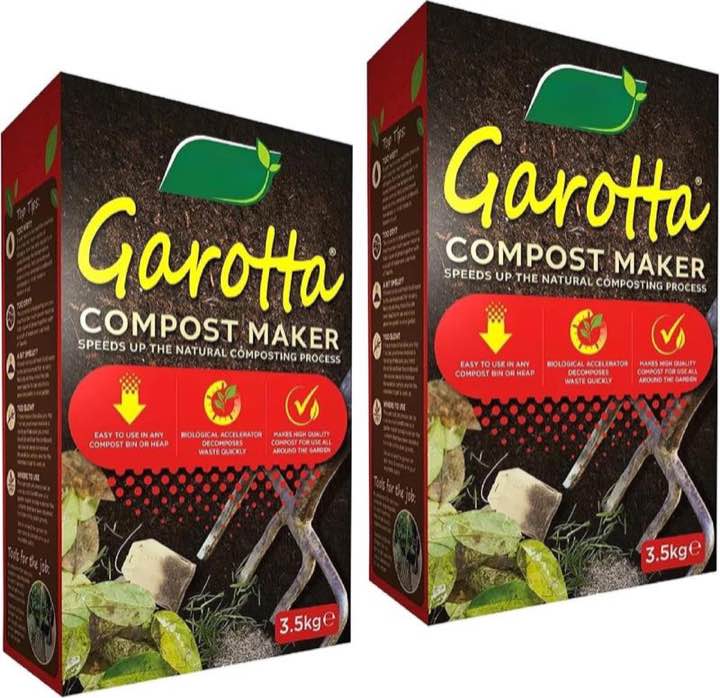
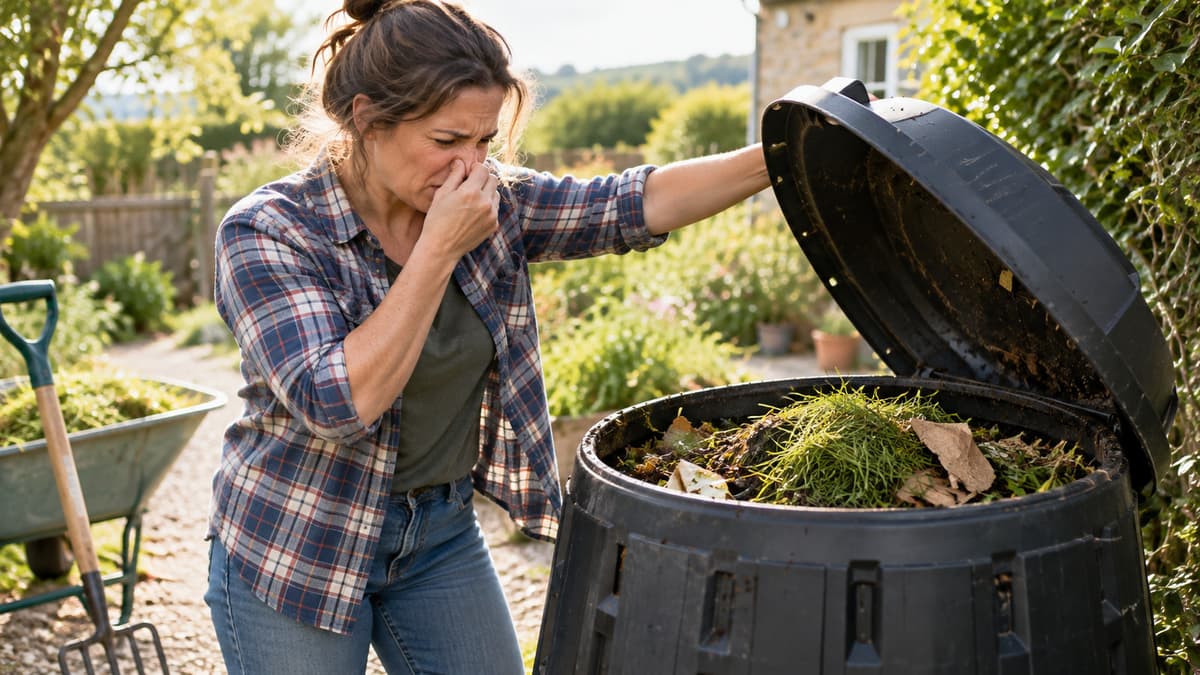
As a rule of thumb, wet peelings thicker than about 15 cm, with no torn cardboard or leaves, slump and smell. Garden Organic aims at roughly equal volumes of green and brown, and a soggy bin is where you pause the caddy for a few days. Topline Garotta in this batch is two 3.5 kg boxes at £17.99 on amazon.co.uk, 4.5 from 151 reviews, with cooked food unstated and no dose on the listing. A powder adds no permission, and the compost accelerator comparison is that shelf once the nation list already allows the scrap.
Can I compost cooked food in England, Scotland, and Wales
GOV.UK, from Defra and the Animal and Plant Health Agency, applies to England, Scotland, and Wales. Animal by-products in home compost means any material with animal content, including food cooked in animal fat or oil, and dairy. You compost them only as catering waste: leftover food and cooking oil from kitchens at homes, offices, restaurants, and caterers, including pasta from your own cooker. Commercial or industrial waste stays out.
Farm animals stay off a heap that holds catering waste, including pets. The page names sheep, cattle, pigs, and chickens and other poultry. Spread the compost only where those animals cannot reach. On the same property as the heap, you need no approval, provided the animals stay off.
Garden Organic says meat, fish, dairy, and cooked food attract vermin, and belong on a home heap only in a sealed hot composting system. The Royal Horticultural Society says a traditional heap leaves cooked food and meat out. The page prints no temperature for sealed hot, so a cool cone can meet the nation rule and still feed rats.
Waste exemption T23 is for operators such as a school, an allotment association, or a community group, and it sits in charging band 2. It refuses treatment that shuts oxygen out, and animal by-products can still need agency approval. A householder's dalek follows the home-heap page, including a bokashi bucket, which works by shutting air out.
Northern Ireland's shorter list
nidirect is the list for Northern Ireland. Fruit and vegetable scraps, tea, coffee, eggshells, and ordinary garden waste can go in. Meat, fish, bones, cooked food, dairy, pet faeces, diseased plants, and nappies stay out, and those food scraps go in the food-waste bin.
GOV.UK names England, Scotland, and Wales. A cooked meal in Belfast or Derry goes in the council caddy. This page covers the United Kingdom, and the Republic of Ireland is a separate authority. The compost dairy UK answer follows that split: catering waste in the three nations on the GOV.UK page, and the food-waste bin in Northern Ireland.
Ordinary domestic pets, on nidirect, generally still let you use composted kitchen waste in the garden. Pigs, cattle, sheep, goats, deer, and other hoofed animals stay away from kitchen waste. Poultry means an enclosed container. A bucket or a powder still leaves Northern Ireland compost meat in the food-waste bin, with fish, dairy, and cooked food.
- Raw fruit and vegetable peelings: home heap or dalek in every nation this page covers.
- Tea, coffee, and eggshells: Garden Organic in England, Scotland, and Wales; nidirect in Northern Ireland.
- Cooked kitchen food: catering waste if farm animals stay off; food-waste bin in Northern Ireland.
- Meat, fish, and dairy: the same split.
- Cat or dog faeces: left out by Garden Organic and by nidirect.
- Commercial or industrial waste: left out of a home heap.
Pet chickens and compost that leaves the garden
Pet chickens are farm animals on the GOV.UK list, with sheep, cattle, and pigs. In England, Scotland, and Wales, catering waste in a pet chickens compost heap means those birds stay off the bin and off every bed you dress with that compost. A run that holds the dalek and the beds fails both tests, so keep the cooked food out or fence the birds off the bin and the soil.
On the property where the heap stands, the page asks for no approval. The score starts when compost goes elsewhere or you sell it, including a bag for a neighbour. Nineteen or under means you can move or sell it with no further action. Twenty or over means you contact the nearest Animal and Plant Health Agency office first.
More than 10 tonnes a year scores 10, and a normal garden scores 0. Domestic gardens and allotments score 0, parks and horticultural land score 3, and farms or smallholdings score 15. Animals where the compost is made score 20, and animals where it is used score 15. No biosecurity plan scores 4, and skipping the Association for Organics Recycling or Community Composting Network code scores 4.
Under 10 tonnes, given to a neighbour's garden, with no farm animals at either place, is 0 on quantity, land, and animals. Skipping the plan and the code adds 4 and 4, a total of 8, so that bag can move. Chickens on the heap score 20 on that line alone, so the bag waits for approval.
Bokashi stays inside the nation list
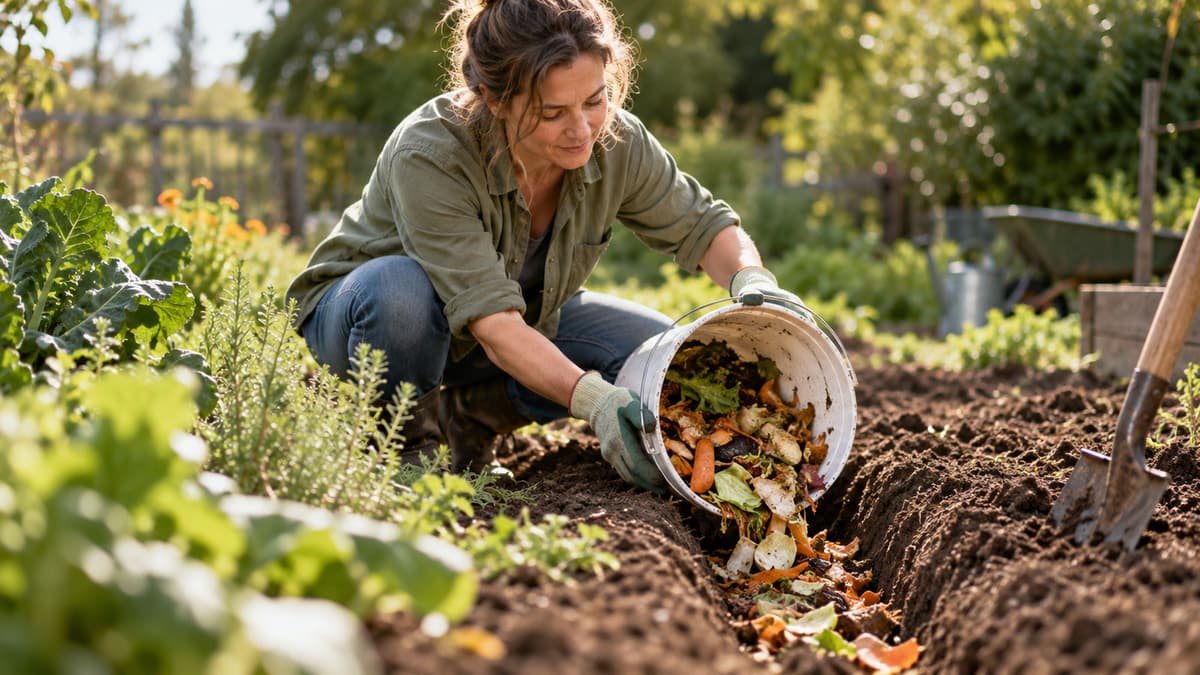
Bokashi is a sealed ferment. The Royal Horticultural Society describes inoculated bran, such as wheat, rice, or sawdust, in a lidded bucket. Sprinkle bran, add scraps, press out air, and keep the lid on. Drain the liquid every couple of days and dilute it about 1:10. After about two weeks you still have acidic pre-compost, so bury it or add it to a heap and wait about two weeks before planting. The Society includes pasta, stale bread, cooked meat, and vegetables, with bran about every 3 to 4 cm. Leave large amounts of oil and unbroken bones out.
In England, Scotland, and Wales that cooked food is already catering waste, and poultry stay off the trench. In Northern Ireland the food-waste bin still takes meat, fish, dairy, and cooked food. A fortnight in the bucket, then about a fortnight in the soil, adds no line to either government page.
On amazon.co.uk in this batch, Biorfe's 1 kg wheat bran was £12.95 and Moutta's 3 kg bag was £29.99, £10 a kilo, at one or two tablespoons a day. The bokashi and heap page keeps the ferment apart from heap powder. WRAP's 2015 note names wormeries beside bokashi, and the compost worms comparison is that livestock when peelings are allowed.
Common questions
Can I put vegetable peelings in a dalek?
Can I compost cooked food in England?
What about dairy and meat?
I keep chickens. Does that change the heap?
Is Northern Ireland the same?
Do I need a permit?
Does bokashi make cooked food legal everywhere?
Can I take community compost to another site?

Peter F. is the editor for DIY & tools at productscompared.co.uk. Comparisons in this category are checked against amazon.co.uk listings, review evidence and public UK sources.
Related articles
Bokashi pre-compost in the garden
A sealed bucket ferments scraps for about a fortnight. The result is pre-compost, and it still has to go in a trench or a heap.
Why a compost bin smells
Ammonia means too many wet greens. Rotten eggs mean the dalek needs air and dry browns before any powder.

Greens and browns for a compost heap
Garden Organic uses roughly equal volumes. The RHS and council pages do not all print that same greens-to-browns split.