Bury Bokashi compost: trench, heap, then wait

Bury Bokashi compost in a trench or a bin, wait two weeks before planting, and keep the drained liquid and the bran dose separate from finished compost.
On this page
You open a fermented Bokashi bucket and the scraps still look recognisable, even though the sealed stage is complete. That is normal. To bury Bokashi compost is to bury Bokashi pre-compost, because the bucket has fermented the food rather than turned it into finished compost. Your next decision is a compost bin, a garden trench or, where the method you follow allows it, a worm bin.
The useful answer is not to wait until the bucket looks like crumbly compost. Choose a finishing route, transfer the fermented material, and if you use a trench, wait before planting. This guide covers that after-bucket stage. We have not run a laboratory test. A qualifying purchase through our links can earn us a commission at no extra cost to you.
In short
Bokashi bucket contents are pre-compost, not finished compost. Move them to a compost heap or bin, a suitable worm bin, or a garden trench. If you bury them, wait two weeks before sowing or planting over that ground. The drained liquid is a separate output. Use only the dilution stated by the guide or product instructions you follow, because the notes used here do not support one universal ratio.
Pre-compost, not finished compost
Bokashi changes food waste through a sealed fermentation. The Royal Horticultural Society describes a two-week period in the bucket and notes that the result can still look like pickled food. That appearance matters. Recognisable fermented scraps are not failed finished compost, and they are not material to scatter around plants as if the garden process were already over.
Call the output Bokashi pre-compost. Fermentation is a pre-treatment. Garden Organic describes the destinations as a compost heap, a worm bin or a trench, so the sealed bucket is not asked to finish the job on its own.
Bran starts and supports the fermentation. It is not a bag of finished compost, and the bucket output is not one either. If you are still deciding whether fermentation or a conventional heap suits the household, use the Bokashi versus compost heap comparison. Once the bucket is already complete, the practical question is destination.
Heap or trench?
A compost heap or bin is the straightforward choice when you already compost outdoors. The heap is where the pre-treated scraps continue towards compost, without reserving a patch of ground.
A Bokashi trench puts the pre-compost straight into the ground, and you then leave that area alone. The Royal Horticultural Society and Garden Organic both specify a two-week wait after burial. That is a minimum, not permission to plant on the day you cover the trench.
A working bin suits occupied planting space, or a household that wants the fermented material with the rest of the compost. A trench suits open ground you can leave unplanted. When the material leaves the bucket, it is still pre-compost entering a finishing stage.
Garden Organic says fermented material is unattractive to rats and foxes. That is guidance, not a guarantee for every trench. If the ferment includes animal material and animals can reach it, check the relevant GOV.UK guidance on animal material in home or community composting. Fermentation and a soil cover are not a substitute for that check.
How to bury Bokashi compost
Plan the trench before you open the bucket. Pick ground that can stay free of seeds and plants for at least two weeks after burial, and only if this route is appropriate for what you fermented. The purpose is a garden finishing stage, not a feed placed beside roots on the same day.
- Choose an unplanted patch and note the burial date.
- Open the ground and keep the pre-compost in the area you will leave undisturbed. The guidance supports burial and does not give one universal trench depth, so do not treat a made-up figure as a rule.
- Empty the fermented scraps into the trench. Recognisable pieces do not mean the sealed stage failed. The Royal Horticultural Society says the contents can still look pickled.
- Cover the pre-compost with soil. Covered scraps are not finished compost.
- Wait two weeks before planting or sowing. The Royal Horticultural Society and Garden Organic both give that interval.
Burial does not justify claiming that every ingredient is suitable in every setting. Where animal-derived food is involved and animals may reach the trench, the UK government guidance is the extra check.
Adding Bokashi to a compost bin
You can add fermented Bokashi material to a normal compost bin or heap instead of digging a trench. The Royal Horticultural Society gives bin or bury as the onward choice. Garden Organic describes Bokashi as a pre-treatment that lets cooked food move into a normal bin. That route is useful when the ground is planted, you have no spare trench, or you already manage a heap.
Treat the transfer as the start of another stage. Emptying a fermented bucket into a dalek does not make the load instantly mature, and there is no basis here for a fixed completion date. The bin takes the pre-compost further, alongside the routine you already follow.
Keep bran and a conventional accelerator separate. Bokashi bran is used while you fill and ferment the sealed bucket. A heap powder belongs to the heap. The compost accelerator comparison includes Bokashi refill products, but neither a refill nor an accelerator is finished compost.
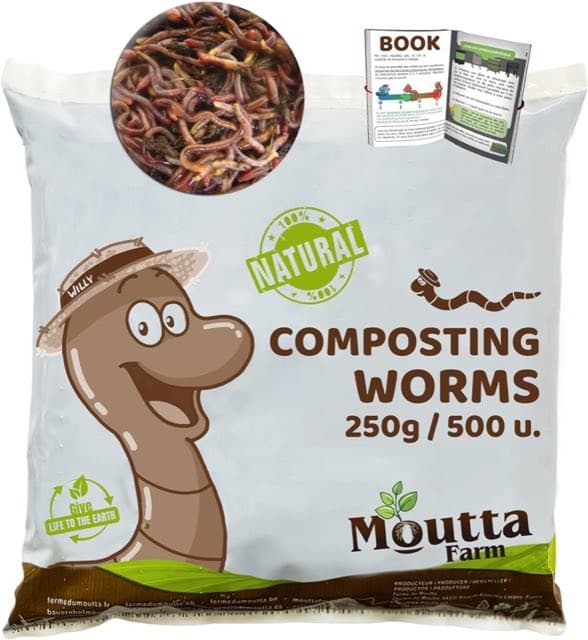
Garden Organic also names a worm bin. Do not tip a full bucket into any wormery until you have checked that system's guidance. These notes do not give a universal loading method. The top pick on the compost worms comparison is the Moutta WormBox: 250 g of live Eisenia at about £27.90, with 4.4 from 1,259 amazon.co.uk ratings. The title names Eisenia and does not add fetida, andrei or veneta. Garden Organic's figure for an average wormery is about 500 g, so the pack is a restock or a slow start if you can open it the day it arrives. There is no best value, because the comparison has one listing. Worms do not turn pre-compost into finished compost on their own.
What to do with Bokashi liquid
Liquid drained from the bucket is often called Bokashi tea. Treat it separately from the solid pre-compost. Removing or using the liquid does not turn the solids into finished compost, and burying the solids does not tell you how the liquid should be applied.
Use the dilution in the guide or product directions you follow. These notes do not establish one universal ratio. If a bran supplier and a general guide differ, follow the instructions for the system you use.
The bucket liquid, the fermented solids and eventual finished compost are three different things. Calling all of them Bokashi compost hides the decision you need to make, and it raises the chance that liquid or solids are used at the wrong stage.
Choosing a bran refill
Bran quantities vary because the available instructions describe additions differently. The Royal Horticultural Society refers to a handful of bran for each inch of food waste. Garden Organic refers to a tablespoon each time material is added, and also advises pressing air out. A Moutta bran listing gives one to two tablespoons. The Biorfe listing does not provide a gram dose in the notes used here. That missing figure stays missing.
Those figures are not one interchangeable dose. Per inch, per addition and a product dose are different reference points. Follow the directions with your bran, especially when an addition is much larger or smaller than usual. Buy bran for the fermentation stage, not because a listing implies the bucket will open as finished garden compost.
This article does not need a pH number, and the notes do not support one pH for every Bokashi system. Layer to your instructions, finish the sealed stage, choose an onward route, and where you bury the material wait two weeks before planting. A heap keeps it in a composting system. A trench uses garden ground.
Common questions
Is the material from a Bokashi bucket finished compost?
How long after burying Bokashi can I plant?
Can I put Bokashi pre-compost in a normal compost bin?
What is Bokashi tea?
How much Bokashi bran should I use?
Can Bokashi pre-compost go in a worm bin?
Will buried Bokashi attract rats or foxes?

Peter F. is the editor for DIY & tools at productscompared.co.uk. Comparisons in this category are checked against amazon.co.uk listings, review evidence and public UK sources.
Related articles

What can I compost UK: peelings, cooked food, nations
Cooked food is catering waste in England, Scotland and Wales if farm animals stay off the heap.
Compost bin smells: wet greens, no air, leave the tub
Ammonia means too many greens. Rotten eggs mean a wet, airless bin that needs dry browns and air.

Greens and browns compost: three UK mixes in buckets
RHS, Garden Organic and Greater Manchester each publish a mix. Measure one in buckets.