Portable electric heater vs oil-filled radiator
You are choosing a heater for one room, and an oil-filled radiator can look cheaper because it stays warm after you switch it off. A portable electric heater vs oil-filled radiator choice is about speed, noise and leftover heat. Electricity costs the same per unit. The Products Compared editorial team set this out on 16 October 2026 from Ofgem’s cap rate, the Centre for Sustainable Energy, Which?’s oil-filled notes, and the rows in our [portable electric heater comparison](/hub/portable-heaters/portable-electric-heater). No oil-filled model is in that folder, so this page does not rank one. If you buy through our links, we may earn a commission at no extra cost to you. Overnight rules sit on the [bedroom page](/hub/portable-heaters/portable-electric-heater/sub/portable-electric-heater-for-bedroom).
You are choosing a heater for one room, and an oil-filled radiator can look cheaper because it stays warm after you switch it off.
You are choosing a heater for one room, and an oil-filled radiator can look cheaper because it stays warm after you switch it off. A portable electric heater vs oil-filled radiator choice is about speed, noise and leftover heat. Electricity costs the same per unit. The Products Compared editorial team set this out on 16 October 2026 from Ofgem’s cap rate, the Centre for Sustainable Energy, Which?’s oil-filled notes, and the rows in our portable electric heater comparison. No oil-filled model is in that folder, so this page does not rank one. If you buy through our links, we may earn a commission at no extra cost to you. Overnight rules sit on the bedroom page.
Our top picks
| Badge | Product | Type in this set | Voltage stated | After switch-off | Note | Price | Offer |
|---|---|---|---|---|---|---|---|
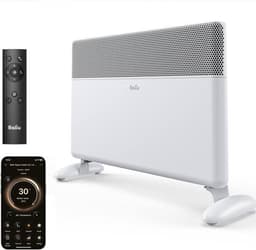
| Best overall |  Ballu Ballu 2000 W WiFi panel | Fanless panel | 230 V | No oil store | 9.6 | about £149.99 | View offer |
 DREO Dreo Atom 316 1500 W gold | PTC ceramic fan | 220–240 V 50 Hz | Blast stops | 9.2 | about £49.99 | View offer | |
| Preis-Tipp |  Amazon Basics Amazon Basics 1800 W ceramic | Ceramic fan | 230 V | Stops when off | 9.0 | about £9.90 | View offer |


On this page
The cost is the watts
Speed, noise and leftover heat
When a heater in this comparison is the one to buy
When to look at an oil-filled radiator instead
Common questions
Which is cheaper to run?
Which heats the room faster?
Which is quieter?
Which stays warm after I switch it off?
Which should I use for an hour at a desk?
Is the Ballu panel an oil-filled radiator?
Related pages
Sources
Public UK sources used for this comparison. Listing prices, stars, and review counts are the amazon.co.uk lines from 16 October 2026.
- Electrical Safety First — portable heaters (retrieved 16 October 2026)
- Ofgem — energy price cap, 1 October to 31 December 2026 (retrieved 16 October 2026)
- Energy Saving Trust — electric heating (retrieved 16 October 2026)
- Centre for Sustainable Energy — room heaters (retrieved 16 October 2026)
- energy.org.uk — electric heaters compared (retrieved 16 October 2026)
- GOV.UK OPSS — portable heater plug report B0BRW4YQ7S (not in this set) (retrieved 16 October 2026)
- NBS — BS EN 60335-2-30 (retrieved 16 October 2026)
- Hertfordshire Fire and Rescue — portable heater safety (retrieved 16 October 2026)