Independent comparisons. We may earn from shop links. More info

How to use a portable electric heater

Updated: October 2026

The heater is out of the box, and the reel behind the television is the easy mistake. This is how to use a portable electric heater: a wall socket, a metre of clear space, and the plug out when you leave. The Products Compared editorial team wrote this on 16 October 2026 from Electrical Safety First, fire-and-rescue guidance, and the notes in our [portable electric heater comparison](/hub/portable-heaters/portable-electric-heater). We did not test a heater in a lab. If you buy through our links, we may earn a commission at no extra cost to you. Overnight use is a separate decision on the [bedroom page](/hub/portable-heaters/portable-electric-heater/sub/portable-electric-heater-for-bedroom). If the listing says 120 V, use the [buying guide](/hub/portable-heaters/portable-electric-heater/sub/portable-electric-heater-buying-guide) before these steps.

The heater is out of the box, and the reel behind the television is the easy mistake. This is how to use a portable electric heater: a wall socket, a metre of clear space, and the plug out when you leave.

Our top picks

On this page

Before you switch it on

Put the heater on a stable surface, not where the lead crosses a doorway. Electrical Safety First asks for a UK three-pin plug in a wall socket, with about one metre clear of curtains and bedding. Do not run the lead under a rug, share the socket with a kettle, or stand the heater by a bath. An extension lead is the wrong default. A partly wound reel gets hot under a 2 kW load. If the only socket is across the room, move the heater or ask an electrician about a proper socket. Appliances from about 700 W to 3000 W normally take a 13 A fuse unless the instructions say otherwise. Do not open a sealed plug to experiment. A 2-prong plug, which one Dreo bullet describes, is not a UK plug to adapt as a habit. Keep the grilles uncovered. None of the twelve listings states an IP rating.

The first time it runs

A new fan heater often smells for a few minutes while factory coating on the element warms up. Reviews of the Dreo Atom 320 in our file mention a smell that fades. Stay in the room, keep the grille clear, and see whether it dies away. A smell that continues, a wisp of smoke, or a plug that is too hot to touch is a different event. Switch off at the socket and leave that heater unused. Set a moderate level first. Amazon Basics and Warmlite reviewers call high noisy. One DR-HSH003 review says the thermostat overshoots by 2–3°C. If the room is still cold on a low eco mode, use a stated heat level while you are there, then turn it down.
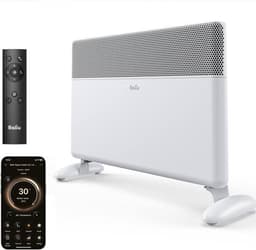
Ballu Ballu 2000 W WiFi panel

Testsieger

Ballu Ballu 2000 W WiFi panel
9.6/10about £149.99

If it switches itself off

A cut-out is often the heater doing what the listing claimed. Overheat protection switches the element off if the airflow is blocked. Tip-over protection, where it is stated, cuts power if the heater is knocked. Amazon Basics reviewers describe a base switch that cuts out when the unit tips, and Atom 320 reviews mention a working tip-over switch. If you had pushed the heater against a curtain, clear that, let it cool, and start again a metre away. A cut-out that returns every few minutes on an open floor is not a feature to work around. WL44002 reviews include a unit that failed after about two months. Do not tape a tip switch down. Models that do not state tip-over, including both Warmlites, will not give you that cut-out.

When to unplug and when to call

Switch the heater off and unplug it when you leave the room, when you go to bed, and before you move it. Drying washing on the grille is a fire path, not a shortcut. If you want heat that continues after switch-off, that is an oil-filled radiator’s behaviour, on the versus page, not a reason to leave a fan heater running. Call an electrician if the socket, plug or cable is hot, buzzing or scorched. Do not open the casing. A child lock or a 12-hour timer does not replace being in the room.

Common questions

Can I use an extension lead?
No, not as the normal way to run a portable heater. Electrical Safety First wants the UK three-pin plug in a wall socket. A 1500 W or 2000 W load heats a coiled lead. If the socket is in the wrong place, move the heater or have an electrician add a socket.
How far from the curtains?
Keep about one metre between the heater and curtains, bedding and sofas. Fire services use the same clearance, sometimes worded as three feet. A heater tucked beside a duvet fails that rule even if a tip-over switch works. The grille must stay clear as well. Floor space is useless if a throw is draped over the outlet.
What fuse should the plug have?
For heaters from about 700 W to 3000 W, Electrical Safety First says a 13 A fuse unless the manufacturer tells you otherwise. The 1000 W to 2000 W models here sit in that band. Follow the leaflet if it names a fuse. Do not rewire a moulded plug.
Why does it smell the first time?
A short smell on a new unit is common while coatings warm through. Atom 320 reviews in our file describe a smell that fades. Stay in the room with the grille clear. If the smell continues, if you see smoke, or if the plug is hot, switch off at the wall and leave that heater unused.
Why does it keep switching off?
Overheat and tip-over cut-outs stop the heater when the grille is blocked or the unit falls. Clear a metre of space, let it cool, and try again. If it cuts out on an open floor every few minutes, or the plug is warm, stop. Do not tape a safety switch down so the heater stays on.
When do I stop and call someone?
Call an electrician if the socket, plug or cable is hot, buzzing or discoloured, or if a breaker trips after you have already removed an obvious overload. Do not keep resetting it. Call a heating engineer or the landlord if a plug-in heater has become the only heat. Do not open the casing yourself.

Related pages

Sources

Public UK sources used for this comparison. Listing prices, stars, and review counts are the amazon.co.uk lines from 16 October 2026.

  1. Electrical Safety First — portable heaters (retrieved 16 October 2026)
  2. Ofgem — energy price cap, 1 October to 31 December 2026 (retrieved 16 October 2026)
  3. Energy Saving Trust — electric heating (retrieved 16 October 2026)
  4. Centre for Sustainable Energy — room heaters (retrieved 16 October 2026)
  5. energy.org.uk — electric heaters compared (retrieved 16 October 2026)
  6. GOV.UK OPSS — portable heater plug report B0BRW4YQ7S (not in this set) (retrieved 16 October 2026)
  7. NBS — BS EN 60335-2-30 (retrieved 16 October 2026)
  8. Hertfordshire Fire and Rescue — portable heater safety (retrieved 16 October 2026)