Fan heater buying guide
The spare room goes cold first, and the heater you add to the basket is usually a fan heater for that one room. This fan heater buying guide is the check before you trust a low-energy line or a coverage number. You want a wattage that fits the room, a thermostat that cuts the power, and the safety switches the listing states. The [fan heater comparison](/hub/portable-heaters/fan-heater) ranks the 12 amazon.co.uk listings. Prices here are the shelf figures in that comparison, about £9 to £75, not a live basket. Products Compared used the listings and public UK guidance. This is not a lab test.
The spare room goes cold first, and the heater you add to the basket is usually a fan heater for that one room. This fan heater buying guide is the check before you trust a low-energy line or a coverage number.
The spare room goes cold first, and the heater you add to the basket is usually a fan heater for that one room. This fan heater buying guide is the check before you trust a low-energy line or a coverage number. You want a wattage that fits the room, a thermostat that cuts the power, and the safety switches the listing states. The fan heater comparison ranks the 12 amazon.co.uk listings. Prices here are the shelf figures in that comparison, about £9 to £75, not a live basket. Products Compared used the listings and public UK guidance. This is not a lab test.
Our top picks
| Badge | Product | Output | Thermostat | Tip-over stated | Note | Price | Offer |
|---|---|---|---|---|---|---|---|
| Best overall |  Pro Breeze Pro Breeze ThermaCube 1500 W | 1,500 W | Eco, 15–35°C | Yes | 7.3 | about £33.99 | View offer |
 DREO Dreo Atom 316 1500 W white | 1,500 W | 5–35°C | Yes | 8.5 | about £42.49 | View offer | |
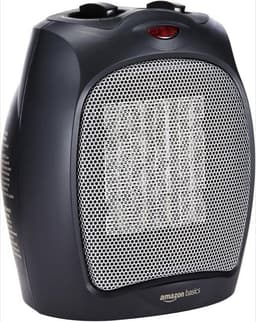
| Preis-Tipp |  Amazon Basics Amazon Basics 1800 W ceramic heater | 1,800 W | Adjustable dial | Yes | 7.5 | about £9.90 | View offer |


On this page
What a fan heater is for
Watts before features
Thermostat, timer and eco mode
The safety line on the listing
How to use the comparison
Common questions
How many watts do I need for a small room?
Is a ceramic heater cheaper to run than a normal fan heater?
Does it need a thermostat or is a dial enough?
Should I insist on a tip-over switch?
What does eco mode actually do?
Can I trust the heats-up-to line on the box?
When should I look at an oil-filled radiator instead?
Related pages
Sources
Public UK sources for the plug, clearance, the seasonal-efficiency rule, and the unit rate. Listing prices, stars, and review counts are the amazon.co.uk figures in this set. Retrieved 16 October 2026.
- Electrical Safety First — Portable heaters (retrieved 16 October 2026)
- Regulation (EU) 2015/1188 — local space heaters (retrieved 16 October 2026)
- GOV.UK — Placing energy-related products on the UK market (retrieved 16 October 2026)
- Ofgem — Energy price cap unit rates and standing charges (retrieved 16 October 2026)
- London Fire Brigade — Portable heaters, gas fires and open fires (retrieved 16 October 2026)
- Centre for Sustainable Energy — Room heaters (retrieved 16 October 2026)
- BS EN 60335-2-30:2009+A13:2022 — room heaters (retrieved 16 October 2026)
- IET Wiring Matters, September 2025 — 13 A continuous load (retrieved 16 October 2026)
- North Yorkshire Fire and Rescue — Heating your home (retrieved 16 October 2026)