LPG heater garage ventilation UK: what to check first
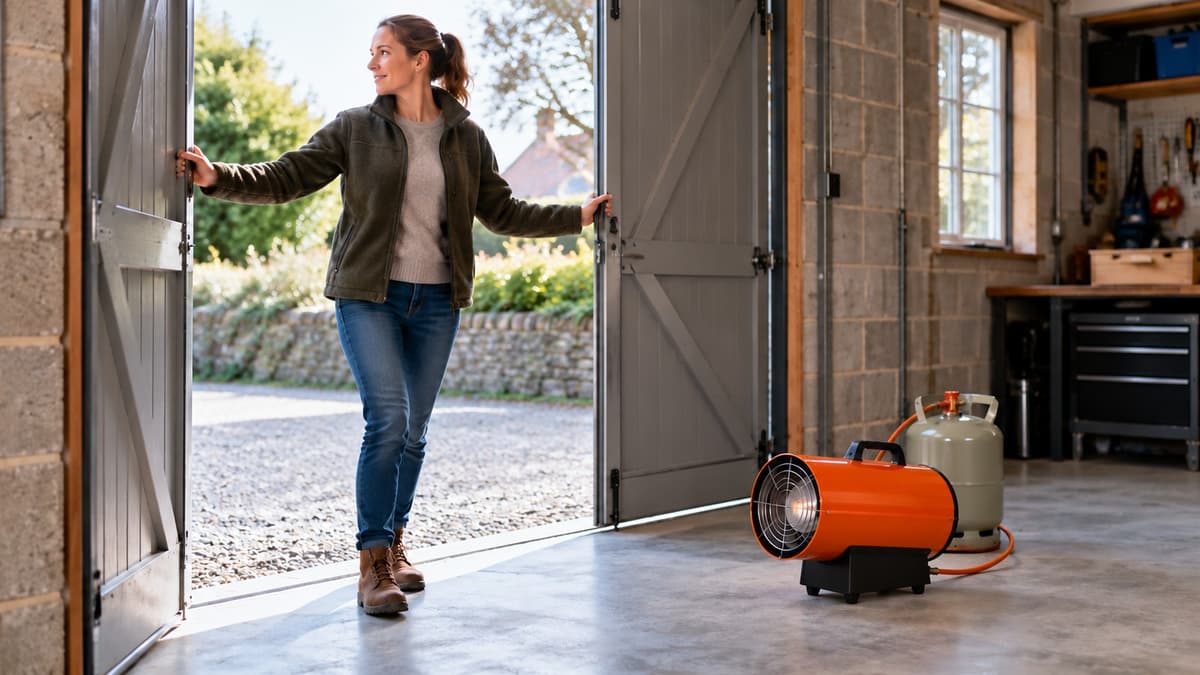
Before using an LPG heater in a UK garage, check flueless heat, petrol vapour, carbon monoxide, room-size limits and the condition of the gas fittings.
On this page
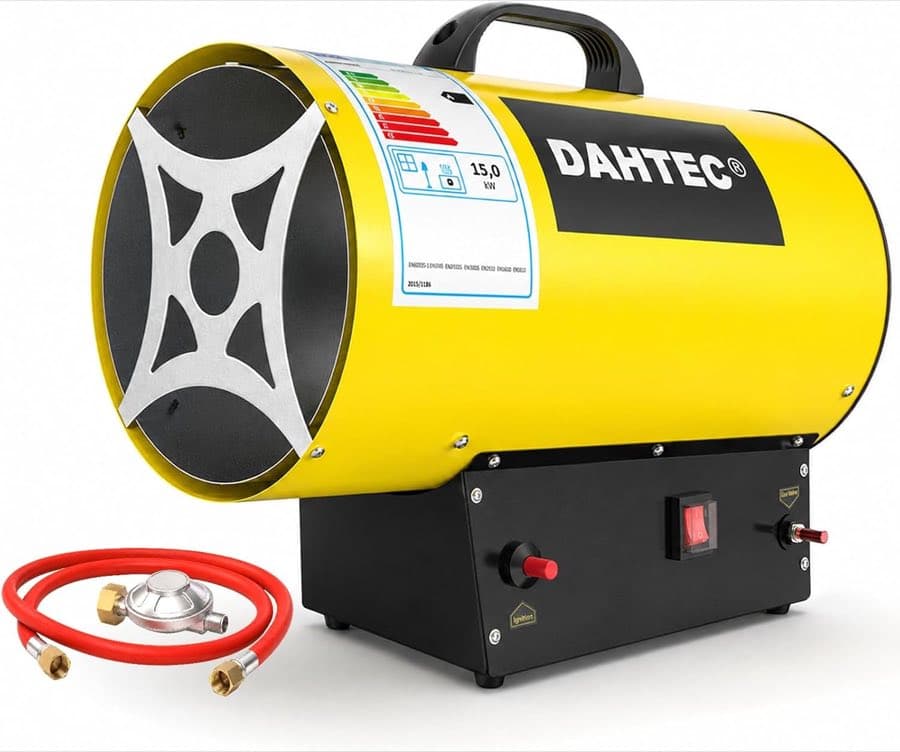
A propane heater can look like the obvious answer when your garage is cold and its amazon.co.uk title actually says “garage”. The label does not settle whether a flueless heater belongs in your room, especially when a car, petrol or a fuel cylinder may also be present. Separate the seller’s suggested use from the heater instructions, UK safety guidance and the realities of your space.
In short
Do not read “garage” in a product title as permission to run a flueless LPG heater in every domestic garage. Petrol vapour, combustion products, ventilation, the manufacturer’s minimum room size and the condition of the gas fittings all matter. Where those cannot be resolved, an electric heater is a different option because it does not burn fuel in the room.
Why a garage label is not permission
Two gas blowers in the comparison data illustrate the problem. The DAHTEC BGA1401-15-18 has an “Indoor” use field, and reviewers describe fast heat in garages, sheds and workshops. The ALINI ALINI15GH also has reviews reporting strong garage heat. A listing field or a review does not decide whether your garage is a suitable place for flueless combustion.
The same DAHTEC evidence contains direct conflicts. One reviewer says the heater cannot be used indoors, despite the listing’s Indoor field. Another buyer says the instruction sheet required at least 100 square metres, which excluded that buyer’s estimate of roughly 65 square metres for a double garage. A title can say “garage” while the instructions impose a condition that a particular garage does not meet.
Start with the exact model and the instructions that arrive with it. Do not combine the most convenient parts of a listing, a review and another heater’s manual. Our gas heater fan comparison can help you compare the products, but the intended-use field still needs to be read alongside the manufacturer’s restrictions.
Flueless heat, petrol vapour and fire
A flueless propane blower burns fuel without a flue that carries the combustion products outside. The appliance is not simply warming clean air in a sealed circuit. It burns LPG in the space, while its fan moves heated air through the room.
UK-facing Calor and Liquid Gas UK guidance warns against using flueless heaters where petrol vapour may be present. A domestic garage that holds a petrol car is not merely a large room with a concrete floor. Opening a door does not turn an unsuitable combination into an approved one, and this guide cannot give you an invented vent opening or a universal number of air changes.
A workshop with no petrol present may still need a careful assessment of the heater instructions, ventilation and cylinder arrangements. A garage containing a car or petrol introduces the vapour issue before you reach questions about comfort or heating speed. If you cannot establish that the proposed use is allowed, do not treat a favourable garage review as a substitute. London Fire Brigade also advises care with portable heaters, gas fires and open fires. A low purchase price or a claim of rapid heat does not cancel the fuel environment around the heater.
Ventilation and carbon monoxide
Carbon monoxide is the less visible part of the same combustion decision. HSE guidance on temporary heating identifies carbon monoxide as a serious risk from combustion equipment and stresses control through suitable equipment, maintenance and adequate ventilation. It is not a smell you can monitor while you work, so “I will notice if the air gets bad” is not a safety plan.
Ventilation must follow the heater’s instructions and the conditions of the space. The available guidance does not establish one minimum opening that works for every 15 kW propane blower, so this article will not manufacture one. Room volume, the specific appliance and the way fresh air reaches the space are not interchangeable with a door that happens to be cracked open.
Blocking ventilation because warm air is escaping defeats the purpose of the control. Pointing the hot air towards your bench does not deal with combustion products in the rest of the garage. If someone feels unwell while the heater is running, stop using it and move into fresh air; do not wait beside the appliance to see whether the feeling passes.
Do not assume a safety device that the listing does not name. HSE discusses an atmosphere-sensing device in information about cabinet heaters, but the researched blower listings do not establish that they have one. A gas cut-off if the DAHTEC overheats is not the same claim as sensing the atmosphere for carbon monoxide or oxygen conditions.
The 100 square metre instruction
The 100 square metre figure shows why the manual can overturn the product-page impression. One DAHTEC reviewer reported that the supplied instruction sheet set that minimum. The reviewer estimated a double garage at around 65 square metres and concluded that the heater could not be used there.
That review is not a national rule, and 65 square metres is not a standard definition of a British double garage. It is one buyer describing one room and one instruction sheet. Do not apply the 100 square metre number automatically to every propane heater, and do not dismiss it when it appears in the instructions for the model in your hands.
Be precise about units. A listing coverage claim is not the same thing as an instruction minimum. The DAHTEC page claims coverage of 1,615 square feet, while the ALINI listing claims up to 300 square metres. These are seller-facing coverage statements, not room tests in your garage and not permission to ignore a separate safety limit. Measure the actual room rather than relying on “single” or “double” as shorthand, then compare that measurement with the exact instructions before connecting fuel. If the condition is unclear or the room falls short, choose another heating approach.
Cylinders, fittings and changing fuel
The cylinder and fittings are part of the system, not accessories to consider after buying the heater. The ALINI listing names propane/LPG, a regulator and a 1.5 metre hose. Its fan uses a 230 V UK three-pin plug. The DAHTEC listing gives 700 mbar working pressure and a mains-powered fan, but does not state the fan voltage. Check what is actually supplied rather than assuming every 15 kW gas blower connects in the same way.
One DAHTEC buyer returned a supplied regulator after finding a faulty outlet thread. Do not force a connection that does not mate correctly, improvise a substitute fitting or repair a damaged thread casually. Change LPG cylinders outdoors. Store spare cylinders upright and outside, not beside the heater in the garage. Those steps do not answer whether operating the heater in that garage is permitted; they address separate hazards around changing and keeping the fuel.
The Gas Safety (Installation and Use) Regulations 1998 include portable space heaters within relevant provisions in England, Scotland and Wales. Do not present that statutory instrument as Northern Ireland law. A suspect fitting or unclear gas connection is the point to stop and obtain appropriately qualified help.
When electric heat is the different answer
An electric blower is not a licence to ignore placement or electrical requirements, but it removes combustion in the room. That makes it a different answer where petrol vapour or flueless gas is the decisive objection. The 15 kW fan heater comparison includes electric and gas models so that this trade-off stays visible.
The DAHTEC IFHO3-150G electric heater illustrates the catch. Its amazon.co.uk bullets require 380–400 V three-phase and explicitly say it cannot run from a standard 220–240 V household socket. The listing gives a 95 W fan-only figure followed by 5 kW, 10 kW and 15 kW heat figures, with airflow stated up to 2,246 cubic metres per hour. It is dry electric heat, but it is not a bigger version of a 13 A plug-in heater.
For a workshop that already has a confirmed 400 V outlet, that electric model avoids bringing an LPG cylinder and combustion products into the heated room. For a domestic garage with only ordinary sockets, it may be electrically unsuitable even though the fuel issue disappears. In that case, compare a lower-powered plug-in fan heater rather than buying a 15 kW machine that your supply cannot support. Gas may offer portable high output, but its flueless operation, cylinder handling and room restrictions must fit the use. Electric heat avoids indoor combustion, while a 15 kW model demands a specialist three-phase supply.
Common questions
Can I use a propane space heater in a domestic garage in the UK?
What is a flueless LPG heater?
Does a double garage meet a 100 square metre minimum?
Is a cabinet gas heater the same as a propane blower?
Who can work on an LPG heater fitting?
Where should I change or store the LPG cylinder?
What should I do if someone feels ill near a gas heater?

Peter F. is the editor for DIY & tools at productscompared.co.uk. Comparisons in this category are checked against amazon.co.uk listings, review evidence and public UK sources.
Related articles

Carbon monoxide from temporary heat
Why temporary combustion heat needs a clear plan for ventilation and warning signs.

Electric blower or propane heater
Compare dry electric heat with portable propane heat before choosing a workshop heater.

Three-phase before you buy a workshop heater
Check whether your supply can run a 15 kW electric blower before you order one.