Carbon monoxide from temporary heaters: stay safe

Learn how temporary heaters can create carbon monoxide, why blocked vents are dangerous, when to stop, and where electric heat changes the risk in the UK.
On this page

A cold shed, site hut or half-finished building can make a portable heater feel like an immediate fix. A carbon monoxide temporary heater risk begins when fuel is burned without enough air, particularly if you block a vent because the incoming air feels cold. Never trade required ventilation for retained heat, and stop using the fuel-burning heater if you cannot ventilate the space as instructed.
In short
LPG heaters and petrol-powered equipment can create carbon monoxide in enclosed or poorly ventilated spaces. HSE specifically warns about petrol equipment indoors and LPG heaters in welfare facilities. Do not cover high or low vents to keep warmth in. Where the supply is suitable, an electric heater avoids combustion in the room, but a 15 kW model needs a genuine 400 V three-phase supply rather than a normal UK socket.
Which temporary heaters produce carbon monoxide?
Carbon monoxide is tied to combustion, not to the fact that a heater is portable. A flueless LPG blower burns fuel in the space it heats, and petrol-powered machinery also produces combustion gases. If the fuel does not burn completely, carbon monoxide can form. You cannot rely on seeing or smelling it, so a room that feels normal is not proof that the air is safe.
HSE identifies petrol-powered equipment used indoors as a carbon monoxide risk even when it has operated for only a few minutes. It also names LPG heaters used in construction welfare facilities. A hut, shed or unfinished room is a setting to assess carefully. Small volume, closed doors and an effort to stop draughts can combine to make a seemingly practical arrangement dangerous.
The distinction matters when you compare gas heater fans with electric models. A gas blower may deliver rapid heat, but it burns fuel in the room. A 400 V electric fan heater does not burn LPG or petrol, so it is not a combustion source of carbon monoxide, though it still needs the correct supply and placement.
An electric heater does not clean contaminated air, make petrol equipment safe indoors or stand in for another fuel-burning appliance. Identify every combustion source in and around the space, including equipment that may not look like part of the heating.
Why blocking a vent is dangerous
A vent that admits cold air can feel as though it defeats temporary heating. Required ventilation is part of safe use: combustion needs air, and contaminated air needs a way out. Blocking a grille to warm the room faster removes that protection.
High and low openings may serve different airflow paths, so one open grille does not make the other redundant. A cracked door is not a substitute for the specified openings. Follow the heater instructions, and switch off if those conditions cannot be kept throughout use.
Comfort can point you the wrong way. The heater appears to work, the air is still chilly, and the vent looks like wasted heat. Poor heat retention does not make a blocked vent harmless. It may show that a flueless heater is a poor match, because the ventilation needed for safety conflicts with the warmth you want to keep.
Treat changes to the space as changes to the risk. Boarding an opening, fitting a temporary door, hanging sheeting or moving the heater into a smaller hut can alter airflow. Check the conditions again. For equipment on active sites, start with construction heaters, then reject any option the location cannot ventilate or supply.
A stop-now check before ignition
Do not light or restart a fuel-burning temporary heater when a required vent is covered, the instructions are missing, the appliance appears damaged or the correct ventilation cannot be maintained. The same caution applies when someone has altered the room since the previous use. Restoring a grille is not a reason to ignore a heater that is malfunctioning or has been modified.
Keep petrol equipment outside enclosed working and welfare areas. An open doorway does not make indoor petrol use safe, and only a few minutes is not a safe assumption.
When electric temporary heat changes the risk
Electric heat changes one part of the problem because there is no flame or fuel combustion in the room. That can make it the more appropriate route where ventilation for an LPG heater cannot be maintained. It does not mean that any electric blower can be connected to whatever socket happens to be nearby.
The featured DAHTEC IFHO3-150G, the top pick, is a 15 kW electric fan heater with 5 kW, 10 kW and 15 kW heat figures. Its amazon.co.uk bullets require 380–400 V three-phase and say it cannot run from a standard 220–240 V household socket. An adjustable thermostat and overheat protection are stated, but the plug type is not named. It is combustion-free heat where that industrial supply already exists, not a domestic plug-in replacement.
Before considering that scale of heater, confirm the available circuit and connector rather than relying on the building having power. A normal UK 13 A socket cannot supply a 15 kW electric heater. Our 15 kW fan heater comparison separates the fuel and supply requirements, which should be checked before price or heat claims.
Changing from LPG to electric does not authorise an improvised adaptor, an overloaded circuit or an unverified three-phase connection. If the site has only ordinary sockets, choose equipment built for that supply. Have any new circuit assessed through the appropriate professional route, and still follow the manufacturer's clearances. The electric heater itself burns no fuel in the room.
Warning signs, alarms and the point to stop
Do not wait for an alarm or obvious illness. If a fuel-burning heater is running with blocked ventilation, switch it off and move to fresh air. If carbon monoxide exposure is suspected, obtain emergency help and do not stay inside to restart or diagnose the appliance.
A carbon monoxide alarm can add a warning, but it cannot make poor ventilation acceptable. It does not supply combustion air, remove exhaust gases or prove that a heater suits the room. Follow the alarm instructions for position, testing and replacement. Treat an activation as a reason to leave and seek help.
Carbon monoxide cannot be managed by smell, and nobody feeling ill does not prove safe combustion. A change in how the appliance burns, repeated shutdowns, damage to the hose or regulator, or uncertainty about servicing are reasons to stop and use someone competent.
Fresh air and emergency help come first when exposure is suspected. This guide cannot assess symptoms or confirm that it is safe to go back in. Do not treat feeling better after leaving as proof that no further help is needed.
Houses, site huts and competent gas work
The building label does not cancel the hazard. A site hut may sit under workplace controls while a domestic shed does not, but fuel still needs air and incomplete combustion can still produce carbon monoxide. Follow the appliance instructions, preserve required ventilation and stop if the arrangement cannot be operated safely.
For employers, HSE gas-safety duties include keeping gas appliances, pipework and flues safe, with the work done by people competent for it. Householders are pointed towards competent gas work rather than do-it-yourself repairs. The Gas Safety (Installation and Use) Regulations 1998 contain relevant duties for portable space heaters in England, Scotland and Wales.
Competence is specific to the work. A damaged hose, suspect regulator, burner fault or safety-device problem is not a repair to improvise because the heater is temporary. Isolate the equipment according to its instructions and arrange the appropriate professional attention. Do not bypass a cut-out or alter the gas arrangement to keep the heater running.
London Fire Brigade guidance also reinforces careful handling of portable gas heating and cylinders, including ventilation when cylinders are changed. The risk assessment extends beyond the minutes when the burner is alight. Storage, cylinder changes and the condition of connecting equipment all belong in the same safe system.
If a room must remain tightly closed to retain heat, a flueless fuel-burning heater conflicts with that aim. Use a suitable electric heater where the verified supply supports it, improve the heating plan, or stop the work until safe temporary heat is available. Comfort is negotiable; required ventilation is not.
Common questions
Which temporary heaters can make carbon monoxide?
Why is covering a ventilation grille dangerous?
Can I use an LPG heater in a shed?
Can a petrol generator run inside with a door open?
Do I need a carbon monoxide alarm in a workshop?
What should I do if carbon monoxide is suspected?
Who should service an LPG space heater?

Peter F. is the editor for DIY & tools at productscompared.co.uk. Comparisons in this category are checked against amazon.co.uk listings, review evidence and public UK sources.
Related articles
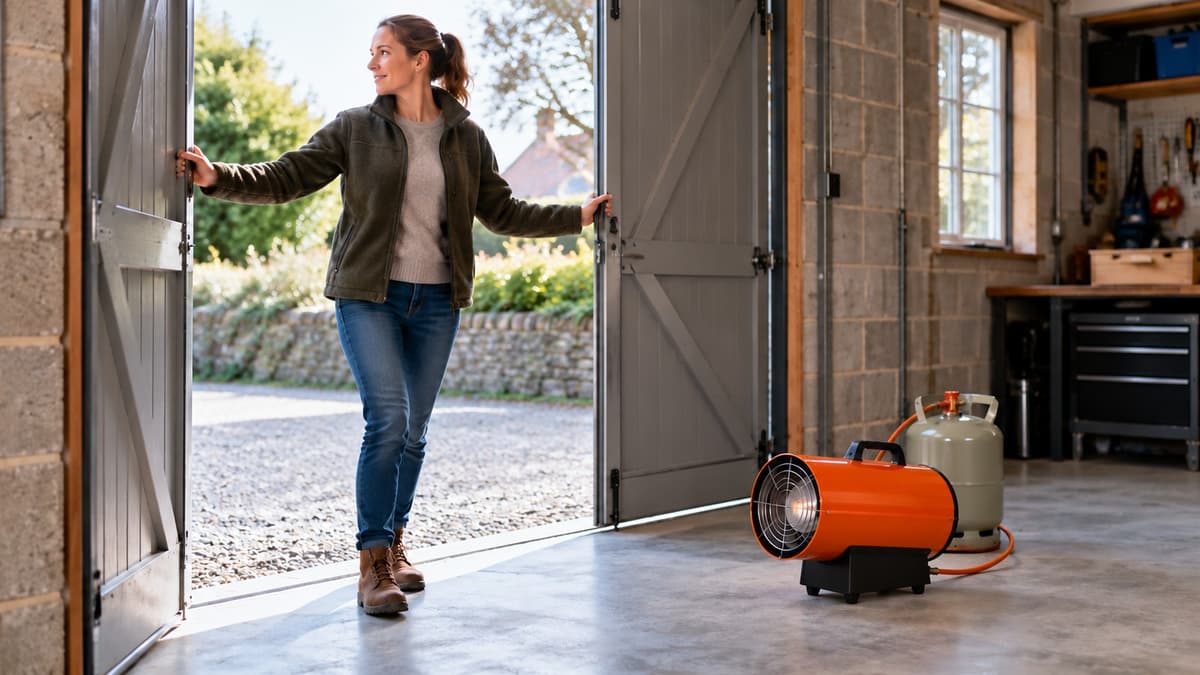
LPG heaters and the air in a garage
Why a flueless propane blower, ventilation and petrol vapour demand more than a casual buying decision.

Three-phase before you buy a workshop heater
Check why a 15 kW electric heater needs more than an ordinary UK household socket.
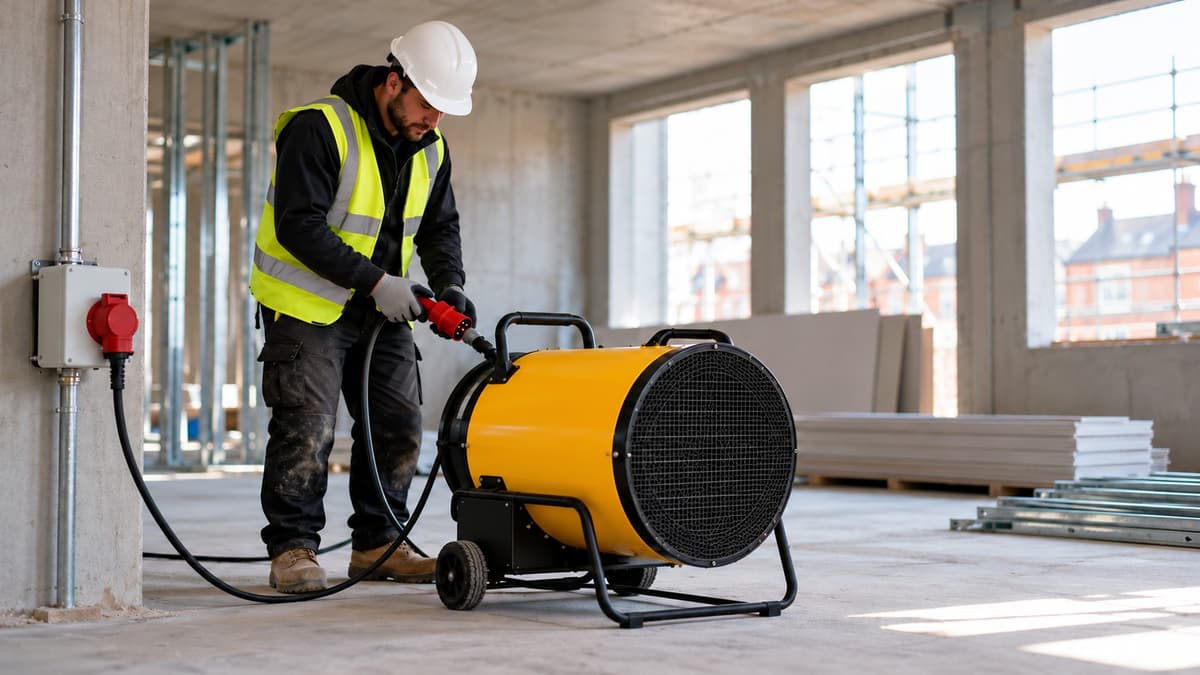
Temporary heat on a building site
Match temporary site heating to the available supply, working space and ventilation.