Temporary heating on a construction site: plan it safely
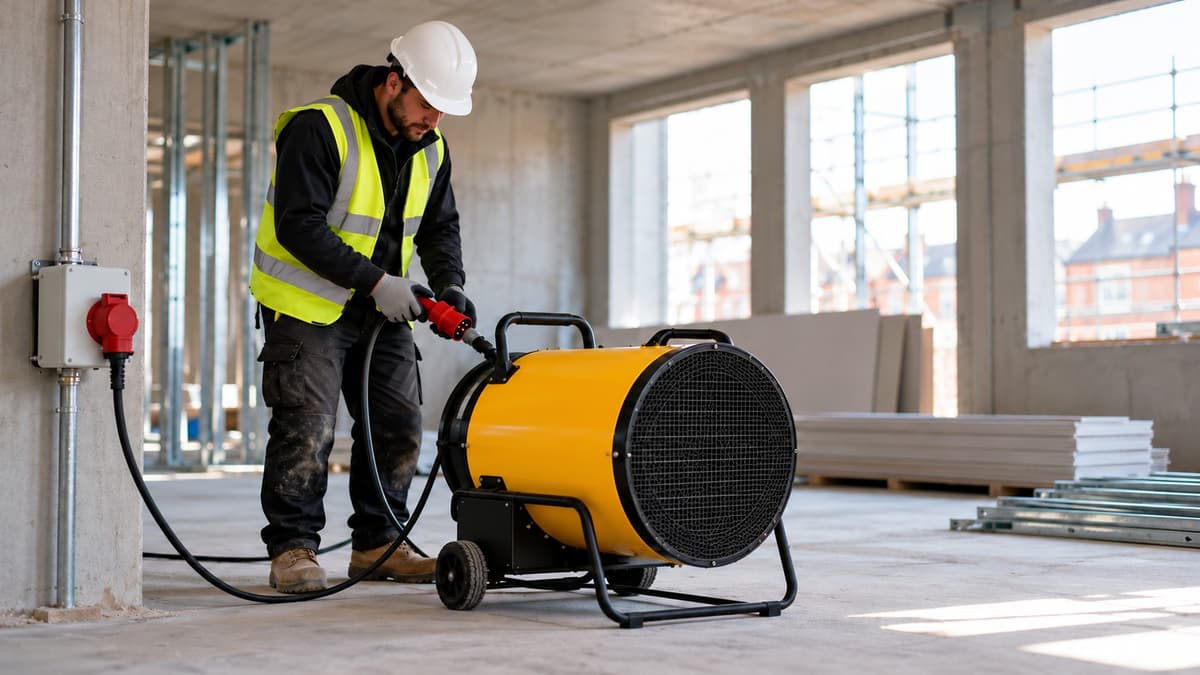
Choose temporary heating on a UK construction site around the available supply, 400 V equipment, LPG ventilation, fire controls and competent design.
On this page
Temporary heating on a construction site in the UK starts with the supply and the space, not the biggest heater in a catalogue. A 110 V tool transformer does not make a 15 kW electric blower usable, because that class of heater commonly needs a designed 400 V supply. If you turn instead to flueless LPG in a hut, ventilation must remain effective even when everyone wants to shut out the cold.
In short
Match the heater to a temporary electrical system designed by competent people, or to a controlled LPG arrangement with dependable ventilation. A small 230 V electric fan may heat an enclosed room, while a 15 kW electric unit needs 400 V and LPG introduces combustion, cylinder and fire controls. Stop before specifying circuits, gas work or ventilation rates yourself.
Start with the site, not the heater
Define the job before you choose fuel or output. A small drying room, an open shell and a welfare hut are different tasks. Record the room, openings, people, combustibles, duration and whether you need comfort, frost protection or process drying. A listing that names "construction site" as a recommended use does not make it a site method.
Identify what supplies actually exist. HSE guidance HSG141 covers temporary systems using 230 V and 400 V as well as the 110 V reduced-low-voltage arrangements familiar from portable tools. Those supplies are not interchangeable. Give the heating brief to the person responsible for the temporary installation. Distribution, protection and connections have to be designed, not assembled around the plug on the heater. A homemade sketch or an adaptor chosen because the connectors appear to fit is not a substitute.
Why 110 V tools do not settle the question
Yellow 110 V kit is common on UK sites because reduced low voltage lowers shock risk for portable tools. That does not mean a heater sold for sites will run from the same transformer. Voltage, current, phases and connection have to match a circuit provided for the heater.
A 2 kW or 3 kW heater may be a 230 V appliance, but that does not grant permission to use any socket or extension available. Confirm the manufacturer's supply requirement and let the competent person check the circuit, protection, loading and environment. Site leads are exposed to traffic, sharp materials and water, and extension reels and shared circuits add failure points.
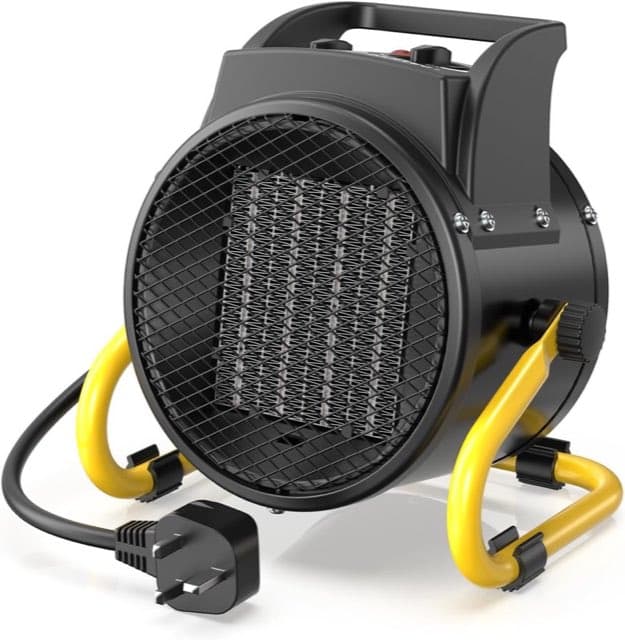
The featured DAHTEC BGP1506-02 is a modest choice, not a universal site solution. Its amazon.co.uk listing states 2 kW, a draw of 8.33 A at 220 V, a 1.60 m lead, 1 kW and 2 kW heat settings and a 25 W fan-only mode. Consider it for a small enclosed room only after a suitable supply is confirmed. The listing gives no splash rating or tip-over switch, so the compact metal body is not permission for wet or exposed use. Compare that type of appliance in the construction heater guide after the location and supply are settled. If the only temporary distribution is 110 V for tools, a 230 V or 400 V heater still will not fit.
Using a 15 kW electric heater
A 15 kW electric fan heater in the researched listings is three-phase equipment and needs 400 V. It will not run from a 110 V tool transformer, and a 13 A socket cannot supply it. Other three-phase plant does not prove spare capacity or a suitable outlet where you want the heat.
State the space, hours, temperature, moisture and whether people work around the heater. A competent electrical designer then decides whether the temporary system can carry the load and how it should be connected and protected. This article does not give cable sizes, protective-device ratings or a distribution diagram.
After a correct connection, keep the intake and outlet clear, follow the manufacturer's clearances and keep materials, dust sheets and drying clothing out of the airflow. Protect the unit and cable from plant and site traffic without blocking an escape route. A handle does not make it safe to move the heater while the casing is hot. Warm air blown through an open façade can use a lot of energy with little benefit where people work, so divide the task into controlled zones where you can. Our 15 kW fan heater comparison explains product differences; the installation remains a competent-person decision.
LPG heat in huts and welfare rooms
LPG looks attractive when the electrical system cannot take a high-output heater, but a flueless appliance uses oxygen and releases combustion products into the room. HSE warns about carbon monoxide from fuel-burning equipment in construction, including temporary huts. Ventilation is part of the heating arrangement.
The predictable failure is that cold occupants cover a grille because it creates a draught. That can defeat the control that made the appliance tolerable. Make the reason for each vent clear, stop casual obstruction and check it during use. If the room cannot stay warm while the required ventilation stays open, change the heating choice or the hut arrangement.
Do not rely on smell to detect carbon monoxide; it has no smell. Headache, dizziness, nausea, weakness or confusion around combustion equipment need fresh air and the site's emergency procedure. An alarm, where specified, does not replace ventilation, maintenance or correct use.
Gas work has a competence boundary. HSE guidance for employers covers gas safety and construction-site huts. Use an appliance intended for the situation, follow its instructions and have installation, servicing or other gas work done by someone appropriately competent. A gas fan heater may still need electricity for its fan. For the air hazard, read carbon monoxide from temporary heat and LPG heaters and garage air. Never trade ventilation for a warmer thermostat reading.
Control cylinders, vents and fire
Treat LPG cylinders and heater use as part of the site's fire-risk controls. HSE process-fire guidance covers the storage and use of LPG on construction sites, including the need to control ignition and manage cylinders rather than leaving them wherever the heater was last moved. Storage location, quantities, segregation and protection depend on the project, so they should be set in the site arrangements and communicated to everyone who receives, moves or connects cylinders.
Keep routes and exits clear. A heater, lead, hose or cylinder in an escape path adds a second hazard. Hot work, smoking controls, flammable products and charging equipment also decide where combustion heating can run. Recheck when the phase of work changes, because finishes, solvents and partitions arrive later.
Portable electric heaters need the same change control. Dust, damaged leads, blocked grilles and heaters moved close to combustible materials can undo the original plan. Inspect equipment as the site system requires, take damaged units out of service and let heaters cool before you move them. Do not defeat a cut-out or prop a control to keep heat running. RC15 favours fixed heating and says portable-heater use should be agreed with the insurer. That is guidance rather than a general ban, but policy terms still matter. Ask before you deploy the heater and record any conditions on supervision, location or hours.
A practical pre-start check
Use a short written check each time the heater is introduced or moved to a materially different area. This check is a prompt, not an electrical design or gas assessment.
- Name the room or zone, why heat is needed, how long it will run and whether the space is occupied.
- Record the stated voltage, phases and load, or the LPG type, and have a competent person confirm it.
- Keep airflow, required ventilation, access and escape routes clear, and note water, dust, traffic and combustibles.
- State who starts, checks and stops the heater, what happens at breaks and how long it must cool before it is moved.
- Recheck after new partitions, finishes, cylinders, extension leads or closed openings.
The list should show when you need specialist input. It is not a way to calculate a circuit or a ventilation rate from an article. HSG141 is the HSE starting point for temporary electrical supplies; HSE carbon-monoxide, process-fire and gas guidance frame the LPG controls.
The purchasing decision comes last. A compact 2 kW heater can suit one enclosed site room and fail in an open work area. A 15 kW electric blower needs a designed 400 V system. LPG can provide mobile output and brings combustion products, ventilation and cylinder controls. Choose the controlled method that fits the work.
Common questions
Will a 15 kW heater run from a 110 V site transformer?
Who should provide a 400 V heater outlet on a small site?
Can you use LPG heating in a site hut?
Can you close a vent because the heater creates a draught?
Where should LPG cylinders be kept on a construction site?
Should you ask the insurer before using portable heaters?
Is a 2 kW heater suitable for every construction site?

Peter F. is the editor for DIY & tools at productscompared.co.uk. Comparisons in this category are checked against amazon.co.uk listings, review evidence and public UK sources.
Related articles

Three-phase before you buy a workshop heater
Why a 15 kW electric heater needs a planned three-phase supply, not a standard socket.

Carbon monoxide from temporary heat
How combustion heaters create a carbon-monoxide risk when ventilation is restricted.
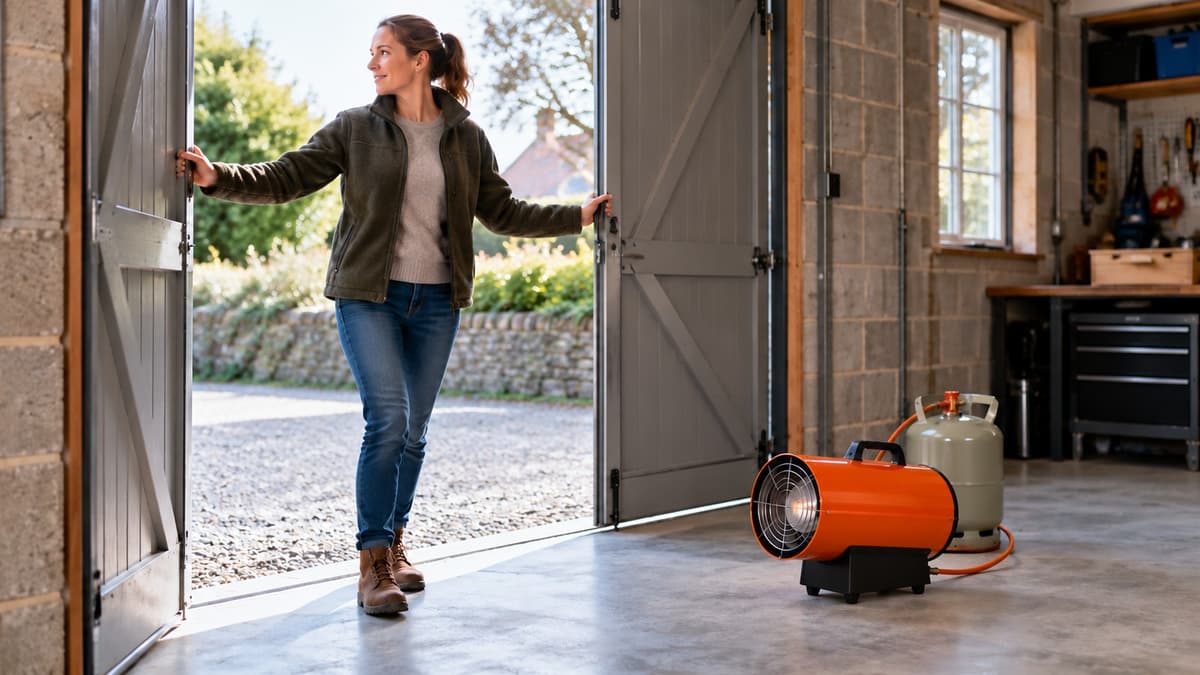
LPG heaters and the air in a garage
What flueless LPG heat changes about ventilation, air quality and where you work.