Electric or propane workshop heater: which suits you?

Compare an electric or propane workshop heater by supply, hourly cost, ventilation and heat quality before choosing a 15 kW blower for your workshop.
On this page

A cold workshop can make two very different machines look interchangeable. Both may carry a 15 kW headline, both may blow warm air across a concrete floor, and both may be sold for workshop use. An electric or propane workshop heater still asks you to solve a different supply problem: the electric model may require 400 V three-phase power, while the propane model still commonly needs a socket for its fan.
The decision is whether the workshop can support the machine safely, whether ventilation changes the value of the heat, and whether fuel, supply and fittings still make the purchase sensible.
In short
Choose a 15 kW electric blower when you already have a confirmed 400 V three-phase supply and want dry heat without combustion products at the heater. Consider propane only when you can provide the specified gas equipment, suitable ventilation and the electrical supply needed by the fan. Neither fuel is automatically cheaper per hour: the published rates showed only a small, conditional gap, and both energy prices can move.
Two machines that share a number
Fifteen kilowatts describes rated heat output, not how the heat is produced or what the machine needs around it. The featured DAHTEC IFHO3-150G electric blower lists a 95 W fan-only stage followed by 5 kW, 10 kW and 15 kW, plus airflow up to 2,246 cubic metres per hour, an adjustable thermostat and overheat protection.
The same listing requires 380–400 V three-phase and says the heater must not be connected to a 220–240 V household socket. Its 1.60 m lead is stated, but the plug type is not. Confirm the connector at your site rather than assuming it matches another 15 kW heater. At 14.5 kg, portable means movable around a suitable workshop, not compatible with every room.
A propane blower takes a different route. LPG supplies the heat, while mains electricity may still run the fan and controls. Propane avoids the large 400 V electric heating load, but it does not necessarily give you a heater that works without a socket. Compare the 15 kW fan heater options and the gas heater fan comparison by complete supply requirements, not fuel name alone.
Airflow is not a shortcut
Two listings may both quote airflow, yet the figures are not necessarily in the same units, and converting a number does not make the conditions identical. Treat airflow as a specification for that product. Room shape, open doors and where the blower stands still decide what you feel, and a high output does not replace the manufacturer's clearances.
What you pay at the till
Propane machines can look markedly cheaper at checkout than a large electric blower. That gap matters for occasional jobs, but the sticker price is incomplete. A propane setup may also require the correct regulator, hose and cylinder arrangement. The heater documentation, not a familiar patio fitting, decides what belongs in that setup.
The researched DAHTEC gas listing prints a regulator pressure of 700 mbar. That rules out casually recommending a 37 mbar patio regulator. A connector that appears to fit is not evidence of the right operating pressure. Check what comes with the heater and what must be bought separately before comparing baskets.
Electric heat has its own boundary. If the workshop already has a suitable 400 V three-phase outlet, the electrical side may be straightforward. If it has only normal UK 13 A sockets, the featured 15 kW machine is not compatible. The answer is not an adaptor or extension lead. Choose a heater suited to the available supply, or have the electrical requirement properly assessed.
A lower till price is not a saving if the gas fittings or the ventilation make propane unsuitable. A higher electric price is reasonable when the workshop already has the right supply and you want dry heat.
What an hour costs, with the limits
Hourly cost should be calculated from current inputs. For electric heat, you need the heater's selected output and your electricity rate. For propane, you need the stated fuel consumption and the price you actually pay for LPG. Compare both at the same output and period, or a lower setting on one side is being set against full power on the other.
At the published rates the hourly difference was small and depended on those rates, so treat it as a warning rather than a bill. Ofgem's price-cap period, Calor's fuel information, a business tariff or a local LPG deal can all differ from a domestic headline. Recheck both sides when you buy.
Running cost does not describe useful heat. An electric blower produces dry heat at the point of use. A flueless propane machine produces combustion products, so ventilation is part of operation, and equal rated output does not guarantee equal retained warmth. For the figures, use what 15 kW of heat costs per hour and treat the result as a snapshot.
Fumes, vents and a socket for the fan
Electric resistance heat does not create combustion products where the heater stands. That does not make every electric machine suitable for every place. The supply still has to match, the listing's indoor-use instruction still matters, and the heater needs sensible positioning rather than being crowded beside stored materials.
Propane changes the air question. The Health and Safety Executive identifies carbon monoxide from fuel-burning equipment as a construction health risk. With a flueless workshop blower, ventilation is part of whether the method suits the space. A garage containing petrol vapour is especially poor territory for a casual fuel-burning heater.
A product title that says garage or workshop is not permission to run the machine in a sealed room. If the required ventilation defeats the purpose, choose another approach. The fan and controls can still need mains power even when LPG supplies the heat. Missing voltage information is an unanswered buying question.
Read LPG heaters and garage air before selecting combustion heat for an enclosed workspace. If you cannot provide the specified gas train, ventilation and fan supply together, that propane heater is not ready to use.
Choose by workshop, not fuel label
Start with the supplies already present. Confirm a suitable 400 V three-phase outlet, not merely a powerful-looking socket. For the featured electric heater, also confirm the connector, because the lead length is listed and the plug type is not. If you only have a household socket, cross that 15 kW electric model off rather than planning an improvised connection.
Then decide whether combustion heat suits the room: ventilation, fuel storage and the manufacturer's instructions. An open door is not a substitute, and petrol vapour should rule out a casual propane choice. Compare the complete purchase, including the specified regulator and hose on gas, and only genuine electrical work on the electric side, then recheck hourly cost at matching output.
The featured DAHTEC electric listing has one UK review, shared with the silver version, so it is not a product test. This comparison uses amazon.co.uk listing details and public UK guidance, not a lab test. A qualifying Amazon purchase can earn a commission at no extra cost to you.
A choice with a condition
Where the workshop already has confirmed 400 V three-phase power, electric is the cleaner decision at the point of use: dry blown heat, no local combustion products, and stated output stages on the featured DAHTEC model. A normal UK household socket cannot supply that machine, and its connector should be confirmed before purchase.
Propane is the conditional alternative when that large electric supply is unavailable but the space can support combustion heat correctly. It may cost less to buy, yet it still asks for the right regulator and hose, ventilation, and often mains power for the fan. If any one of those conditions is missing, the purchase price does not make it suitable.
Choose electric when confirmed three-phase power and dry heat outweigh the higher machine price. Choose propane only when the gas specification, ventilation and fan supply are all clear. If neither set of conditions is met, use a heater built for the supply you have.
Common questions
Which is cheaper to buy, an electric or propane workshop heater?
Which costs less per hour at 15 kW?
Does a propane workshop heater work without electricity?
Is 15 kW propane heat the same as 15 kW electric heat?
Can I use a 15 kW electric heater in a normal UK socket?
Can I use a propane blower in a closed garage?
Can I use a patio-gas regulator on a workshop heater?

Peter F. is the editor for DIY & tools at productscompared.co.uk. Comparisons in this category are checked against amazon.co.uk listings, review evidence and public UK sources.
Related articles
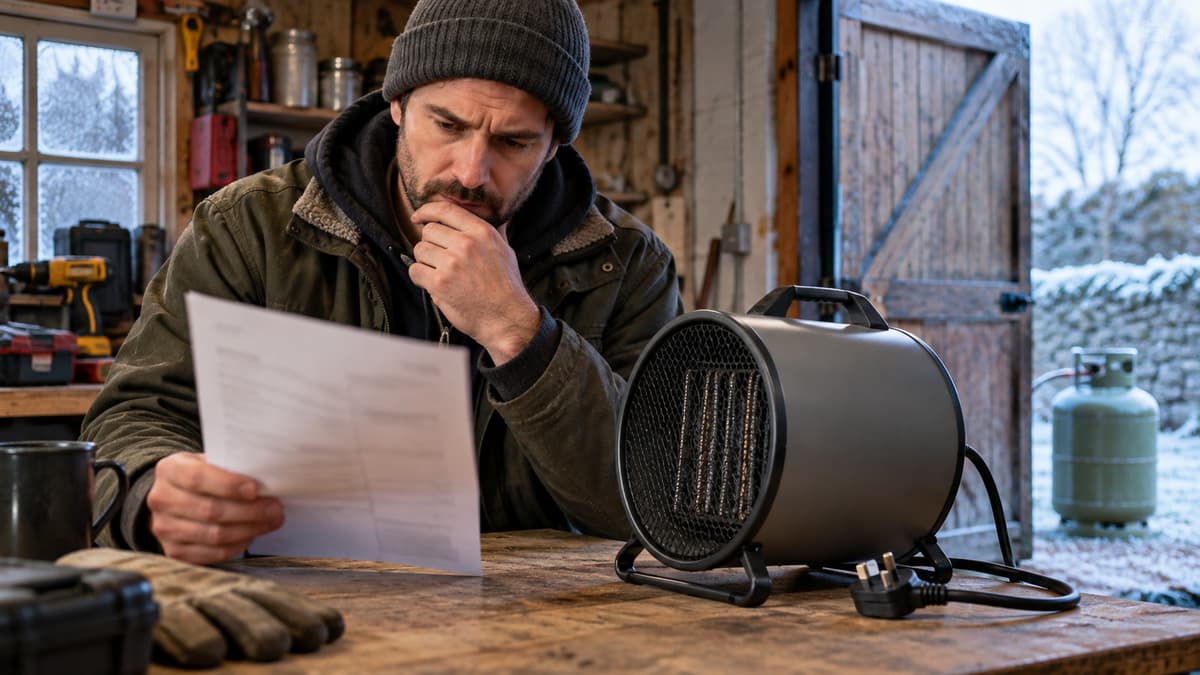
What 15 kW of heat costs per hour
See why the purchase price alone does not reveal the likely cost of full-output heat.

Three-phase before you buy a workshop heater
Check why a 15 kW electric blower is not simply a larger heater for a household socket.
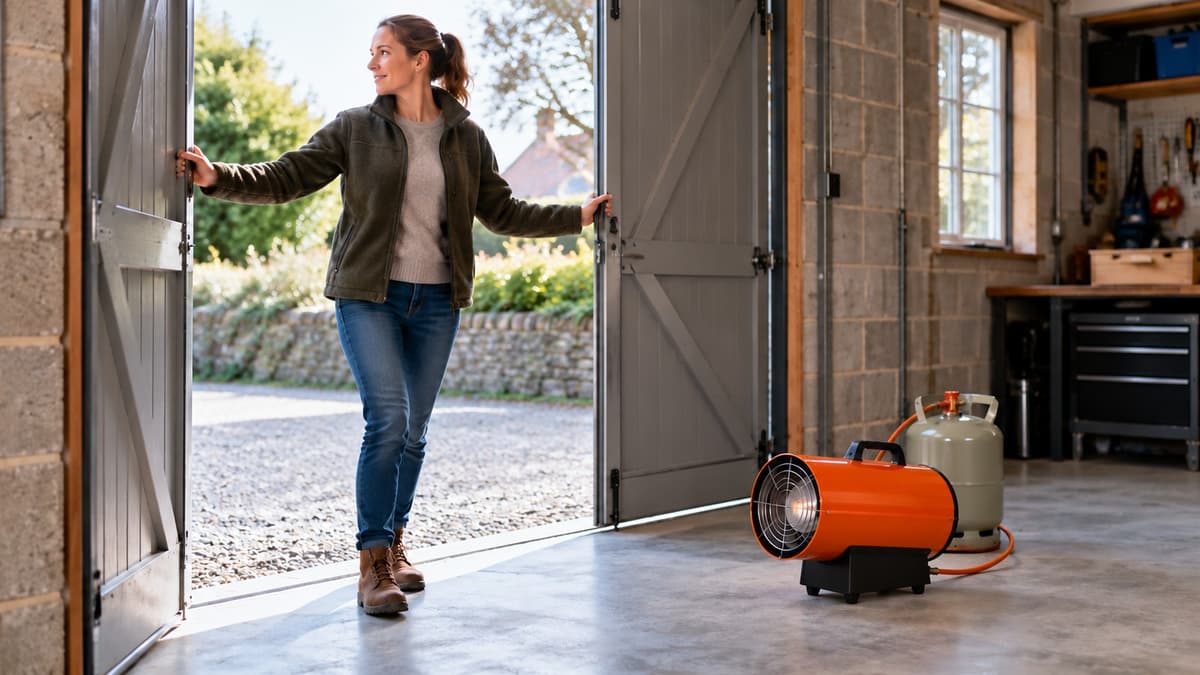
LPG heaters and the air in a garage
Understand the ventilation question before using flueless propane heat in a garage.