Independent comparisons. We may earn from shop links. More info

How to use spider spray

Updated: 23 October 2026

A fresh trigger bottle after a house spider on the stairs is a familiar autumn moment, yet misting the middle of the carpet achieves almost nothing. How to use spider spray means a narrow perimeter for frames and thresholds, not an air freshener. Unless you clear cobwebs and seal gaps first, a film on the frames still leaves you guessing whether new spiders are crossing the sill. If you still need a bottle, our [spider spray comparison](/hub/pest-control/spider-spray) covers the current UK options. A purchase through a link can earn a commission at no extra cost to you.

A fresh trigger bottle after a house spider on the stairs is a familiar autumn moment, yet misting the middle of the carpet achieves almost nothing.

Our top picks

On this page

Before you spray: clear webs and test a patch

Start with a vacuum, a glass and a card before you twist the nozzle. Silk does not hold an even film, and old webbing makes it impossible to tell later whether the barrier is keeping new spiders out. The British Pest Control Association pairs physical removal with gap sealing, because housekeeping alone will not close an unsealed vent. Catch visible spiders with a glass and card and release them outdoors, away from the house. Vacuum corners, behind radiators and under cupboards so webs, egg sacs and prey insects are gone. Seal gaps around utility pipes, skirting and external doors where a liquid film cannot bridge an opening. Shake the bottle if the label says so, as Invigortex WildGuard does, then test a drop on a hidden corner of paint or fabric and wait an hour. Oils and solvents can ring matt emulsion and painted sash windows.

Where to spray, and where never to spray

A barrier belongs on narrow entry points: window frames, door thresholds, skirting gaps and air bricks. It does not belong across open floors or furniture. A film along the edge a spider must cross gives peppermint oil a working boundary. Spray into open air and it is gone in minutes. Indoors, run a narrow band along sills, trickle vents, pipe collars and patio doors. Outdoors, treat shed frames, garage thresholds and plastic camera housings only if the label allows it, and keep the liquid off the lens. A deterrent and a contact aerosol are not the same placement. That split is in spider repellent vs spider killer spray. Never spray beds, mattresses, cots, toys or kitchen worktops. Do not spray pet bedding, kennels or hutches unless the bottle in your hand allows that surface. Keep children and pets out while frames dry, and follow the Health and Safety Executive surface rules on the label.

Nozzle settings, leaking triggers, and how much a house uses

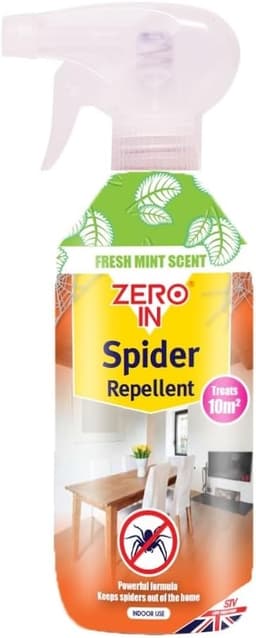
Most 500 ml triggers twist between a fine mist for low skirting and a tighter stream for ceiling corners. A narrow stream lets you trace coving without standing under falling droplets. UK reviews flag two traps: leaking necks and a bottle that empties faster than you expect. Users of 500 ml peppermint sprays report liquid weeping around the collar onto their fingers. Zero In STV981 carries an EUH208 warning that peppermint oil may cause an allergic skin reaction. Wash with soap and water after use, or wear household gloves if the neck weeps. A 200 ml aerosol can empty in about 20 seconds of continuous spray. Buyers treating every window, door frame and skirting line in a three-bedroom semi-detached house report using almost two 500 ml bottles, nearly a litre, in one go. Pack sizes are compared in the spider spray buying guide.

When to re-apply, and when to call someone

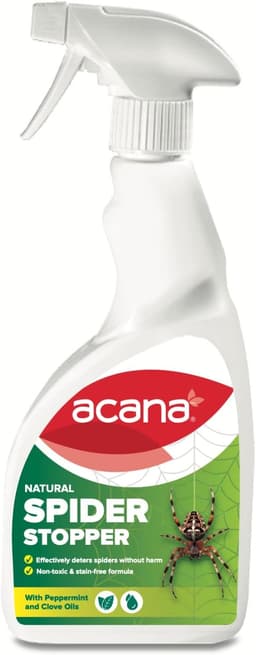
Zero In and Acana need re-applying every two to three weeks indoors, or sooner after you wipe the frames or after rain. Oils fade on PVC and painted wood, so one September coat will not last until November. A threshold film does not remove spiders already behind a wardrobe. A spider on the carpet the next day does not, by itself, mean the bottle failed. Reviews on STV981 note that indoor spiders often take a couple of days to move on, and open windows give them an untreated bridge. If you have vacuumed, sealed gaps and kept that routine and you still see heavy numbers, contact a BPCA-registered controller. If a suspected bite grows red, warm or painful, contact NHS 111. Call 999 for severe swelling or breathing difficulty. Use biocides safely, and always read the label before use.

Common questions

Where exactly should I spray spider repellent in a house?
Spray along narrow entry points where spiders enter or travel: window frames, trickle vents, external door thresholds, skirting corners and pipe gaps. Avoid carpets and the middle of a room. Peppermint oil and barrier films only work when a spider crosses a treated edge.
Should I vacuum cobwebs before or after spraying?
Always vacuum cobwebs, egg sacs and dead insects before you apply spider spray. Spraying over old silk wastes liquid on dusty strands that cannot hold an even barrier. Clean corners also let you see, over the next fortnight, whether new webs appear across the treated frames.
How often do I need to re-apply peppermint spider spray?
Most UK peppermint trigger sprays, including Zero In and Acana, tell you to re-apply every two to three weeks indoors. Re-apply sooner if you wipe window sills with detergent. Washing strips the scented film from PVC and painted wood. A 12-week title is not the working interval.
Does rain wash spider spray off outside window frames and cameras?
Yes. Rain washes water-based and essential-oil sprays off exposed outdoor surfaces such as external sills, shed doors and camera housings. If the label permits outdoor use, spray under sheltered eaves or top up the barrier once the surfaces have dried after wet weather.
Can I spray spider repellent on beds, cots or kitchen worktops?
No. Do not spray beds, mattresses, cots, children's bedding or kitchen worktops. Unless the physical bottle in your hand explicitly allows soft furnishings or pet housing, keep the spray on hard frames. Keep children and pets away while it dries.
Why did I still see spiders in the room the day after spraying?
A perimeter spray on window frames deters new spiders from crossing the sill. It does not kill spiders already hiding behind wardrobes, radiators or sofas. Leaving windows open in warm weather also lets spiders climb in without touching the treated frame. Give indoor spiders a couple of days to move on.

Related pages

Sources

Public UK sources used for this comparison. Shelf prices, stars and review counts are the amazon.co.uk figures captured for these five listings. Last checked 22 October 2026.

  1. HSE biocidal product types (retrieved 22 October 2026)
  2. HSE biocidal advertising (retrieved 22 October 2026)
  3. Acana Spider Stopper directions (retrieved 22 October 2026)
  4. HSE packaging and labelling (retrieved 22 October 2026)
  5. BPCA spider control (retrieved 22 October 2026)
  6. BPCA false widow sightings (retrieved 22 October 2026)
  7. NHS insect bites and stings (retrieved 22 October 2026)
  8. STV981 safety data sheet (retrieved 22 October 2026)