Independent comparisons. We may earn from shop links. More info

Spider spray in autumn

Updated: 23 October 2026

A giant house spider in mid-September, or a false widow web in October, starts a search for spider spray. Sightings that jump overnight are easy to read as a march in from the garden. Most large house spiders are already indoors and roaming to mate, and wet weather strips a barrier off outside sills. Our [spider spray comparison](/hub/pest-control/spider-spray) sets out the five bottles on amazon.co.uk. This page is the season: why September and October spike, what a frame spray can and cannot do, and when housekeeping or NHS bite advice is the better response. A purchase through a link can earn a commission at no extra cost to you.

A giant house spider in mid-September, or a false widow web in October, starts a search for spider spray. Sightings that jump overnight are easy to read as a march in from the garden.

Our top picks

On this page

Why sightings peak in September and October

The sudden large spiders in UK lounges and hallways are the indoor mating season, not a mass walk in from a cold garden. Giant house spiders live all year in dry voids under floorboards, in lofts and behind bath panels. Autumn is when adult males leave their webs to search for females. The British Pest Control Association reports that call-outs for noble false widow spiders peak in October, when mature spiders build untidy webs around window frames, conservatories and porch lights. Male house spiders are already inside the building. Peppermint on an external patio door will not stop one coming out from under the stairs in the evening.

What a barrier can and cannot do in autumn

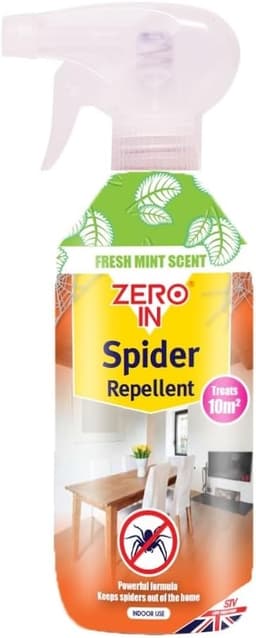
A peppermint barrier under GB BPR Product Type 19 lays a scented film on entry points that spiders prefer not to cross, if the spider is not already in the room. Treat internal frames, thresholds and skirting through September and October and you can cut newcomers at trickle vents and casement seals. The bottle does not kill on contact, and it cannot clear residents behind wardrobes. Oils against knockdown aerosols are in spider repellent vs spider killer spray. One buyer of the Zero In twin (B074PN6H85, about £12.90) kept spiders out of bedrooms by repeating every fortnight. Another emptied a 500 ml bottle around a garage and still saw spiders on the floor. Open windows in a warm spell brought spiders back within two days. A 12-week title still loses to the directions and the STV981 label: every two to three weeks.

Outdoor frames, sheds, wing mirrors and rain

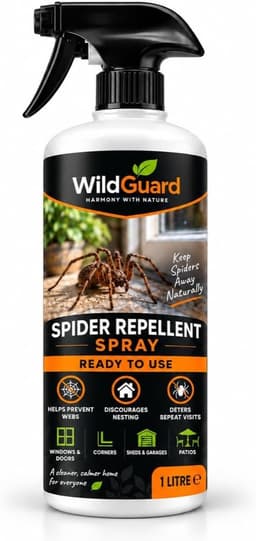
A water-based oil on exterior brick, a shed or a car wing mirror in October lasts less than an indoor frame, because rain and overnight damp wash the film away. An indoor reveal stays until you wipe it. An exposed sill can lose its scent after one downpour. Match the label and the repeat to the weather. Most 500 ml triggers here focus on indoor frames. Invigortex WildGuard (B0HLGBR2VS, about £12.95 for 1 litre) names peppermint, lavender and eucalyptus with castile soap for sheds, garages and exterior doors as well. The saved listing has no amazon.co.uk reviews, and rain still means a re-application. One buyer of Pestshield (B01CR88VCG, about £12.10) cleared a false widow web from a car wing mirror for several days. That aerosol hits one spider. It is not a rainproof film. Which bottle fits which job is on best spider spray.

Housekeeping, false widow bites, and NHS routes

The British Pest Control Association says native UK spiders are not a general health threat and puts non-chemical control ahead of sprays in the autumn peak. False widows are described by the BPCA and the Wildlife Trusts as non-aggressive. Bites usually happen when a spider is trapped against skin, and the pain is often compared with a wasp sting. A spray alone, with webs, flies and gaps left in place, keeps drawing spiders back. Catch wanderers with a glass and card. Vacuum corners and reveals, seal pipes, air bricks and draught excluders, and switch off porch lamps that attract moths. Use biocides safely, and always read the label and product information before use. Never spray beds, cots or food surfaces. Call a BPCA-registered professional if heavy numbers remain after that, or if you suspect a spider from overseas freight. If a bite worsens or looks infected, contact NHS 111 in England, Scotland and Wales. Call 999 for breathing trouble, a swollen mouth or throat, dizziness or collapse.

Common questions

Why do so many large spiders appear indoors in September and October?
Large dark house spiders in September and October are usually adult males that already live inside, under floorboards, in lofts or behind skirting. They leave their webs in autumn to roam across carpets and walls in search of females. They are not invading all at once from a cold garden.
When do false widow sightings peak in the UK?
The British Pest Control Association says public call-outs and sightings of noble false widow spiders peak in October. By early autumn, adults have reached full size and spin tangled webs around window frames, conservatories, porches and car wing mirrors to catch late-season flies.
Will a peppermint barrier on window frames stop spiders that are already inside?
No. A peppermint barrier on window frames and external doors will not clear house spiders that already live in wall voids, lofts or under floorboards. A Product Type 19 repellent only discourages spiders from crossing the treated strip. Indoor residents need a glass and card, or a vacuum.
How often do I need to respray in September and October?
Re-apply a peppermint spider barrier every two to three weeks during September and October, and sooner if you wipe the frames or if outdoor rain washes the film away. Even when an amazon.co.uk title claims up to 12 weeks, bottle directions and the STV981 label specify a two-to-three-week interval.
Does autumn rain wash spider spray off outside sills and car wing mirrors?
Yes. Wet autumn weather washes water-based essential-oil sprays off exterior sills, brickwork and car wing mirrors within days. If you treat outdoor thresholds or shed doors in October, wait for a dry spell and re-apply after rain. Clear a sheltered web by hand, then treat only if the label allows that spot.
Are false widow spiders aggressive, and what should I do if I am bitten?
The British Pest Control Association and the Wildlife Trusts say false widow spiders are not aggressive. They normally bite only when trapped or pressed against skin, with pain similar to a wasp sting. Contact NHS 111 if a bite worsens or swells. Call 999 for difficulty breathing, a swollen mouth or throat, or collapse.

Related pages

Sources

Public UK sources used for this comparison. Shelf prices, stars and review counts are the amazon.co.uk figures captured for these five listings. Last checked 22 October 2026.

  1. HSE biocidal product types (retrieved 22 October 2026)
  2. HSE biocidal advertising (retrieved 22 October 2026)
  3. Acana Spider Stopper directions (retrieved 22 October 2026)
  4. HSE packaging and labelling (retrieved 22 October 2026)
  5. BPCA spider control (retrieved 22 October 2026)
  6. BPCA false widow sightings (retrieved 22 October 2026)
  7. NHS insect bites and stings (retrieved 22 October 2026)
  8. STV981 safety data sheet (retrieved 22 October 2026)