Independent comparisons. We may earn from shop links. More info

Yacht varnish or Crystal Clear for windows?

Updated: October 2026

An old clear finish can leave a pale oak window looking orange, yet the usual advice is often to replace it with “tough” yacht varnish. Choosing yacht varnish or Crystal Clear for windows is really a choice about colour, solvent and maintenance rather than a simple contest of strength. Ronseal Crystal Clear is the water-based option and carries a non-yellowing claim; Ronseal Yacht Varnish is solvent-based and the maker warns that it may darken or mellow some timber. This guide explains when each claim fits. For the five exterior window products retained in our shopping comparison, see the [window varnish comparison](/hub/paints-and-varnishes/window-varnish).

An old clear finish can leave a pale oak window looking orange, yet the usual advice is often to replace it with “tough” yacht varnish.

Our top picks

On this page

Two Ronseal products, not one

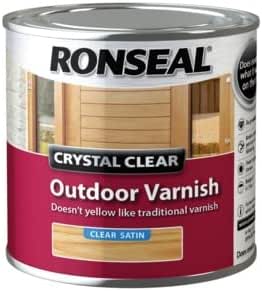
Crystal Clear Outdoor Varnish and Yacht Varnish are separate finishes. Crystal Clear is a water-based coating listed for exterior windows and doors. Ronseal says it will not yellow like traditional yacht varnish. The brush can be washed with water, the product page gives coverage of up to 16 m² per litre, and the stated recoating time is six hours. Yacht Varnish is a traditional solvent-based clear finish, also listed for smooth-planed exterior windows and doors. It needs white spirit for brush cleaning, is labelled high VOC and requires three coats with eight hours between coats. On a pale oak casement, Crystal Clear better matches a brief to keep the present colour. On an older softwood frame where a warmer finish is wanted, yacht varnish may fit better. Our window varnish buying guide explains exterior and interior-labelled tins.

Colour and the test patch

The clearest dividing line is the maker’s own wording. Ronseal’s trade Crystal Clear technical sheet says the water-based product will not yellow like traditional yacht varnish. By contrast, the consumer Yacht Varnish page says the product may darken the natural colour, while its technical information says some timbers may darken or mellow. If your previous coating turned amber and preserving a pale appearance is the priority, yacht varnish is therefore the less honest match. Test the actual finish on an inconspicuous part of the same window, then view it after it has dried rather than judging the liquid in the tin. A warmer yacht-varnish result may be permanent until the film is stripped.

Drying clocks, smell and clean-up

The Crystal Clear consumer page says it is rainproof in one hour and ready for another coat in six hours, while brushes wash in water. Ronseal’s trade technical sheet gives a maximum VOC content of 60 g/l for that Crystal Clear product. Do not copy that figure onto every pack without checking the label. Yacht varnish uses solvent, requires white spirit for clean-up and is described as high VOC. Ronseal gives four hours for rain protection and eight hours between coats, and says not to apply below 10°C. The consumer Yacht Varnish page says up to 16 m² per litre, whereas the trade page says up to 8 m² per litre. Do not average those figures. See our guide to varnish for exterior window frames.

Which finish should you choose?

Choose Crystal Clear when a pale colour and water clean-up are central to the job. Its non-yellowing claim answers an old amber finish. Customer reports of white marks after rain mean you should not treat “rainproof in one hour” as proof that every freshly coated frame is immune to moisture problems. Choose yacht varnish when you want a traditional solvent-based film and can accept a warmer or mellowed appearance. Leave enough time for the eight-hour recoating interval, and plan for white-spirit clean-up. No yacht-varnish ASIN was retained, so this page does not give yacht varnish a price.

Common questions

Will yacht varnish turn a new oak frame orange or brown?
No exact colour change can be promised without testing the timber. Ronseal says its Yacht Varnish may darken the natural colour and may darken or mellow certain timbers, so a pale oak frame could look warmer. Apply a small patch in an inconspicuous area and judge it only after it has dried.
Is Crystal Clear the one that claims not to yellow?
Yes. Ronseal’s Crystal Clear information describes it as water-based and says it will not yellow like traditional yacht varnish. That is a manufacturer claim for the specified product, not a guarantee that preparation, old coatings or moisture can never affect how a finished window looks.
Which product is solvent-based?
Ronseal Yacht Varnish is solvent-based and its brush-cleaning instructions call for white spirit. Crystal Clear is water-based and brushes wash in water. The difference affects smell, clean-up and VOC classification, but you should still ventilate the work area and follow the safety information on the exact tin.
Why are the rainproof times one hour and four hours?
They are separate claims for separate formulations. Ronseal gives Crystal Clear a one-hour rainproof claim and Trade Yacht Varnish a four-hour claim. Neither clock starts until the coating has been applied under suitable conditions, and neither replaces checking the forecast, timber moisture and minimum application temperature.
Why do Ronseal yacht pages show 8 m² and 16 m² per litre?
The trade Yacht Varnish page states coverage up to 8 m² per litre, while the consumer page states up to 16 m² per litre. Do not combine those figures. Follow the label for the exact formulation and pack you hold, then allow extra for porous timber, edges and profiles.
Can yacht varnish go over a water-based clear?
Do not assume the two films are compatible merely because both are clear varnishes. The existing coating must be sound, clean and dry, and the new tin’s instructions must permit the substrate. Test a small patch first; if the old film is peeling, soft or unidentified, remove or stabilise it before recoating.
Is yacht varnish included in this amazon.co.uk comparison?
No. The retained comparison contains five window-varnish listings, but no yacht-varnish ASIN. That is why this page compares the two product types using manufacturer information without inventing a yacht-varnish price, star rating or review count from another marketplace.

Related pages

Sources

Public UK sources and maker sheets used for the limits on this page. Prices, stars and review counts are from the amazon.co.uk listings. We did not run a lab test.

  1. SI 2012/1715 — VOC limits for trim varnishes (retrieved 17 October 2026)
  2. EN 927-1:2013 preview — stable end use for windows (retrieved 17 October 2026)
  3. Ronseal — Crystal Clear Outdoor Varnish (retrieved 17 October 2026)
  4. Ronseal Trade Crystal Clear technical data sheet (retrieved 17 October 2026)
  5. HSE — Lead FAQs (retrieved 17 October 2026)
  6. Dulux Trade — Substrate preparation (retrieved 17 October 2026)
  7. Dulux Trade — Woodstain and varnish FAQs (retrieved 17 October 2026)
  8. Consumer Rights Act 2015, section 22 (retrieved 17 October 2026)