Independent comparisons. We may earn from shop links. More info

Best varnish for window frames: five UK listings compared

Updated: October 2026

If you are refreshing a wooden sash or casement, the best varnish for window frames is not automatically the tin with the highest star rating or lowest price per litre. Of the five listings, Ronseal Crystal Clear Outdoor Matt 250 ml is the conditioned top pick because its stated uses include exterior windows and doors. That recommendation has caveats: the tin is small, three coats reduce its practical coverage, and some UK buyers report white marks after rain. See the [main window varnish comparison](/hub/paints-and-varnishes/window-varnish) for the five-product table; below, the decision is narrowed to the right listing for each job.

If you are refreshing a wooden sash or casement, the best varnish for window frames is not automatically the tin with the highest star rating or lowest price per litre.

Our top picks

On this page

The exterior window pick

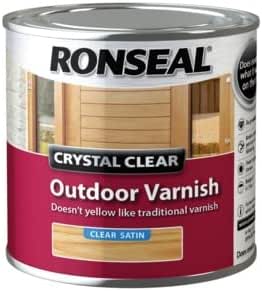
Ronseal Crystal Clear Outdoor Matt, model CCODVM250, is the most defensible choice here for an exterior wooden window. The manufacturer's UK information explicitly names windows and doors, describes a water-based finish and gives coverage of up to 16 m² per litre. It also specifies three coats, around six hours between coats and a claim that the coating is rainproof in one hour. The £13.03 Amazon listing is for only 250 ml. At the printed coverage rate, that is about 4 m² for one coat, or roughly 1.3 m² for three coats before you allow for absorbent timber, edges, end grain or brush loss. Skip it if several little tins make the project uneconomical or temporary whitening in wet weather would be unacceptable. Use the exterior window-frame guide to check whether clear varnish suits the condition of your joinery.

What the reviews do to that pick

The top pick is a listing match, not a lab-test winner. Its Amazon UK line showed 4.4 stars from 262 reviews, but comments include reports of white dots after rain, peeling on a Scottish shed, a finish perceived as satin rather than matt, and a 250 ml tin disappearing quickly on a small bench. These complaints do not prove that every correctly prepared window will fail; they do show that “rainproof in one hour” is not a guarantee of flawless appearance in every damp exposure. Ronseal's trade technical sheet gives a maximum VOC figure of 60 g/l, but that figure belongs to the trade document and was not independently measured from the Amazon tin. The liquid being milky in the container is consistent with a water-based product that dries clear, while a persistent white film after weather exposure is a different concern. The separate application guide covers preparation and coating order.

The lowest price per litre

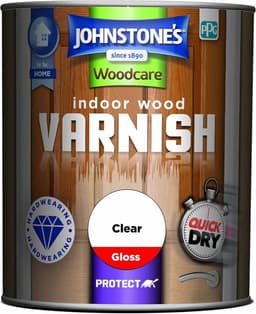
Johnstone's 750 ml varnish is the best-value listing only for an interior job that its listing supports. At £11.25, or £15.00 per litre, it costs much less per litre than the small Ronseal outdoor tin. However, the product title identifies a floor varnish, while interior windows are among the named uses. That is not enough evidence to promote it for the exposed outer face of a sash or casement. The 172-review figure is duplicated across the 250 ml and 750 ml listings, so it should not be read as two separate bodies of customer experience. Either can make sense for an indoor sill when the label permits it. Neither becomes an exterior recommendation because the larger pack has a better cost per litre.

What not to call a winner

DRW Outdoor Varnish names windows and offers a satin option, so it looks relevant at first glance. The listing supplied no star line, review evidence or coverage figure, while its price was £13.79 and its cost per litre was higher than the Ronseal outdoor listing. Missing evidence is not evidence of poor performance, but it prevents a responsible ranking above the product with clearer usage and coverage information. DRW is an unproven alternative, not a disguised Ronseal product or a winner by default. A blog preference for yacht varnish is not a comparative test of these five listings. Yacht varnish is a different coating type, and marine positioning does not establish that it is the best clear finish for your window.

Common questions

Which tin is the top pick for an exterior wooden window?
Ronseal Crystal Clear Outdoor Matt 250 ml is the conditioned top pick because the manufacturer's UK information names exterior windows and doors. Skip it if 250 ml is too little for three coats or if buyer reports of white marks after rain are unacceptable for your project.
Why is the 4.5-star Ronseal tin not the top pick?
Its 4.5 stars from 1,099 reviews relate to an interior listing associated with floor varnish. A larger review count can increase confidence about that listed use, but it does not establish suitability for the weather-exposed face of a wooden window.
Is Johnstone's 750 ml the best value for an outside frame?
No. It is the best-value listing by price per litre at £15.00, but its title is for floor varnish and the window use identified in the comparison is interior. Treat it as an indoor option, not a cheaper exterior equivalent.
Does rainproof in one hour mean the finish cannot turn white?
No. It is a manufacturer claim about rain resistance under the stated application conditions, not a promise that every substrate and exposure will look flawless. Amazon UK comments reporting white marks should remain part of your decision, especially on a prominent frame.
Should I buy DRW because it names windows?
Only if you can verify the missing details on the exact tin. Naming windows is relevant, but this listing supplied no star line, review basis or coverage figure. Its satin finish may suit your aim, although the evidence here is too thin to rank it first.
How much does a 250 ml tin cover with three coats?
At 16 m² per litre, 250 ml theoretically covers about 4 m² for one coat. Divide that by three and the result is roughly 1.3 m² for three coats before waste, extra absorption, edges and end grain reduce the practical area.

Related pages

Sources

Public UK sources and maker sheets used for the limits on this page. Prices, stars and review counts are from the amazon.co.uk listings. We did not run a lab test.

  1. SI 2012/1715 — VOC limits for trim varnishes (retrieved 17 October 2026)
  2. EN 927-1:2013 preview — stable end use for windows (retrieved 17 October 2026)
  3. Ronseal — Crystal Clear Outdoor Varnish (retrieved 17 October 2026)
  4. Ronseal Trade Crystal Clear technical data sheet (retrieved 17 October 2026)
  5. HSE — Lead FAQs (retrieved 17 October 2026)
  6. Dulux Trade — Substrate preparation (retrieved 17 October 2026)
  7. Dulux Trade — Woodstain and varnish FAQs (retrieved 17 October 2026)
  8. Consumer Rights Act 2015, section 22 (retrieved 17 October 2026)