Independent comparisons. We may earn from shop links. More info

How to varnish floor tiles

Updated: October 2026

You have washed a dry quarry or unglazed floor, the tin is open, and the mistake that marks the weekend is walking on a film that only feels dry. How to varnish floor tiles is a wait, a first-coat dilution and a roller warning, not one thick coat brushed on and forgotten. Touch-dry is not the cure. The listings sit on the [varnish tiles comparison](/hub/paints-and-varnishes/varnish-tiles). We did not run a laboratory test, and a qualifying purchase can earn a commission at no extra cost to you.

You have washed a dry quarry or unglazed floor, the tin is open, and the mistake that marks the weekend is walking on a film that only feels dry.

Our top picks

On this page

Prepare a dry, unwaxed floor

Polyvine’s product page treats wax and grease as a cause of failure, and the June 2026 sheet tells you to take both off before a coat goes down. Wash the floor and leave the grout dry to the touch. Invert the bottle to mix it. Do not shake the Polyvine tin or the HG bottle. A dinner-plate test patch in a corner shows whether the tile drinks the first coat or beads it. If the patch stays milky or lifts at the edge, the floor is not ready for the rest of the tin. Rising damp, or an old film peeling across a kitchen, is a different job, covered on the varnish for quarry tiles and slate page.

Polyvine coats and the 16 hour cure

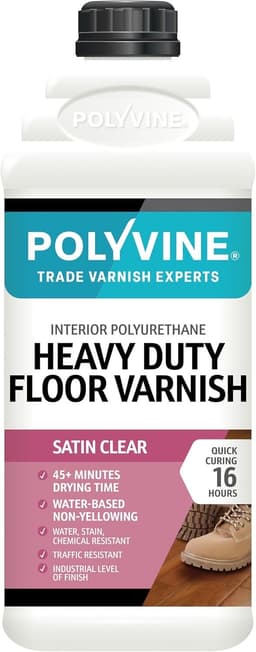
The June 2026 sheet is the clock for this polyurethane. On a porous floor the first coat takes about 10% water. Later coats go on neat and thin, and you stop at two or three satin coats. A brush is preferred. At 20°C the sheet gives about 30 minutes to dry, about 2 hours to recoat, and 16 hours to cure. The kept listing says touch dry in 45 minutes, recoat in 1–2 hours, and the same 16 hour cure. Neither lets you walk the kitchen. Polyvine cites BS 6150 and says do not apply below 8°C or above 30°C. Measure the tile, because quarry can sit colder than the air. Who this tin is for is on best varnish for tiles.

HG in straight lanes

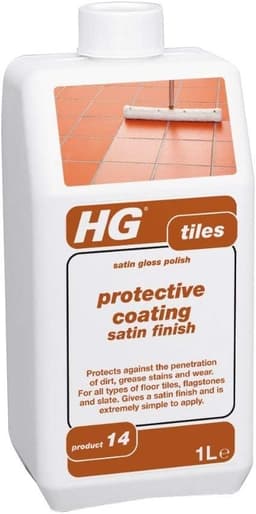
HG tile protector, product 14, is not laid like the polyurethane. The kept listing says the polish is fast drying and covers about 40 m² per litre per layer. B&Q and Tiling Supplies Direct add what the listing omits: do not shake, use a wax spreader or a lint-free cloth, and keep a long-pile roller for rough tile. Work in straight lanes. A separate 1 litre amazon.co.uk page says dilute 1:1. The kept twin does not, so do not thin this polish unless your bottle says so.

When to stop

You can finish a clean, dry interior yourself when the sheet names that surface and the test patch has dried clear. A film lifting across a whole kitchen has to come off first, and stripping a room that size is a contractor’s job rather than a new coat over the failure. A cold damp slab, or a floor with no damp-proof membrane, can whiten or peel under a closed film. A shower is outside Polyvine’s interior specification. If one of those is your floor, book someone who reseals stone. If none is, trust the cure the sheet prints. If you have not chosen the liquid, start with the varnish for tiles buying guide.

Common questions

How many coats do you put on, and which one is diluted?
Polyvine’s June 2026 sheet uses two or three thin coats. Only the first coat on a porous floor is diluted, at about 10% water. Later coats stay neat. Do not copy that 10% onto HG. The kept listing does not say to thin the polish, and a 1:1 line lives on a different 1 litre page.
When can you walk on Polyvine, as opposed to when it is touch dry?
At 20°C the sheet says dry in about 30 minutes and cured in 16 hours. The kept listing says touch dry in 45 minutes, with the same 16 hour cure. Recoat after about 2 hours on the sheet, or 1–2 hours on the listing. Walking, and putting furniture back, waits for the cure.
What temperature stops the job?
Polyvine’s current PDF says do not apply below 8°C or above 30°C, and it cites BS 6150. Measure the floor, because quarry can sit colder than the air. An older merchant figure of 5°C is out of date for this sheet. Sadolin’s 10–25°C window belongs to Sadolin, not to Polyvine.
How do you apply HG without lap marks?
Lay product 14 in straight lanes with a wax spreader or a lint-free cloth. Retailer pages reserve a long-pile roller for rough tile and put a cross coat at about 40 minutes. That timing is theirs. The kept listing does not print it. Circles pile the wet edge into a line you see once the polish dries.
What did the foam roller do in the HG review?
One UK review of the kept listing reported dimples from a foam roller and overlaps that stayed visible. The reviewer preferred a fur roller. It is one review, not a controlled test, so it does not condemn every roller.
When should you stop and call someone?
Stop if the film is lifting across the kitchen, if the slab is damp, if the floor needs a workplace slip test, or if the room is a shower. A clean, dry interior that the sheet names, with a clear test patch, is the job you can finish, if you wait for the cure rather than the touch-dry line.

Related pages

Sources

Public UK and maker sources used for the substrate, VOC and slip points on this page. Prices, stars and review counts are from the amazon.co.uk listings in this set.

  1. Polyvine technical data sheet, Heavy Duty Floor Varnish, June 2026 (retrieved 17 October 2026)
  2. Polyvine — Heavy Duty Floor Varnish (retrieved 17 October 2026)
  3. HG UK tile chart (retrieved 17 October 2026)
  4. SI 2012/1715 — VOC in paints and varnishes (retrieved 17 October 2026)
  5. HSE GEIS2 — Assessing the slip resistance of flooring (retrieved 17 October 2026)
  6. Workplace (Health, Safety and Welfare) Regulations 1992, regulation 12 (retrieved 17 October 2026)
  7. Lithofin — glazed tiles (UK) (retrieved 17 October 2026)
  8. Cadence — Aqua Stone varnish (retrieved 17 October 2026)