Independent comparisons. We may earn from shop links. More info

Stabilising solution vs PVA

Updated: 23 October 2026

Someone has told you to PVA the wall, someone else has said a mist coat, and the tin says stabilising solution. Those three names do three different jobs. PVA bonds a new plaster coat while it is still tacky. A mist coat is thinned emulsion for sound new plaster. A stabilising solution binds a dry surface that is still powdery after you scrape it. Brushing steps are on [how to apply stabilising solution](/hub/paints-and-varnishes/penetrating-primer/sub/penetrating-primer-how-to-apply). Prices for the six binders are on the [penetrating primer comparison](/hub/paints-and-varnishes/penetrating-primer). None of those ASINs is a PVA.

Someone has told you to PVA the wall, someone else has said a mist coat, and the tin says stabilising solution. Those three names do three different jobs. PVA bonds a new plaster coat while it is still tacky.

Our top picks

On this page

Three products, three jobs

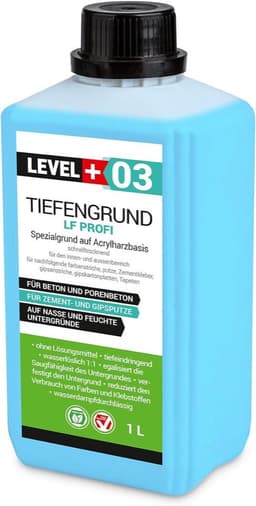
A stabilising solution, also called a penetrating primer, soaks into dusty plaster, render, or masonry and glues the loose particles. In SI 2012/1715 a binding primer stabilises loose particles, adds water-repellent behaviour, or protects wood against blue stain. The VOC caps are 30 g/l for water-borne and 750 g/l for solvent-borne, ready to use. PVA here is a polyvinyl acetate emulsion used as a plaster bonding agent and, on some sheets, as a diluted sealer. A mist coat is the finish emulsion thinned with water, so thirsty new plaster does not suck the first full-strength coat dry. If the wall is old and chalky, you are outside both cases. The hand test is on primer for chalky walls.

What PVA is specified to do

Everbuild 501 Universal PVA puts numbers on the split. For bonding plaster, use it undiluted and apply the plaster while the PVA is still tacky. The sheet cites BS 5270 for a gypsum plaster bond. That standard does not turn PVA into a paint primer for a chalky wall. For sealing porous plaster before a further coating, the same sheet gives 4 parts water to 1 part emulsion. That is still PVA used as a sealer, not a stabilising solution brushed into powdery render. Bostik’s plasterer’s grit is a skim key. Where suction is high and the background is chalky, that sheet points to diluted SBR first, then the grit. Outside, Dulux Trade sends sound bare masonry to a thinned masonry paint, and powdery masonry to a stabiliser.

New plaster you want to paint

Sound new plaster that has dried, and that does not dust, is a mist-coat job. Which? puts the mix at about half emulsion and half water, unless the emulsion tin prints its own ratio. Wait until the plaster is dry. A mist coat on plaster that is still green traps moisture. A dedicated primer is the alternative Which? allows, and it is still not an automatic stabilising solution. New gypsum that is firm and clean fails the chalk test. Your hand stays clean. Stabiliser on that face can leave a glassy film, because there is no loose layer for the binder to disappear into. If a filler patch powders, that patch can take a binder, and the sound plaster around it can take the mist coat.

When the stabiliser is the one to open

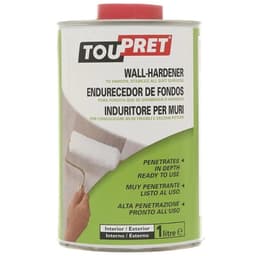
Open a stabilising solution, or a wall hardener, when the wall is dry and a scrape still leaves powder. That is old chalky plaster, powdery render, or dusty masonry, after damp is cured and hollow plaster is repaired. Sika’s sheet is a binder for chalky surfaces before paint, wallpaper, or tiles, and it says do not dilute. Dulux Trade keeps the same primer off sound surfaces. Toupret’s alcohol resin needs ventilation, no flame, and about 24 hours. Dry chalky plaster, after scraping, gets a stabilising primer or a wall hardener. Sound new plaster you are about to paint gets a mist coat. PVA is used undiluted, and still tacky, when you are bonding a plaster coat. If the wall is wet, salty, or crumbling, none of the three is the next tin. Call a professional for that wall, and for any pre-1980s paint you would have to strip.

Common questions

Can I paint over PVA on new plaster?
Emulsion can go over a PVA sealer, and many jobs are better without that sealer. Checkatrade advises against sealing new plaster with PVA glue, and points you to watered-down emulsion once the plaster is dry. Which? describes that mist coat as about half and half. If the PVA is a bonding coat under wet plaster, paint comes after that plaster has dried.
When is PVA the right product?
PVA is right when you are bonding a gypsum plaster coat. Everbuild 501 says to use it undiluted and to apply the plaster while it is still tacky, and it cites BS 5270 for that bond. A different mix on the same sheet is 4 parts water to 1 part emulsion. Neither line means neat PVA on chalky render and then emulsion.
When is a stabilising solution the right product?
Use it when the surface is dry and still powdery after you scrape and brush it. Sika specifies Stabilising Solution for chalky surfaces before paint, wallpaper, or tiles, and says not to dilute. Dulux Trade keeps that primer off sound surfaces. Wet walls, hollow plaster, and sound new plaster are outside this tin.
Does BS 5270 make PVA a paint primer?
On the Everbuild 501 sheet, BS 5270 is cited for the bond of gypsum plaster. That is the tacky, undiluted coat under new plaster. It does not certify PVA as a stabiliser for dusty masonry, and it does not replace a mist coat on sound new plaster.
Is a gritted plaster primer either of these?
It is a skim key, not a paint primer and not a PVA bonding coat. Bostik’s sheet helps a skim to stick, and on a chalky high-suction background it points to diluted SBR first. If you are decorating a dry chalky wall rather than skimming it, open a stabilising solution after the hand test.

Related pages

Sources

Public sources from the research digest, last checked on 21 October 2026. Shelf prices and star lines are the amazon.co.uk figures in the display file. The price band is this set, not a market average. No listing was lab-tested.

  1. SI 2012/1715, VOC in paints and varnishes (retrieved 21 October 2026)
  2. HSE: solvents (retrieved 21 October 2026)
  3. HSE: lead and old paint (retrieved 21 October 2026)
  4. Dulux Trade Weathershield Stabilising Primer (retrieved 21 October 2026)
  5. EVERBUILD 406 stabilising solution (retrieved 21 October 2026)
  6. BS 6150:2019, painting of buildings (retrieved 21 October 2026)
  7. Toupret wall hardener (retrieved 21 October 2026)
  8. Farrow & Ball stabilising primer sheet (retrieved 21 October 2026)