Independent comparisons. We may earn from shop links. More info

Penetrating primer: which tin to buy

Updated: 23 October 2026

You have scraped an old wall and the dust is still on your hand. A search for a penetrating primer then offers a stabilising solution, a deep primer, a wall hardener, and a gritted skim key. This guide is the order of that decision: whether the wall is still dusty, which chemistry the tin is, whether you may dilute it, and how the pack sits against the prices on our [penetrating primer comparison](/hub/paints-and-varnishes/penetrating-primer). The six amazon.co.uk rows stay on that page. Peter F. assembled this on 21 October 2026 from those listings and public UK sheets. It is not a lab test.

You have scraped an old wall and the dust is still on your hand. A search for a penetrating primer then offers a stabilising solution, a deep primer, a wall hardener, and a gritted skim key.

Our top picks

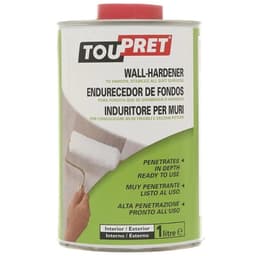
Toupret Toupret wall hardener

Best overall

Toupret Toupret wall hardener
8.0/10about £22.62
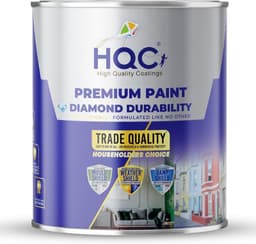
HQC HQC stabilising primer

Alternative

HQC HQC stabilising primer
4.3/10about £39.95
On this page

What a penetrating primer is for

A penetrating primer is a thin binding coat. It soaks into dusty, chalky, or very absorbent plaster, render, masonry, or old paint and glues the loose particles so the next coat has something sound to hold. On a tin you will also see stabilising primer, stabilising solution, deep primer, and wall hardener. In SI 2012/1715 a binding primer stabilises loose particles, adds water-repellent behaviour, or protects wood against blue stain. A water-borne binding primer is capped at 30 g/l VOC and a solvent-borne one at 750 g/l, ready to use. You buy one when the dry wall is still powdery. Dulux Trade says sound surfaces do not get this primer. The hand test is on primer for chalky walls.

Solvent, water-based, or a conflict

The Health and Safety Executive prefers a water-borne stabilising solution where it will still bind the dust. Ventilate, and keep solvent out of a small closed room. Everbuild 406, sold as Sika Stabilising Solution, is a fine polymer emulsion, milky in the tin, clear when dry, 5–10 m² per litre, and it says do not dilute. Dulux Trade Weathershield and Sandtex Trade are aimed at powdery masonry. Sandtex sits in VOC subcategory A/h with a maximum of 749 g/l. Toupret’s wall hardener is an alcohol resin. The maker’s UK how-to says ventilate, keep flames away, and leave it uncovered by solvent polyurethane or epoxy. Two 5 litre tins, both about £39.95, print both stories. HQC’s bullets say solvent-based, and the paint-type line says water-based. The Landlords title says water-based, and a bullet plus the paint type say solvent. Read the tin before you use either in a bedroom. PVA against a mist coat is on stabilising solution or PVA.
Toupret Toupret wall hardener

Testsieger

Toupret Toupret wall hardener
8.0/10about £22.62

Dilution and coverage

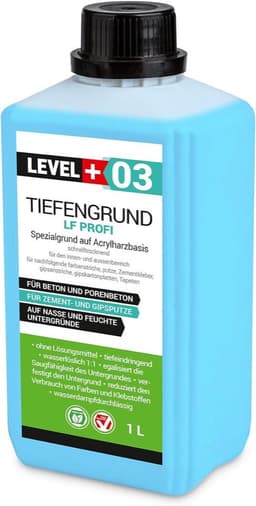
Follow the line on the tin you bought. Everbuild 406 and Bostik Stabilising Solution both say do not dilute. Level Plus 03’s bullets allow 1:1 with water on weakly absorbent surfaces. Level Plus 02 prints no ratio. Using the 1:1 line on a do-not-dilute stabiliser leaves the wall dusty, or glassy so paint will not key. Sika puts a second coat only on a surface that is still extremely porous. Level Plus 02 prints 0.20 litres per square metre. The 1 litre Level Plus 03 prints 5–20 m² per litre. Toupret, HQC, and Landlords print no coverage. The £8.38 tin is the smallest spend, and that capture has no review text.

How the six listings sit on that order

Read the six rows as a check, not a new ranking. Toupret at about £22.62 has the UK reviews of dusty plaster, and the listing says powder in one line and 1 litre in another. Level Plus 02 at about £14.98 for 10 litres is the lowest litre price, with German review text only. The two £39.95 tins contradict themselves on solvent versus water. If the dust test fails, leave all six. None of the scores is a pull-off test.

Common questions

What is a penetrating primer if the tin says stabilising solution?
They are the same job under different trade names: a thin coat that binds loose particles before you paint. A wall hardener such as Toupret’s alcohol resin is a different liquid from an acrylic deep primer. A gritted plaster primer that helps a skim to stick is a further product again. Match the sentence on the tin to the wall, then check dilution and where you can use it.
Do I need one on sound new plaster?
Leave it if the plaster is sound, dry, and free of dust. New plaster that is ready to paint usually takes a mist coat of emulsion thinned with water. Dulux Trade tells you to keep stabilising primer off sound surfaces. A binding primer is for the wall that still dusts after you have scraped it.
Should I choose solvent or water-based for a bedroom?
Choose a water-borne binder when it will still hold the dust, and ventilate the room. A solvent stabilising primer, or Toupret’s alcohol resin, needs airflow and no ignition source. If the listing says both water-based and solvent, read the label before you use it in a bedroom.
Can I dilute it?
Only when that tin says so. Everbuild 406 and Bostik Stabilising Solution say do not dilute. Level Plus 03 says 1:1 with water on weakly absorbent surfaces, and Level Plus 02 prints no ratio. The 1:1 line belongs to one acrylic deep primer in this comparison. It is not a house rule for every brand.
How much area does 5 litres cover, as a planning figure?
Use about 5 m² to 10 m² per litre from the trade sheets in this category, which puts 5 litres at roughly 25–50 m² before a second coat on a hungry patch. That is a planning band, not a measurement of your wall. Sika prints 5–10 m² per litre. Toupret, HQC, and Landlords print no coverage on these captures.

Related pages

Sources

Public sources from the research digest, last checked on 21 October 2026. Shelf prices and star lines are the amazon.co.uk figures in the display file. The price band is this set, not a market average. No listing was lab-tested.

  1. SI 2012/1715, VOC in paints and varnishes (retrieved 21 October 2026)
  2. HSE: solvents (retrieved 21 October 2026)
  3. HSE: lead and old paint (retrieved 21 October 2026)
  4. Dulux Trade Weathershield Stabilising Primer (retrieved 21 October 2026)
  5. EVERBUILD 406 stabilising solution (retrieved 21 October 2026)
  6. BS 6150:2019, painting of buildings (retrieved 21 October 2026)
  7. Toupret wall hardener (retrieved 21 October 2026)
  8. Farrow & Ball stabilising primer sheet (retrieved 21 October 2026)