Independent comparisons. We may earn from shop links. More info

How to apply stabilising solution

Updated: 23 October 2026

The tin is on the bench and the wall has already earned a binder: it is dry, and a scrape still leaves dust. This page is how to apply stabilising solution, from the brush-off to the moment you may paint. One drying time does not fit every brand. Product choice stays on the [penetrating primer buying guide](/hub/paints-and-varnishes/penetrating-primer/sub/penetrating-primer-buying-guide). The six rows stay on the [penetrating primer comparison](/hub/paints-and-varnishes/penetrating-primer). Peter F. wrote this on 21 October 2026 from maker sheets. It is not a site visit.

The tin is on the bench and the wall has already earned a binder: it is dry, and a scrape still leaves dust. This page is how to apply stabilising solution, from the brush-off to the moment you may paint.

Our top picks

On this page

Prepare the face

Scrape and brush back to a sound face before any stabiliser goes on. Bostik’s UK sheet says to scrape to sound material, to cure damp, and to leave no algae untreated. Everbuild 406 will not restore render that has already disintegrated, and it should stay off below 5°C or outside if rain is due within 6 hours. The coat cannot dry the wall. If the plaster sounds hollow, or a screwdriver goes in, stop and read the damp and hollow cases on primer for chalky walls before you open the tin. HSE notes that lead pigments were common until the 1960s and remained in some paint into the early 1980s. Do not dry-sand or burn that paint.

Brush it in and watch for shine

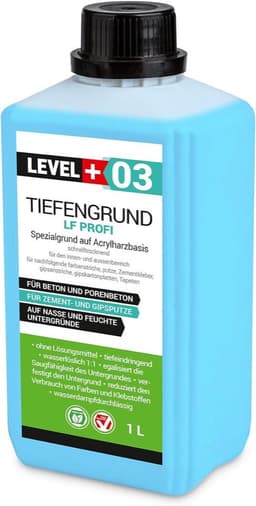
Brush or roll a ready-to-use stabiliser into the surface until the dust is bound, and stop before a spare film sits on top. Sika says do not dilute, and to brush from the bottom upward. Dulux Trade specifies brush or roller and does not recommend spray. A second coat is for a wall that is still hungry after the first has dried. Sika limits that to surfaces that are extremely porous. Sandtex says one liberal coat and not to over-stabilise. A glassy skin means the product sat on the face. Level Plus 03 allows 1:1 with water only on weak suction. That line does not transfer to a do-not-dilute tin. Use a brush unless the sheet in your hand allows a gun and you can ventilate. If you are still unsure whether this wall wants PVA, that comparison is stabilising solution or PVA.

How long you wait

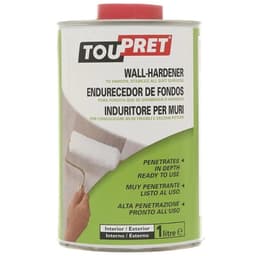
Read the tin in your hand, and treat every other number as someone else’s product. At 20°C, Sika puts touch-dry at 2–4 hours. Bostik allows up to 12 hours, above 5°C. Sandtex Trade quotes a 16 hour recoat. Dulux’s consumer page says touch-dry in about 4 hours, above 10°C. Dulux Trade Weathershield quotes 16–24 hours. Toupret’s alcohol-resin hardener is about 24 hours, with the room ventilated. Level Plus 02 and the 1 litre Level Plus 03 print 2.0 hours, while the listing titled 10 litres prints 0.5 hours. Do not borrow 30 minutes from that conflicting pack. Below 5°C, Everbuild 406 stays in the shed, and rain inside six hours can wash an exterior coat. A shiny first coat means more film, not more binding. Wait out the recoat on your tin, then test a patch.

Solvent, flame, and when to stop

Solvent products, and Toupret’s alcohol resin, need ventilation and no flame. Do not cover Toupret with solvent polyurethane or epoxy. HQC and Landlords, both about £39.95, each print water-based and solvent on the same capture. Do not treat a bedroom as settled until you have read the label. Stop when the wall is wet or salty, when render is crumbling, when pre-1980s paint has to be stripped, or when the only tin that fits is solvent and the room will not ventilate. A stabiliser will not rebuild disintegrated render or cure damp. Sandtex does not recommend decorating Fletton commons or facings. If the coat has gone glassy, take that film off and start again.

Common questions

Do I scrape before or after the stabiliser?
Scrape and brush first, back to a face that is sound enough to bind. Stabiliser on loose flakes glues them down for a short time and then lets go with the paint. Bostik’s order is scrape to sound, then the solution, after damp is cured and algae are treated.
Should I use one coat or two?
Start with one coat brushed in until the dust is bound. Add a second only when the first has dried and the wall is still absorbent. Sika limits that second coat to surfaces that are extremely porous. A shiny first coat means you have already over-stabilised.
What if it dries shiny?
The product has sat on the surface instead of soaking in. Paint will struggle to key, and more stabiliser adds more of the same skin. If a whole wall has gone glassy, that film has to come off before you decorate. Do not dilute a do-not-dilute tin to chase a matt finish.
Can I thin it with water?
Only when your tin says so. Everbuild 406 and Bostik Stabilising Solution say do not dilute. Level Plus 03 allows 1:1 with water on weakly absorbent surfaces, and that bullet belongs to that acrylic deep primer. Level Plus 02 prints no ratio. Water in a solvent stabilising primer is the wrong thinner. If HQC or Landlords arrived, read the label, because those listings contradict themselves.
When is it too cold, and when do I stop?
Everbuild 406 should not go on below 5°C, or outside if rain is due within 6 hours. Bostik wants the same 5°C floor. Dulux’s consumer page quotes above 10°C. Brush is the default: Dulux Trade does not recommend spray. If the wall is wet, salty, or crumbling, stop. A binder will not cure damp or rebuild fallen render.

Related pages

Sources

Public sources from the research digest, last checked on 21 October 2026. Shelf prices and star lines are the amazon.co.uk figures in the display file. The price band is this set, not a market average. No listing was lab-tested.

  1. SI 2012/1715, VOC in paints and varnishes (retrieved 21 October 2026)
  2. HSE: solvents (retrieved 21 October 2026)
  3. HSE: lead and old paint (retrieved 21 October 2026)
  4. Dulux Trade Weathershield Stabilising Primer (retrieved 21 October 2026)
  5. EVERBUILD 406 stabilising solution (retrieved 21 October 2026)
  6. BS 6150:2019, painting of buildings (retrieved 21 October 2026)
  7. Toupret wall hardener (retrieved 21 October 2026)
  8. Farrow & Ball stabilising primer sheet (retrieved 21 October 2026)