Independent comparisons. We may earn from shop links. More info

Boiled linseed oil for garden furniture

Updated: 22 October 2026

The bench has greyed over a wet British winter, and you want one oil to feed the wood before the next spell of sun. Boiled linseed oil for garden furniture is a fair choice when the timber is softwood and the label says so. It is the wrong hope when the table is exterior oak or teak, and it is not a coating with a stated number of years. The six listings and their prices are on the [boiled linseed oil comparison](/hub/paints-and-varnishes/boiled-linseed-oil). Peter F. checked these outdoor claims on 20 October 2026 against maker sheets and the amazon.co.uk files, not against a weathering rig. A qualifying purchase can earn a commission at no extra cost to you.

The bench has greyed over a wet British winter, and you want one oil to feed the wood before the next spell of sun.

Our top picks

On this page

Softwood benches, sheds, and fences

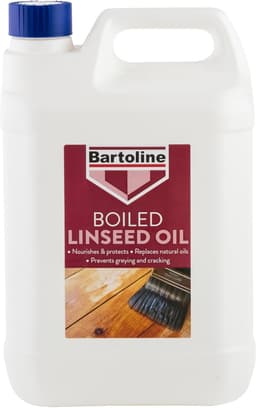
Bartoline’s technical data sheet is written for this job. It says the oil is especially suitable for softwood garden furniture, that it helps the wood after long periods in the sun, and that you get a natural sheen from additives that speed drying. The product sheet allows internal or external use on unpolished wood, about 16 hours at 23°C, and about 10 m² per litre. Two or three coats, 24 hours apart, with the excess removed, is the technical sheet’s method. Sheds and fences are the same softwood feed if the wood is bare. They are not a different chemical. In this set the outdoor pair is the Bartoline 500 ml flask, B00BTESRH4, at about £7.65 with 4.6 from 484 reviews, and the 5 litre bottle, B008B6HCK6, at about £29.95 with 4.6 from 374. The 500 ml bullets name softwood garden furniture and include a cloth-fire line. UK reviewers say it soaks into dry softwood and that a little goes a long way, which is the right size for one bench or a couple of chairs. The 5 litre listing says outdoor use, a satin water-resistant finish, and touch dry in about 14–24 hours. Reviewers buy it for fences, sheds, gates, and summerhouses. More than one UK review of the 5 litre bottle could not unscrew the cap because oil had dried in the thread.

Exterior oak and teak are a different oil

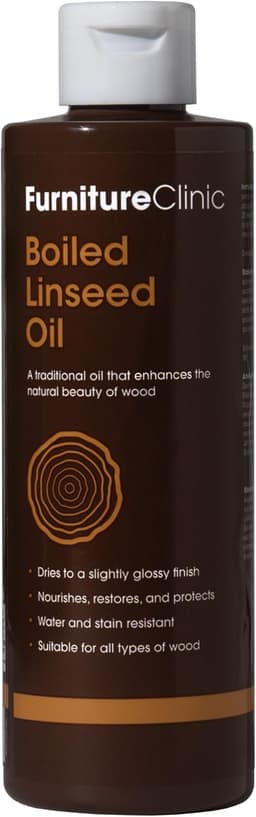
Oak and teak stop this oil even when the furniture lives in the garden. Bartoline tells you to use teak oil on those species. Furniture Clinic’s bullets exclude exterior oak, and the product page explains why: oak is porous, the oil soaks deep, and damp weather can let mould grow before the surface dries. Libéron excludes exterior oak as well. A stockist page points that oak job toward Libéron pure tung oil. Tung oil is outside this comparison. It is the maker’s redirect, not a product scored here. The same companies do not speak with one voice about every garden piece. Furniture Clinic’s product page still allows exterior wood except exterior oak, and a UK review used the oil on an outside pine table. Furniture Clinic’s separate article on oil for wood furniture says to avoid boiled linseed oil on all garden furniture. Those are two pages. The label on the bottle you are holding is the one you can follow, and for Bartoline that label’s job is softwood. One UK buyer of the 500 ml flask found the not-for-oak line only after the new oak bench was already coated. Materialix names garden furniture, fences, sheds, and decking in the bullets, while the outdoor-furniture question on the listing is unanswered. Naming a bench is not the same as a softwood-only sheet with an oak redirect.

Sheen and water resistance are not a year count

The 5 litre Bartoline listing sets “is waterproof” to true and the water-resistance level to water resistant. The bullets say a water-resistant finish against cracking, greying, and sun damage on softwood garden furniture. That is a maintenance claim for softwood, not a warranty that exterior oak stays dry for five years or any other number. No source here gives a year count for waterproofing oak with this oil. Grey will come back as the surface weathers. You recoat bare softwood. You do not expect a varnish skin. Materialix says the oil guards against moisture while letting the wood breathe, and it leaves the UV question unanswered. A food-contact test to Regulation (EC) No 1935/2004, which that tin does claim, is not a UV rating for a south-facing bench. Furniture Clinic’s 250 ml title says interior and exterior and still excludes exterior oak, with coverage stated as 50 square feet rather than a lifetime. One UK review called two coats of the Bartoline 500 ml “waterproofing”. The listing question “Does it protect against water?” is unanswered, so that review is one person’s result. Read water resistant as help for softwood between recoats.

Thin coats outside, and the cloth

Outside, the same thin-coat rule applies, with the weather added. Bartoline wants the excess off and about 24 hours between coats. If you start late on a 5 litre job, UK reviewers say the wood can still be wet that evening, and one review calls the oil watery and slow to dry in. A cold, damp day is a reason to wait, not a reason to load the brush. East Sussex Fire & Rescue Service and Northamptonshire Fire and Rescue Service treat linseed-oil cloths as an oxidation risk wherever you used them. A piled rag can smoulder. The oiled bench is not that hazard. Hang the cloths flat outside, soak them, or use a metal container, and do not carry a warm bundle into the kitchen. Bartoline’s 500 ml bullets already mention cloth disposal. The 5 litre bullets in this capture do not, though a UK review says cloths can self-ignite. Rotten legs, a listed facade, or timber that is soft under the grey surface are a specification job. Oil will not replace a joint. If the bench is sound softwood, two or three thin coats and a plan to recoat when the sheen has gone is the use these labels describe.

Common questions

Is boiled linseed oil meant for softwood garden benches?
Yes, when the label says softwood. Bartoline’s technical sheet is written for softwood garden furniture, with a natural sheen and two or three coats about 24 hours apart. The 500 ml flask at about £7.65 matches a single bench. The 5 litre bottle at about £29.95 matches sheds, fences, and several pieces if you will use it and the cap will turn. UK reviewers describe the oil soaking into weathered softwood. They also report stuck caps on the large bottle.
Can you use it on an oak or teak garden table?
Bartoline says no, and points you to teak oil. Furniture Clinic and Libéron exclude exterior oak because the oil soaks in and damp weather can bring mould before it dries. A UK review of an oak bench, or of a pine garden table, does not remove that line. If you have already oiled oak, wiping the surplus does not convert the job into the softwood use on the sheet.
Will it stop the wood going grey for a set number of years?
No year count is stated in these listings or on Bartoline’s sheet. The 5 litre bullets say a water-resistant finish against cracking, greying, and sun damage on softwood. Grey returns as the surface weathers, which is why people recoat. Materialix leaves the UV question unanswered. Do not read “water resistant” as a multi-year waterproofing warranty for oak.
Is the 500 ml flask or the 5 litre bottle the outdoor buy?
500 ml at about £7.65, about £15.30 a litre, is enough for a bench or chairs when reviewers are right that a little goes a long way. Five litres at about £29.95 is about £5.99 a litre and is the buy for fences, sheds, gates, and summerhouses. The 5 litre bottle is poor value if the cap is seized, which more than one UK review reported, or if you only have one small stool.
Does “water resistant” on the 5 litre listing mean waterproof oak?
No. The field says water resistant, and the bullets tie that finish to softwood garden furniture. Oak and teak are outside Bartoline’s boiled-linseed job. Waterproof on the attribute line does not add a year count, and it does not override the species limit. Coverage is not printed on that listing. Bartoline’s own sheet, for the oil generally, says about 10 m² per litre.
Can you put it on a shed, a fence, or decking as well as a chair?
Yes for bare softwood, which is how UK reviewers of the 5 litre bottle use it, on fences, sheds, gates, and summerhouses. The chair and the shed share the same limits: thin coats, excess wiped, exterior oak excluded, and cloths not left in a pile. Decking is named on the Materialix bullets, not as a tested lifespan, and the UV question there is unanswered. Caplin names outdoor benches and leaves the same outdoor question unanswered.
What do you do with the cloth when you finish in the garden?
Treat it as the fire risk, not the bench. Hang it flat outside, soak it, or put it in a metal container, following East Sussex and Northamptonshire guidance and your council’s rules for oily waste. Do not fold it into a plastic bag in the shed overnight. If it is already smoking, call the fire service. Bartoline’s smaller flask mentions cloth disposal in the bullets. The large bottle’s reviews mention self-ignition even where the bullets do not.

Related pages

Sources

Public sources from the research digest, last checked on 20 October 2026. Shelf prices and star lines are the amazon.co.uk figures in the display file. The price band is this set, not a market average. No listing was lab-tested.

  1. East Sussex Fire & Rescue Service: fire hazards of linseed oil (retrieved 20 October 2026)
  2. Northamptonshire Fire and Rescue Service: oil-cloth combustion (retrieved 20 October 2026)
  3. Bartoline boiled linseed oil safety data sheet (retrieved 20 October 2026)
  4. Bartoline boiled linseed oil technical data sheet (retrieved 20 October 2026)
  5. Bartoline boiled linseed oil product sheet (retrieved 20 October 2026)
  6. Libéron boiled linseed oil (retrieved 20 October 2026)
  7. Furniture Clinic: raw vs boiled linseed oil (retrieved 20 October 2026)
  8. GOV.UK: food contact materials authorisation guidance (retrieved 20 October 2026)
  9. Fiddes boiled linseed oil (retrieved 20 October 2026)