Tap water or rainwater for misting houseplants: cooled

Tap water or rainwater for misting houseplants: orchid pages prefer rainwater or boiled water that has cooled. Overnight standing leaves the chalk in the jug.
On this page
You fill the mister at the kitchen tap because the fern is there and the rainwater butt is not. Tap water or rainwater for misting houseplants is two decisions at once. One is what the leaf and the roots tolerate. The other is what a fine nozzle does with the minerals you just poured in. Cold water from the spout adds a third problem: a shock to tissue that orchid pages avoid by saying the water should be at room temperature.
The Royal Horticultural Society's orchid tips prefer rainwater, or boiled water that has cooled. Grow Tropicals says standing tap water overnight deals with a chlorine smell and leaves the limescale minerals behind. Products Compared did not test jugs or nozzles in a lab. Listing lines below are from this amazon.co.uk set on 15 October 2026. A qualifying purchase can earn us a commission at no extra cost to you.
In short
Tap water or rainwater for misting houseplants splits by the plant. Orchid advice prefers rainwater or boiled water that has cooled to room temperature. Standing tap water overnight does not remove the chalk. A jug filter is the indoor alternative for many plants, and hot kettle water stays out of the bottle.
Two reasons the water matters
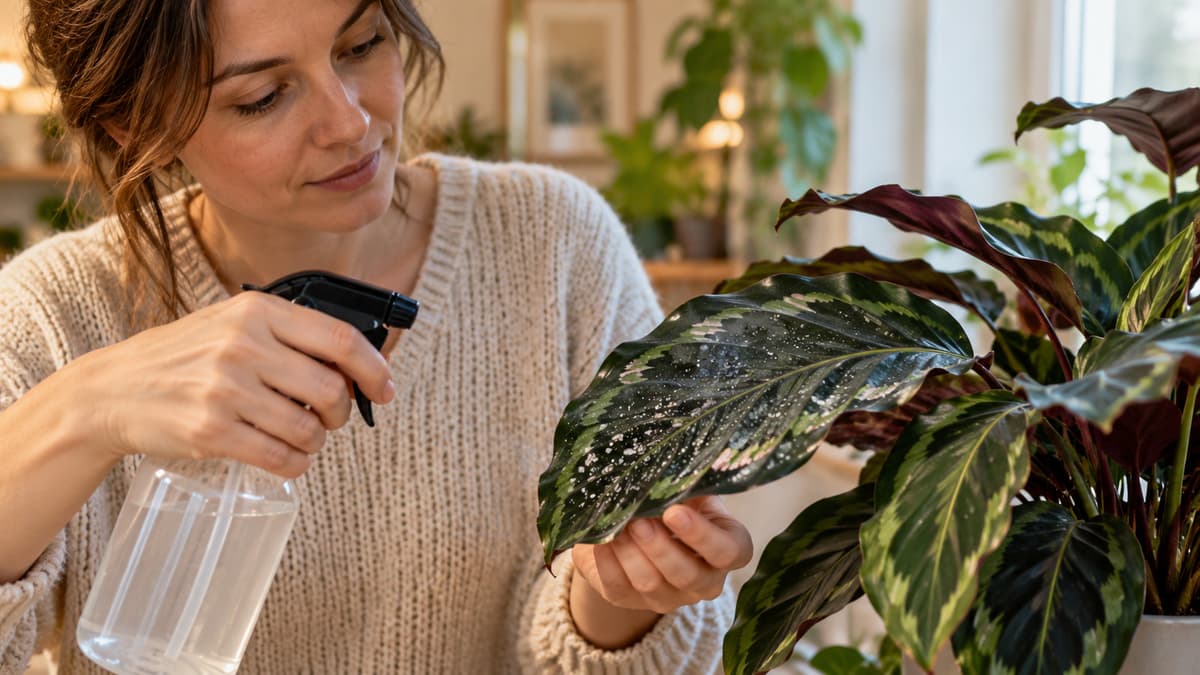
The leaf reason is what dries on the surface. Hard tap water leaves a pale film once the droplet has gone, which is why a calathea can look spotted the evening after a mist. The nozzle reason is the same minerals in a much smaller hole. A 0.3 mm outlet, the size stated on the white GRIFEMA (B0DXTLWVBL), furs the way a kettle element furs, and the spray turns from a mist into blobs. Blobs soak crowns. The plant and the bottle fail together, for one ingredient.
Temperature is the other half of what to pour. Icy water on a winter morning is a shock, and water still hot from the kettle is a scald. Orchid pages that mention boiling say the water should be cooled to room temperature before you use it. Leave the jug until it matches the room, and keep kettle water out of a plastic bottle.
Not every houseplant needs rainwater. The stricter preference in these sources sits on orchid pages, and on plants that dislike lime. A tough foliage plant may shrug at the tap while an orchid and a carnivorous pot do not. Decide for the plant you are about to spray, then decide again for the nozzle if the mist is already turning coarse. The spray bottle comparison is the hardware. This page is only the jug.
What orchid advice actually says
The Society's Phalaenopsis guide tells you to water when the plant is almost dry, and to use pale, silvery roots as the cue. It says mist lightly in summer, and it tells you not to wet the crown. The humidity box on that page does not name a water source. Daily misting of foliage and aerial roots in hot weather is a leaf job, not permission to spray cold tap water.
The water source sits on the Society's top tips for orchids at home: rainwater, or boiled water at room temperature. That is the sentence to follow for a moth orchid's mister. It is not a claim that every windowsill plant in the UK must be taken off the tap. Azaleas, gardenias and carnivorous plants are grouped with orchids by GardenAction's older UK note as plants that dislike lime. Use that note as a secondary pointer beside the Society's line on the orchid in front of you.
Crown, aerial roots, and the summer mist are set out on the orchids and ferns page. Fill the bottle only after the water has cooled, and keep the pass light enough that the crown stays empty. If you bottom-water the pot with hard tap water, you have solved the leaf film and left the lime in the compost. For a lime-hating orchid, the jug matters in the pot as well as in the mister.
Hard tap water and the white mark
Grow Tropicals describes the white spots as limescale from hard tap water. Much of England is hard, and they name the South East and East among the hardest. The Drinking Water Inspectorate's hardness page is the definition for a UK supply. Read it for what hard means at the tap. Do not expect a fern recipe or a safe acid. A furred kettle is the household clue that your mister will fur too.
The marks themselves, and how to wipe a sturdy leaf without inventing a vinegar ratio, are on hard water marks on houseplant leaves. The Guardian's caution on 8 September 2026 stands: acids are discussed as hacks, with a warning not to believe every tip. This page will not add a dilution. Change the water, or stop misting that leaf, before you reach for lemon.
Bottom watering keeps hard tap water off the foliage. It does not soften the water the roots receive. A fern that only shows chalk on the leaf can stay on the tap in the saucer and move to rainwater in the mister. An orchid on the lime-hating list wants the better water in both places. A succulent usually wants no mist at all. Wet leaves on a dry-air plant are a rot problem.
Standing, filtering, boiling
Three household moves get confused. Standing a jug overnight lets a chlorine smell fade. Grow Tropicals says it does not remove limescale minerals. If your only issue was the smell, the overnight jug is enough, and it has the side benefit of reaching room temperature. If the issue is white spots or a furred nozzle, that jug still carries the chalk.
A jug filter is their indoor alternative when you cannot collect rain. They say a filter cuts enough calcium for many plants. That is a nursery's practical claim, not a test of every cartridge on sale, and not a promise that a filter equals rainwater for a carnivorous plant. Replace the cartridge when the maker says so. An exhausted filter is tap water with extra steps.
Boiling, then cooling, is the orchid tip and GardenAction's chalk-mark habit. Scale stays in the kettle. The water you pour off has to cool to room temperature before it enters the mister or touches a leaf. Rainwater remains Grow Tropicals' first choice: a lidded can, not a bucket of leaves and bird dirt. In a flat, the filter or the cooled kettle is the realistic pair. How often you then pull the trigger is on how often to mist houseplants. The best jug still fades as a humidity treatment within minutes.
What not to add
Keep the mister a water bottle. Thick oils are what the black GRIFEMA listing (B0CMPTSGL4) tells you to avoid. That line is a clog limit, not a pesticide approval. Pesticide concentrates, homemade pest mixes, and anything you would need a MAPP number to store belong on the product's own label, in its own container. The rules are on pesticide in a spray bottle. Do not add a drop in a 200 ml mister.
Do not add vinegar or lemon as a standing ingredient. No ratio on this page is Royal Horticultural Society advice, and an acid left in the bottle is what the next fern receives. Fertiliser in the mister is a separate product decision. If a feed label tells you to spray it, follow that label. If it does not, water the compost as the feed instructs and leave the mister on plain water. A white crust from fertiliser salts can look like limescale. The University of Maryland Extension notes that look, as a US source on appearance only.
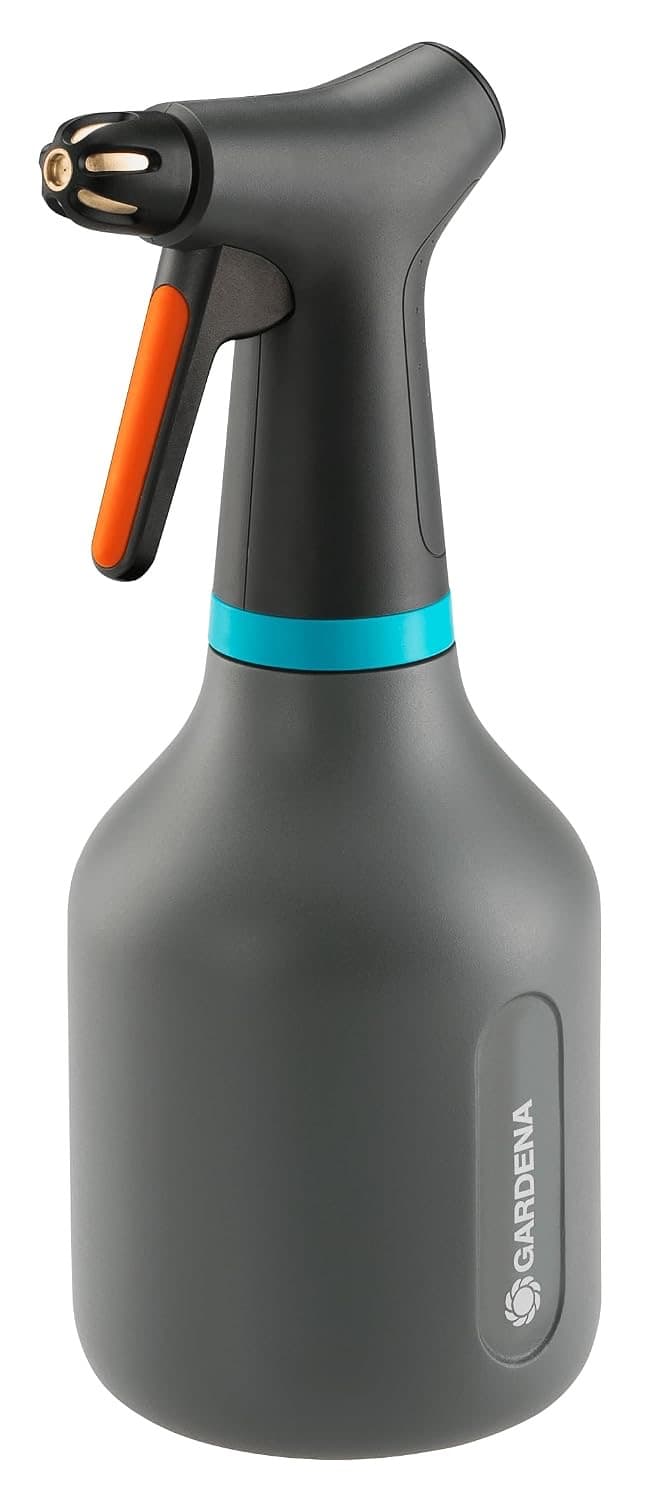
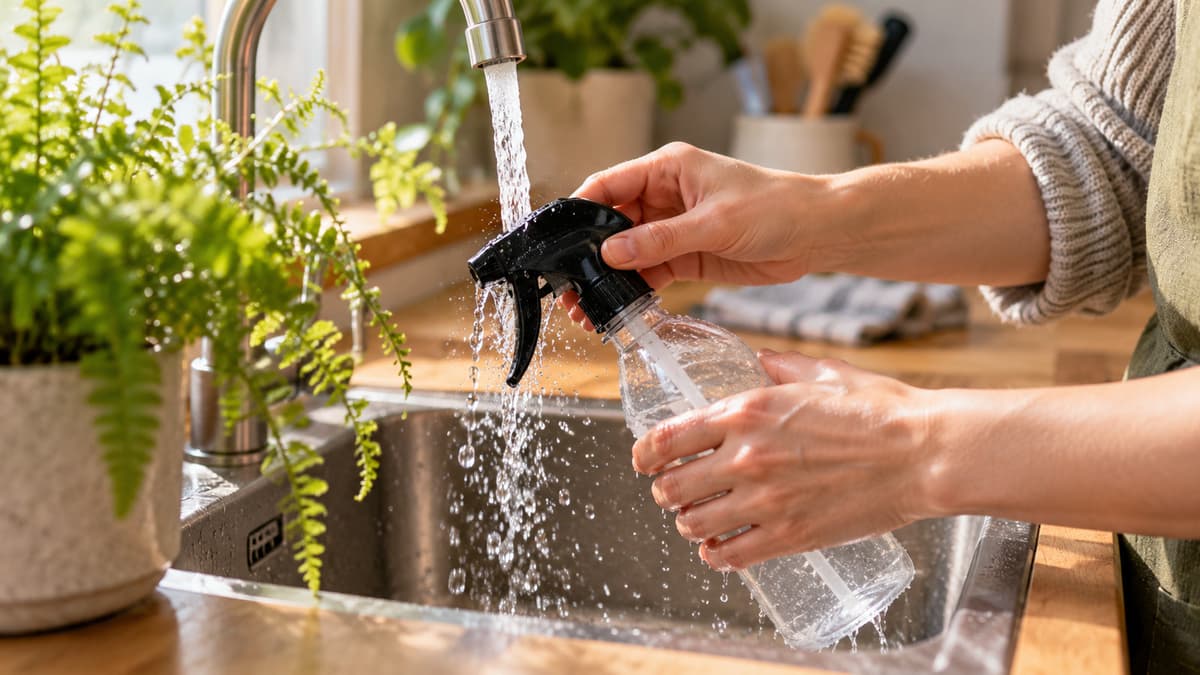
Rinse the head when the pattern coarsens. The white GRIFEMA listing says to use clean water and rinse the spray head and internal tube, and not to put the bottle in a dishwasher. Those steps are on clean a clogged plant mister. The Gardena pump (B08KGH3XDD) states a brass nozzle from a full jet to a fine mist, at £11.99 with 4.7 from 1,722 reviews. Brass does not cancel a hard tap. Fill it with water the plant can take, and keep the kettle water cool.
Common questions
Is tap water safe in a plant mister?
Does leaving tap water out overnight fix hard water?
Why boil water for misting?
Can I mist with water from the kettle while it is hot?
Is rainwater always better for houseplants?
Do ferns and orchids want the same water in the mister?
Will tap water clog the nozzle?

Products Compared publishes British-English buying guides based on amazon.co.uk listings and public UK sources. We do not run a lab and we do not invent test scores.
Related articles
Hard water marks on houseplant leaves
White spots after misting are dried minerals. Wipe a sturdy leaf with plain water, and change what you pour.

How often to mist houseplants
A light morning pass wets a fern leaf. It does not hold a heated room, so pair it with a tray or a group.
Clean a clogged plant mister
The minerals that spot a leaf also narrow a fine nozzle. Rinse the head before you decide the trigger has died.