Hard water marks on houseplant leaves: the chalk film
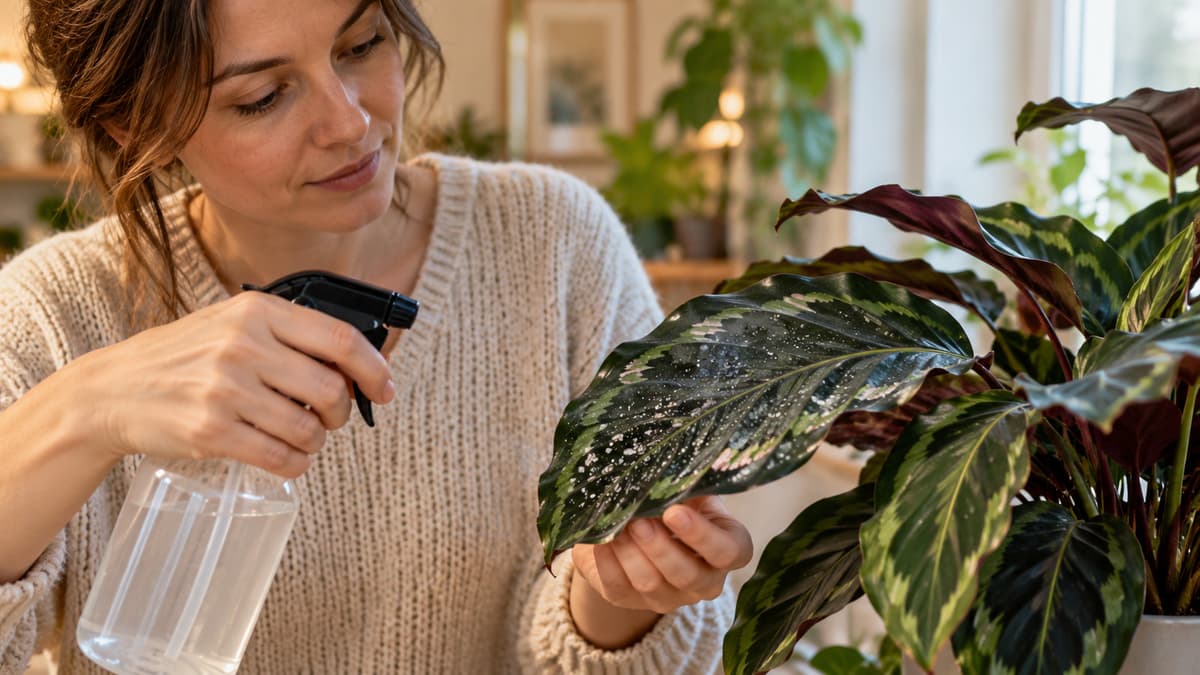
Hard water marks on houseplant leaves are limescale from a hard UK tap. Overnight standing leaves the minerals in, and the same chalk furs a fine nozzle.
On this page
You mist a calathea before work, and by the evening the dark leaf has a scatter of pale spots. Hard water marks on houseplant leaves are that film: minerals left behind when tap water dries. In much of England the tap is hard enough to do it, and the same chalk narrows a fine nozzle until the spray becomes blobs.
Grow Tropicals, a UK nursery, describes the spots as limescale and says that leaving water to stand overnight deals with a chlorine smell, not the minerals. A Guardian piece on 8 September 2026 treats vinegar and lemon as hacks, with a warning attached. Products Compared did not laboratory-test leaves or nozzles. Bottle figures below are amazon.co.uk shelf prices and review counts from this set on 15 October 2026. A qualifying purchase can earn us a commission at no extra cost to you.
In short
Hard water marks on houseplant leaves are dried minerals from the tap, not a disease by themselves. Standing water overnight leaves the chalk in the jug. Use rainwater, a jug filter, or cooled boiled water for the mister, wipe a sturdy leaf with plain water, and rinse a furred nozzle before the spray turns to blobs.
What the white mark is
The spot is a crust. You spray, the droplet sits, the water evaporates, and calcium and the other dissolved minerals stay on the surface as a pale film. Grow Tropicals names those white spots as limescale from hard tap water. They show up after misting because misting wets the leaf on purpose, again and again, while a watering can aimed at the compost leaves the leaf dry.
The look overlaps with other white deposits. The University of Maryland Extension, a US source, describes mineral and fertiliser-salt crust on indoor plants. Use that page for the appearance only. It is not a map of English water, and a fertiliser drench can leave a similar tide mark along a drip line. Dust smears. Mealybug sits in the axils and smears when crushed. If a wipe lifts powder and the tissue underneath is sound, you are looking at a deposit.
Marks do not prove the plant is dying. A calathea can carry a chalk film and still push new leaves. Soft, spreading patches under the film are a different problem, and more spraying will keep the leaf wet on top of whatever is wrong. Stop, let the surface dry, and identify that damage on its own. The misting interval, including when to stop because a leaf never dries, is on how often to mist houseplants.
Where UK tap water is hard enough to matter
Grow Tropicals' account is the plant-side map: much of England is hard, and the South East and East are among the hardest. If you mist with the kitchen tap there, a pale scatter on glossy leaves is a likely result. Your street can differ from that headline, which is why the kettle is a better clue than a postcode guess.
The Drinking Water Inspectorate explains what hard means for a UK tap: a drinking-water fact, not a recipe for ferns. A furred kettle, a furred shower screen, or a white crust on the drip tray is the same family of minerals meeting a surface that dries. The leaf is another surface you keep wetting.
Bottom watering is Grow Tropicals' way to keep hard tap water off the foliage while you still use the tap on the compost. It does not remove minerals from the water the roots drink. Plants that dislike lime, which older UK notes such as GardenAction list as orchids, azaleas, gardenias and carnivorous plants, still meet that lime in the pot. The leaf film and the compost chemistry are two problems. This article is the film. What to pour for an orchid is on tap water or rainwater for misting.
What to put in the mister instead
Rainwater is the first swap Grow Tropicals recommends. A small watering can under a downpipe fills a 200 ml mister many times over. Keep the container lidded, and skip a filthy first flush off a roof if the water runs brown. In a flat with no outdoor tap on the gutter, a jug filter is their indoor alternative: they say a filter cuts enough calcium for many plants. That is a nursery's practical claim, not a laboratory certificate for every cartridge on the high street.
Boiled water, cooled, is the other household habit. GardenAction's older UK note links it to fewer chalk marks, with the scale left in the kettle. Let it reach room temperature before it touches a leaf. Hot kettle water on a fern is a scald, and the orchid pages that mention boiled water say cooled. The orchids and ferns page is where crown and aerial-root care sit. This jug decision is only the water inside the bottle.
Standing a jug on the counter overnight is the step that disappoints people. The smell may fade. The minerals that dry into spots are still dissolved in the morning. Keep that jug out of the mister if the leaves are already chalky.
Cleaning the leaf without a new myth
On a smooth, sturdy leaf, wipe. Support the blade with one hand so you do not tear it from the stem, use a soft cloth and plain water, and dry the surface so the cloth itself does not leave a new ring. Fuzzy leaves and leaves with a heavy bloom, such as many succulents, should stay out of this routine. A wet wipe strips the coating you were trying to save.
Vinegar and lemon juice circulate as leaf-cleaning hacks. The Guardian column of 8 September 2026, by Gynelle Leon, puts dust and hard water in the same film and discusses acids with a warning: do not believe every acid tip. This page will not invent a dilution, a soak time, or a safe-for-all-foliage claim the Royal Horticultural Society has not made. An acid strong enough to shift chalk can mark a thin leaf, and acid left in a mister is a residue the next fern receives. The default here is plain water and a cloth.
Wiping treats the symptom. The next mist with hard tap water writes the film again. Change the water in the bottle, or stop misting that plant and use bottom watering plus a tray for humidity. Leave pesticide, oil and leaf-shine out of this bottle.
When the nozzle furs up as well
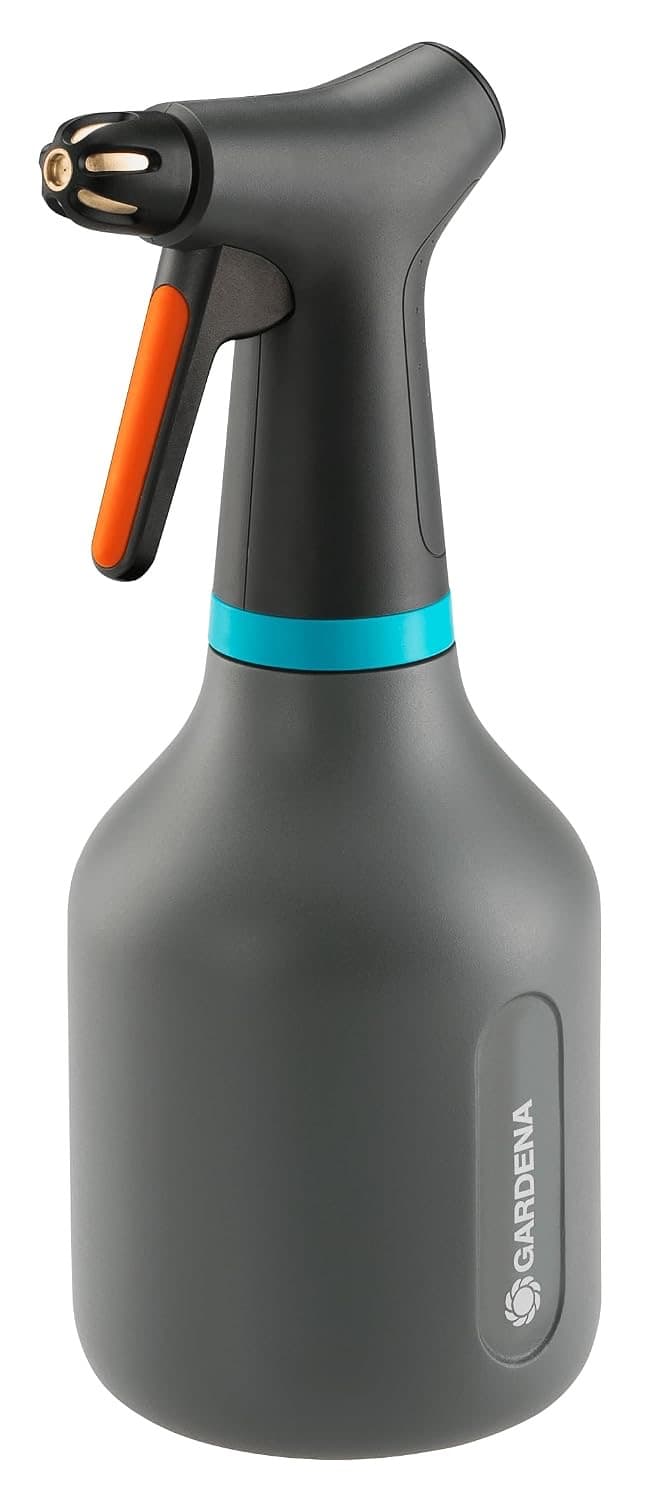
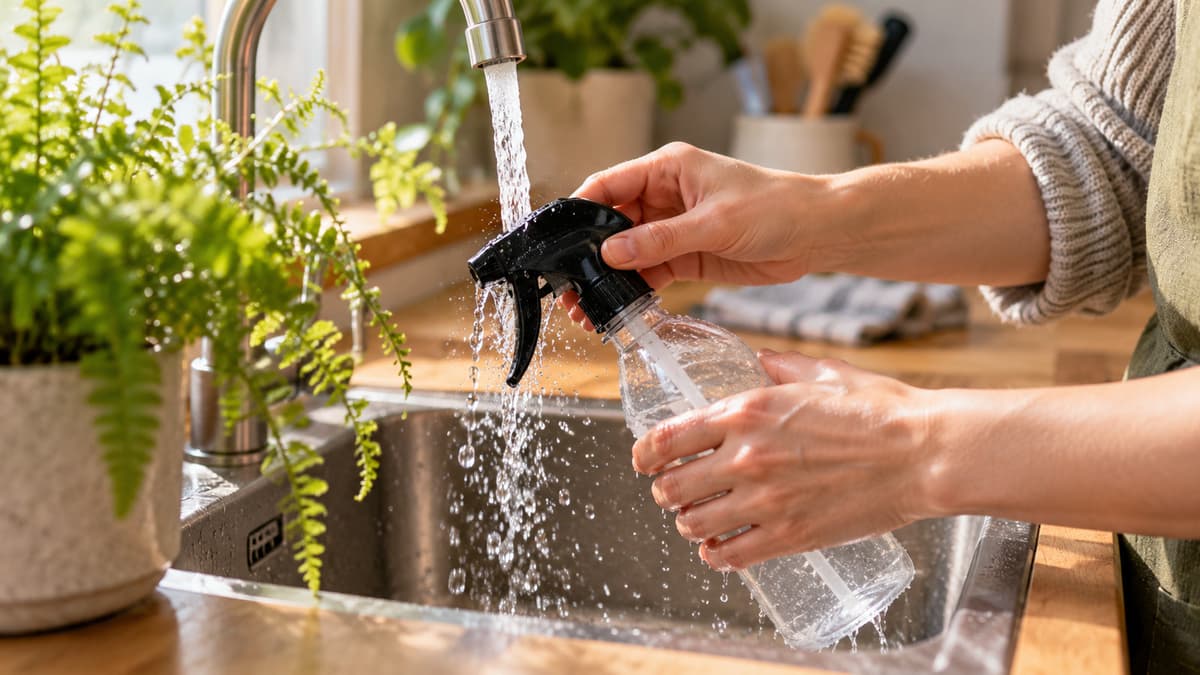
The crust on the leaf and the crust in the nozzle are one mineral story. A fine hole, such as the 0.3 mm nozzle stated on the white GRIFEMA (B0DXTLWVBL, £4.99, 4.3 from 2,900 reviews on 15 October 2026), is the same scale a kettle element collects, only smaller. The listing tells you to use clean water and to rinse the spray head and internal tube so mineral build-up is reduced. It also says not to put the bottle in a dishwasher. That is the maker's instruction. It is not a test we ran, and it is not a vinegar recipe.
When the mist turns to blobs or a single heavy jet, you are laying bigger tide marks and you are more likely to fill a crown. Rinse before you decide the plant is at fault. The order of checks, including a tube that never reaches the water, is on clean a clogged plant mister. A head that is cracked or dead, rather than furred, will not improve with a rinse. That failure sits with the reviews on the spray bottle comparison, where several cheap triggers are described as dribbling or stopping.
If you still want a bottle that states a fine mist, read the pattern on the listing, not the star rating alone. The buying guide sets out those claims, and the how to mist page is the distance and the angle once the nozzle is clear. Hard water will fur a good nozzle too, only more slowly if you fill it with rainwater or filtered water.
Common questions
Are white spots on houseplant leaves a disease?
Why do hard water marks show up after misting?
Is a furred kettle a clue to leaf marks?
Will leaving tap water out overnight stop the marks?
Is rainwater worth collecting for a mister?
Can I wipe hard water marks off the leaves?
Why has my fine mist turned into blobs?

Products Compared publishes British-English buying guides based on amazon.co.uk listings and public UK sources. We do not run a lab and we do not invent test scores.
Related articles

Tap water or rainwater for misting
Rainwater or cooled boiled water is the orchid advice. Standing tap water overnight deals with a smell, not the chalk.
Clean a clogged plant mister
A fine mist that turns to blobs is often scale in the nozzle. Rinse the head before you blame the plant.

How often to mist houseplants
A morning spray wets the leaf for a short while. In a heated flat it does not hold the room through the evening.