Pesticide in a spray bottle UK: read the label first

A pesticide in a spray bottle UK is legal only as the label allows. An empty plant mister is a water bottle. Store the product in its own pack, and follow P501.
On this page
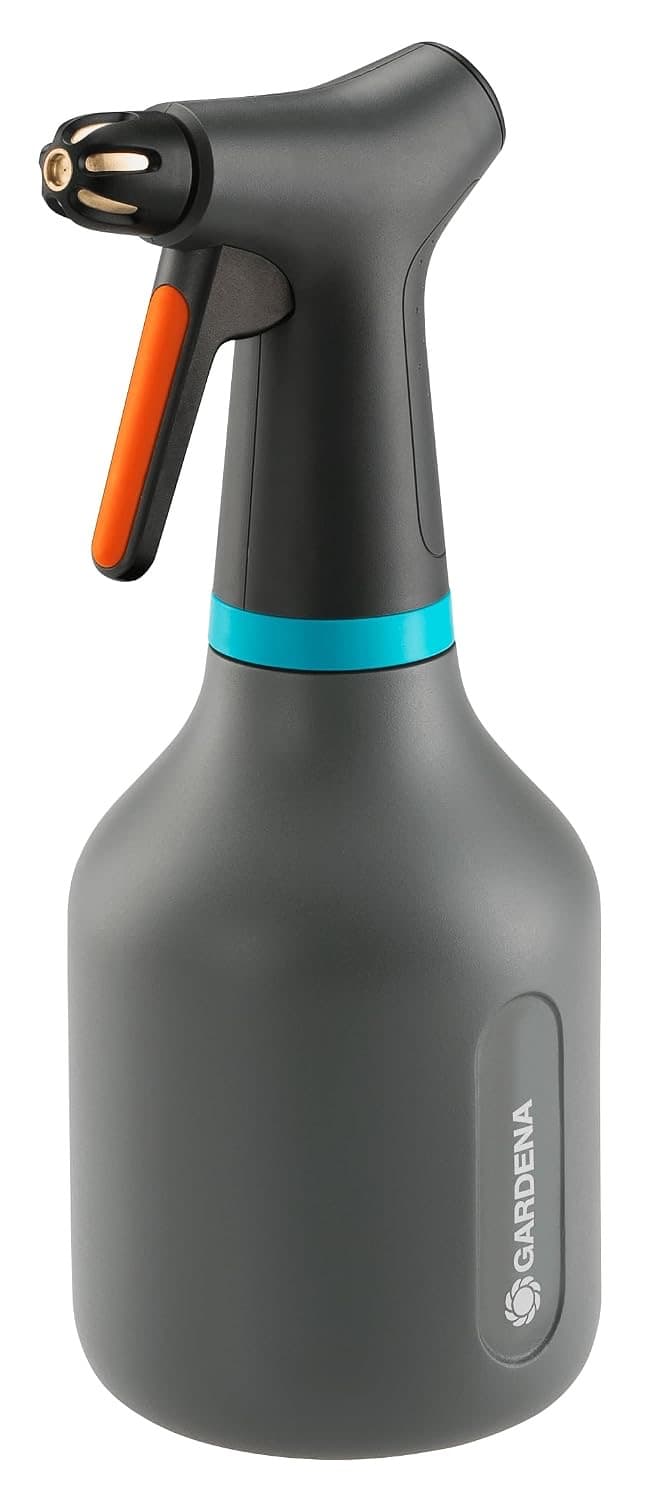
The mister is empty, the aphid spray is half a bottle, and it is tempting to pour one into the other. A pesticide in a spray bottle UK is not a question the mister can answer. The label on the pesticide is the product. The trigger bottle in this comparison is a water container with no authorisation number and no dose.
The Health and Safety Executive says to read the label before you buy and before you use, to store the product in its original container, and never to decant into drinks bottles or similar containers. Products Compared did not test these misters with any pesticide, and this page gives no mixing recipe and no dose. Bottle descriptions below are amazon.co.uk listing lines from this set on 15 October 2026. A qualifying purchase can earn us a commission at no extra cost to you.
In short
A pesticide in a spray bottle UK stays legal only inside the label on an authorised product. An empty plant mister is not that product. Store and keep the pesticide in its own labelled container, do not leave a diluted mix in the mister, and follow the label's disposal line rather than the sink.
An empty mister is not a pesticide product
The bottles on the spray bottle comparison are sold empty. Listings talk about mist, stream, litres, and triggers. They do not carry a MAFF, MAPP or HSE number, and they are not the pack a pesticide was authorised in. Pouring a concentrate into one of them does not transfer the authorisation. You now have an unlabelled bottle of pesticide and an empty, legal pack sitting in the cupboard.
That distinction is the whole article. A £3 trigger and a £12 pump can both throw water. Neither one becomes a home-garden pesticide because the nozzle is fine. The buying guide is where those water claims are compared. Use it to choose a mister. Use the pesticide label to decide whether a pesticide may be applied at all, on which plant, and with what kit the label itself names.
If the label tells you to dilute and spray, follow that label for the mix and the equipment it describes, at the time you use it. This page will not repeat a rate, a crop list, or a tablespoon per litre from memory. Rates change with the product. The limit is the wording on the bottle in your hand. If that wording is gone, you do not have instructions. You have an unknown liquid.
What the label is for
The HSE garden and home page is the amateur starting point: read before you buy, read again before you use. The label is where the plant, the pest, the dose, the protective kit, and the waiting period are printed. It is also where storage and disposal sit. A blog cannot replace it, and a mister's cardboard box never tried to.
Buy products that are authorised. HSE identifies those by a MAFF, MAPP or HSE number. The number is how you know the pack was allowed onto the home market, not a decoration beside the brand. Great Britain and Northern Ireland do not always authorise the same product. Do not guess from a photograph online. The HSE garden page is the place to check which part of the UK you are standing in, and what that means for the bottle you hold.
A homemade mix is the gap people try to fill with a mister. If the point of the mix is to kill or control a pest, you are in pesticide territory. Soap, oil, or a kitchen concentrate you invented has no MAPP number and no approved label. This article will not supply a recipe, and it will not tell you the mix is harmless because the ingredients came from a cupboard. Ask the HSE page before you spray. Until then, leave the mister full of water or empty.
Why decanting fails the storage rule
HSE's line on storage is blunt. Pesticides are sold, supplied, and stored in the original container with the label. Unlabelled storage is illegal. Decanting into drinks bottles, or into containers that look like them, is specifically ruled out, because someone else may drink what they think is juice or water. A clear plant mister on a kitchen shelf is in that family even when you bought it for a fern.
Diluted product kept for later may not work. That is an effectiveness point sitting next to the legal one. A mix that separates, weakens, or grows a film in a trigger bottle is a bad spray and an unlabelled store. Make up what you will use for the job the label describes, use it then, and do not park the leftovers in the mister until Saturday. The original container, shut, with its label, is the store.
Children make the rule concrete. A low shelf, a bottle that looks like a drinks bottle, and no label is how a mouthful happens. If that happens, take any label you still have and contact NHS 111. If the person is seriously unwell, call 999. Tell them the product name if you know it. Then change the way the next bottle is kept. The how to mist page is for water on leaves. It is not a pesticide method.
Disposal in ordinary language
The label's disposal instruction is often a P501 statement. HSE's note on amateur home and garden products distinguishes concentrate wording from ready-to-use wording. Read the line on your pack. Do not borrow the sentence from a different bottle, and do not expect this article to quote the handbook. Leftover product and an empty container are not always the same instruction.
Leftover pesticide is hazardous waste. A household recycling centre that takes it is the ordinary route, and your council is who you ask if you cannot tell what the liquid is. Empty containers can be a milder instruction on some labels and a hazardous one on others. The label decides. The sink, the compost heap, and a gutter that drains to a stream are guesses, and guesses are how the wrong liquid leaves the house.
Rinsing a mister that has held pesticide is part of the same problem. Washings are still the product, diluted. Follow the label for washings. If you never should have decanted, you still have to dispose of what is in the bottle now, and the council is the call when the label is missing. After a legal rinse, the mister goes back to water only. It does not become a second pesticide store because you only use it for the roses.
What these bottles actually claim
On 15 October 2026 the black GRIFEMA (B0CMPTSGL4) listed water or other thin, water-based liquids, and told you to avoid thick oils. If the spray turns uneven, rinse the nozzle and the intake tube. That is a clog note. It is not an authorisation to put a pesticide, a white oil, or a neem mix through the head. One gardener's review that a different bottle tolerated an oil is one review, not a licence, and it is not on this GRIFEMA instruction.
The white GRIFEMA (B0DXTLWVBL) states a 0.3 mm nozzle and a rinse to reduce mineral build-up, and it is not dishwasher safe. The Gardena pump (B08KGH3XDD) states a brass nozzle from a full jet to a fine mist, at £11.99, with 4.7 from 1,722 reviews. None of those lines is a MAPP number. None of them names a pest. Choose among them on the comparison if you are misting with water. Leave them on the shelf if you are looking for somewhere to hide a concentrate.
If a listing is silent, assume water. Thick liquids, oils, and pesticide concentrates are how fine nozzles clog and how labels get separated from their products. The rinse steps for chalk and residue are on clean a clogged plant mister. A dead trigger is on spray bottle not spraying. Neither fault is fixed by pouring a chemical through a blocked head. The label stays on the pesticide. The mister stays a mister.
Common questions
Can I pour a pesticide concentrate into my plant mister?
Is a homemade soap spray a pesticide?
What number should be on a legal home-garden product?
Can I leave diluted pesticide in the mister for next week?
What should I do with leftover pesticide?
Are these amazon misters approved for chemicals?
What if a child drinks from an unlabelled bottle?

Products Compared publishes British-English buying guides based on amazon.co.uk listings and public UK sources. We do not run a lab and we do not invent test scores.
Related articles

Tap water or rainwater for misting
These misters are for water. Rainwater, a filter, or cooled boiled water is the plant question, not a pesticide mix.
Clean a clogged plant mister
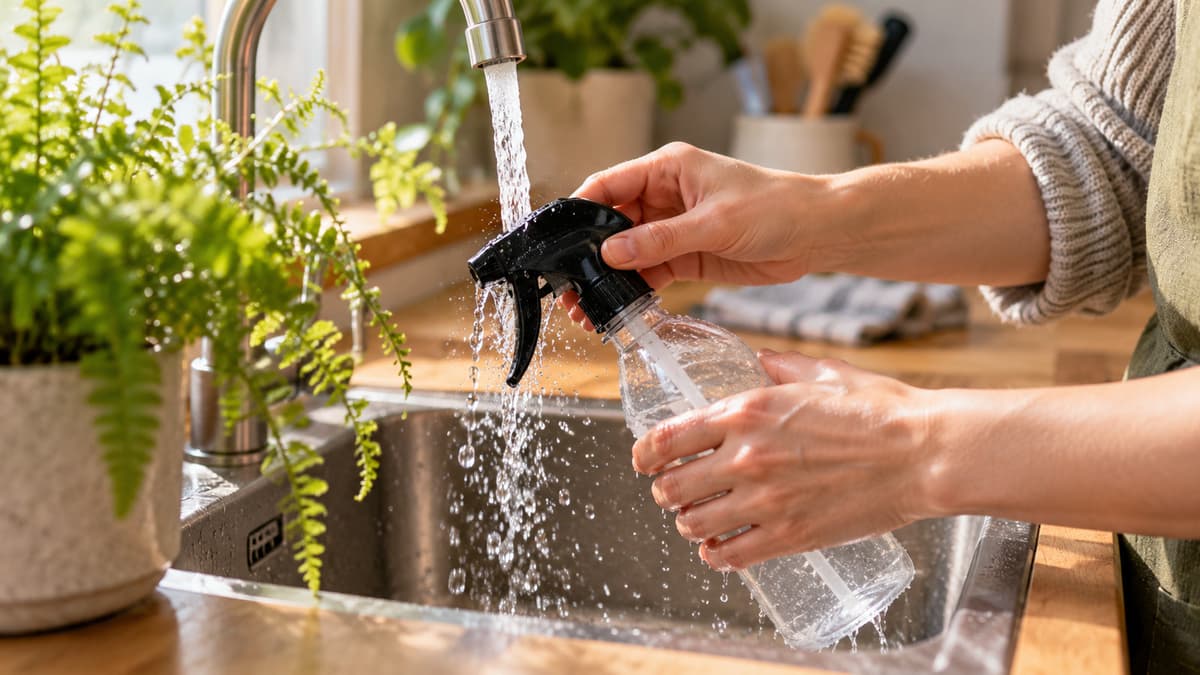
Scale and residue block a fine nozzle. Thick oils are a mister limit on the GRIFEMA listing, not a pesticide approval.

Spray bottle not spraying
A dead trigger, a curled tube, or a furred nozzle explains a bottle that has stopped. Rinse first, then look at the head.