Pebble tray vs misting houseplants: two different jobs

Pebble tray vs misting houseplants: a spray fades in minutes, and a tray stays local too. Keep the pot just above the water, and the bottle for the leaf.
On this page
You have been told to do both: a pebble tray under the orchid, and a spray bottle over the fern. Pebble tray vs misting houseplants is really a question about time. One sits in the saucer after you leave the room. The other is a cloud that thins while you are still holding the bottle. They are poor substitutes for each other, and neither one is automatically the winner.
The Royal Horticultural Society lists a tray of moist gravel, grouping, and frequent spraying together. James Wong treats the tray as the method that outlasts a spritz. Penn State Extension argues that a tray’s moisture drifts into the room as well. This page keeps that disagreement visible. Products Compared did not meter a saucer or a bottle. The bottle prices further down are amazon.co.uk figures from this set on 15 October 2026. A qualifying purchase can earn us a commission at no extra cost to you.
In short
Pebble tray vs misting houseplants splits into two jobs. A spray changes the air for minutes in James Wong’s home trials, then the reading falls back. A tray can keep evaporating after you stop, and other sources say that moisture still drifts away. Keep the pot above the water, and keep a fine mister for the leaf, not as a humidifier.
Two different jobs
Misting wets a surface and throws a small plume into the air around it. A pebble tray is a saucer of water with stones so the pot stands clear, and the water evaporates beside the plant for as long as the saucer holds any. Grouping pots is a third move: several leaves and several compost surfaces sharing a pocket of damper air. The Society’s houseplant guide puts all three in one list. It does not rank them, and it has not banned misters.
The mistake is to ask which one works without saying for how long and for which plant. A fern that crisps by the radiator wants the air next to the leaf to stay damper through the evening. A moth orchid in hot weather may also want a light mist on foliage and aerial roots, with the crown kept dry. A succulent wants neither. If you buy a bottle to solve a six-hour heating cycle, you have given the leaf job to a room problem.
Hand movements, distance, and the difference between a mist and a jet sit on the how to mist page. How often to come back is on how often to mist houseplants. This page only compares the tray and the spray. A method that helps a fern can rot a cactus stood in the same saucer for tidiness.
What misting changes, and for how long
James Wong’s Guardian column of 23 May 2021 says a spritz lasts minutes. He writes that studies point to misting every five to ten minutes if you want the air to change and stay changed, and he treats that pace as impractical. Use the line as a boundary. A morning spray is a poor plan for an evening radiator, and it is not a timetable that asks you to spray all day.
His New Scientist piece of 1 November 2023 is a home trial with meters. A living room moved from about 50 per cent to about 70 per cent relative humidity and drifted back in about 30 minutes. A drier room returned in under 20 minutes. He repeated each trial three times. Mark it as one person’s flat, not a published laboratory standard, and not your hallway. After the meters, he points to a terrarium or to plants grouped on a pebble tray.
Droplets on the leaf can outlast the room reading. That is the leaf job: dust, a brief wet surface, orchid foliage in hot weather. The room job has already slipped away. If the bottle throws blobs rather than a mist, you are watering the crown by accident. Listings that name a fine pattern are on the spray bottle comparison. The white GRIFEMA (B0DXTLWVBL) states a 0.3 mm nozzle and about three seconds of mist, at £4.99 with 4.3 from 2,900 reviews on that date.
What a pebble tray can and cannot do
A tray keeps working after you put the bottle down, which is why Wong prefers it for anything longer than a spritz. Fill a saucer with pebbles, pour water to just below the top of the stones, and stand the pot on the stones. The Royal Horticultural Society’s Phalaenopsis guide allows damp gravel in hot weather and is explicit that the pot should not sit soaking. Compost in a puddle rots. Roots fail. The air you wanted never required the pot to drink from the saucer.
Top up when the stones dry, and empty a saucer that has risen over the drainage hole after you watered. A wide tray under a group of pots covers more than a coaster under one orchid. The group fails when you jam a succulent into the cluster. Refill with the same care you use in the mister if the plants dislike hard water. Chalky water poured through an orchid mix is a separate problem, covered on tap water or rainwater for misting.
The limit is height and room size. Evaporation from a saucer is a small source in a heated living room. It can damp the air immediately around the leaves. It will not hold a whole open-plan room at a number you picked. A shut bathroom is a larger damper volume, and only if the light suits the plant. A dark bathroom starves the leaf.
The disagreement in the sources
Wong’s articles treat the tray, the group, or a damper room as the practical reply once you accept that misting every five to ten minutes is not a life. The Society still lists frequent spraying in the same sentence as the tray. Spraying remains on their growing guide. The tray is an addition, not a replacement they have ordered.
Penn State Extension’s humidity page is the opposing limit, and it is a US source, not a UK rule. Their reading is that both a mist and a pebble tray diffuse into the room, and that the lift a few inches above the tray is slight. The method they keep for a real change is a humidifier. A UK flat can borrow the caution without borrowing an American target humidity. If your hygrometer, an hour after you filled the saucer, reads what it read before, the tray did local work and the room swallowed it. That is the moment a humidifier, or a closed terrarium, is the honest tool.
Do not crown either side. Wong measured a mist in his own rooms and then recommended the tray. Penn State doubts the tray’s reach. The Society lists both. Your constraint is the plant and the room you actually have. A single orchid on a bright bathroom shelf may need nothing else. A fern against a living-room radiator may need the tray and still crisp at the tips. The orchids and ferns page keeps those plants apart from succulents.
What to keep the spray bottle for
Keep the bottle for the leaf. Dust on a rubber plant, a light pass over a fern in the morning, and the hot-weather mist of orchid foliage and aerial roots are bottle jobs. The tray does not wipe a leaf and it does not wet an aerial root on purpose. Stop when water sits in a crown or the leaf is still wet at the next pass. That limit is sharper than any argument about humidity percentages.
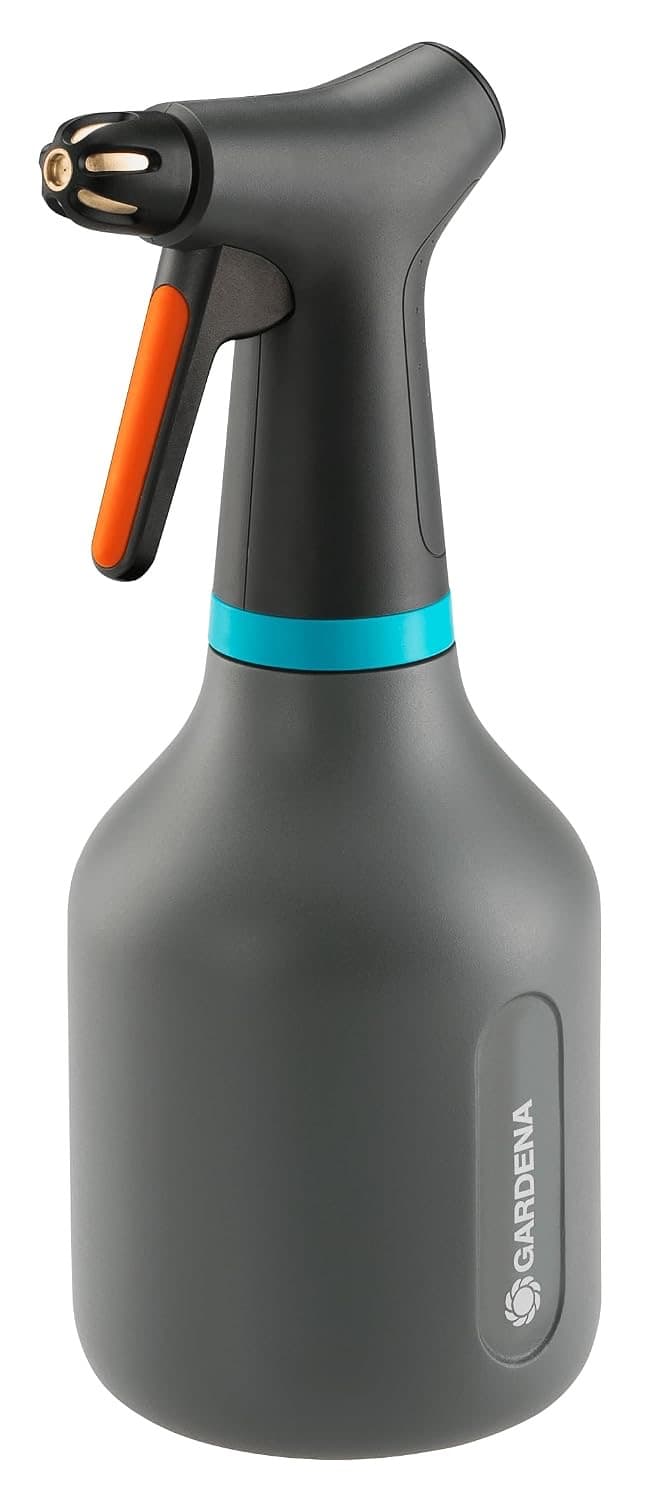
A jet wastes the leaf job. In this set the Gardena pump (B08KGH3XDD, model 11110-20) states a brass nozzle from a full jet to a fine mist, 0.75 litres, £11.99, and 4.7 from 1,722 reviews. Reviews also mention a head that was slow to reset and units that lasted under three months. The Draper 1 litre listing does not name a pattern, and many of its reviews describe blobs or no spray at all.
Fill it with water the plant tolerates, and keep pesticide and thick oils out. A dead trigger in the first fortnight is a faulty-goods question. Prices move. A fine mist beside a properly filled tray is a pair of tools, and the room may still need a humidifier when both have done the small thing they can do.
Common questions
Does a pebble tray work better than misting?
Can the plant pot sit in the water?
How long does a mist last?
Do I still need a spray bottle if I have a tray?
Is a bathroom enough on its own?
Will a pebble tray or a mister save a succulent?
When is a humidifier the honest answer?

Products Compared publishes British-English buying guides based on amazon.co.uk listings and public UK sources. We do not run a lab and we do not invent test scores.
Related articles

How often to mist houseplants
A morning spray on a fern is a leaf habit. In a heated flat the air falls back within about half an hour.

Should I mist succulents?
Most cacti and succulents want dry air. A tray under a desert plant is the same wet-leaf mistake in a saucer.

Tap water or rainwater for misting
Hard tap water spots leaves and furs nozzles. Rainwater or cooled boiled water is what orchid pages prefer in the bottle.