Independent comparisons. We may earn from shop links. More info

USB multimeter buying guide

Updated: October 2026

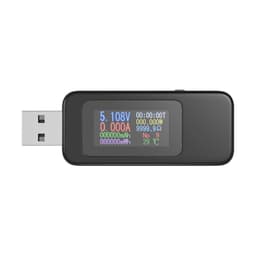
You searched for a USB tester because a phone charges slowly, a power bank looks optimistic, or a hobby board will not start, and the amazon.co.uk results mix handheld mains multimeters with colour screens that sit in the lead. This USB multimeter buying guide is the order of checks for the five inline meters we kept, from £8.79 to £16.97 in the extracts of 15 October 2026. It does not name a winner. The [USB multimeter comparison](/hub/measuring-equipment/usb-multimeter) holds the table. Peter F. compared those listings on 16 October 2026 and did not run a lab test. A qualifying purchase can earn a commission at no extra cost to you.

You searched for a USB tester because a phone charges slowly, a power bank looks optimistic, or a hobby board will not start, and the amazon.co.uk results mix handheld mains multimeters with colour screens that sit in the lead.

Our top picks

YEREADW YEREADW KWS-2303C

Best overall

YEREADW YEREADW KWS-2303C
9.2/10about £11.97
YEREADW YEREADW 066C

Preis-Tipp

YEREADW YEREADW 066C
9.0/10about £9.27
Aideepen Aideepen TM962

Alternative

Aideepen Aideepen TM962
8.8/10about £8.79
On this page

Start with the plug you still own

The first split is the connector, not the star line. UK reviews of the Aideepen TM962 describe it plugged into a USB-A charger, so treat that £8.79 meter as USB-A unless the live photo shows something else. It stores capacity in groups 1–9 and does not name PD or QC. Reviewers say the screen does not rotate. The two USB-C-only meters are both YEREADW. The 066C is £9.27, stated at 4–30 V and 0–6.5 A, and a double-click rotates the screen. The KWS-2303C is £11.97, stated at 4–30 V and 0–12 A, with a curve page. A second plug is wasted if you never use USB-A. The YEREADW UT003 is £15.79 and the YOJOCK is £16.97. Both put USB-A and USB-C on one body and state 3.6–32 V. Who each row is for is the best USB multimeter page.

Stay inside 30 V or 32 V

Every meter here states a ceiling of 30 V or 32 V. That covers about 5 V until the device asks, then 9 V, 15 V, or 20 V. It does not cover USB Power Delivery extended power range. Public descriptions, including Plugable’s VAMETER3 page and ChargerLAB’s material on the KM003C, name 28 V, 36 V, and 48 V, up to 240 W. A 12 A line on a 30 V meter is not permission to sit in a 48 V link. Do not exceed the voltage printed on the meter. If the brick may negotiate 36 V or 48 V, leave this set. BadgerWiFi listed a KM003C at £90 and marked it sold out.
YEREADW YEREADW KWS-2303C

Testsieger

YEREADW YEREADW KWS-2303C
9.2/10about £11.97

Protocol names are not a handshake

The £9.27 and £11.97 YEREADW pages print PD, QC, and several vendor names. The dual-port pages print PD, QC, and BC 1.2. None states PPS, AVS, or e-marker reading. An inline wattmeter shows the watts flowing now. An analyser is what you need to read a cable chip or a PD contract. USB-IF’s e-marker method is a lab procedure, not a button on these screens. If fast charge works until the meter is inserted, take the meter out. A meter also does not certify the Northern Ireland common-charger rules. From 28 December 2024, in-scope radio equipment on that market must use USB-C, and charging above 15 W must support USB PD. Great Britain has not adopted the same rule. The screen can only show what this charger, this cable, and this device negotiated.

Read the conflicts before you pay

The YOJOCK title says 0–8.0 A and a bullet says 0–5.1 A. Do not average them. The YEREADW UT003 states 0–8.0 A without that second figure, at £1.18 less, and it shares the model field UT003. The 066C power-source field says battery powered. UK reviews say there is no cell and the screen lights from the USB supply. Two listings print accuracy as ±(1%+5) and do not define the 5. That is not a calibration certificate. If a meter arrives dead, the Consumer Rights Act 2015 is the frame for goods that are not of satisfactory quality. None of these is a CAT-rated mains tester. UK mains are 230 V with a BS 1363 plug. Do not probe a wall socket. The first successful reading is the how to use a USB tester page.

Common questions

What should I check before the price?
Check the plug you still own, then the voltage ceiling. USB-A points at the Aideepen if the live photo agrees. USB-C only points at the 066C or the KWS-2303C. Both plugs point at the UT003 or the YOJOCK. Every meter here stops at 30 V or 32 V. A lower price does not add 48 V.
Can a 12 A meter measure a 240 W laptop brick?
Only if that brick stays inside the meter’s voltage ceiling. The KWS-2303C states 4–30 V and 0–12 A. Extended power range uses 36 V and 48 V in the public descriptions we used. Do not put a 30 V meter on a link that may negotiate those voltages. 12 A is not 240 W support.
Do I need USB-A and USB-C on one unit?
You need both only if you still use both. The dual-port meters cost £15.79 and £16.97. A USB-C meter at £9.27 or £11.97 is the smaller spend when the drawer has no USB-A plugs left. Reviews disagree on whether the YOJOCK will pass a mixed pair of ports.
Does a long protocol list mean the meter decodes PD?
No. The names are printed on the listing. They are not a log of the handshake, and they are not an e-marker read. The wattmeter shows volts, amps, and watts on this lead. Certifying a cable is a different tool.
Why do two current numbers appear on the YOJOCK?
The title says 0–8.0 A and a bullet says 0–5.1 A. The extract does not say which figure the hardware follows. Treat that conflict as unresolved. The YEREADW UT003 states 0–8.0 A on its own listing, at £15.79, and it is a different listing.
Is a handheld multimeter the same purchase?
No. A handheld meter with probes is for circuits you can touch with leads. These five products sit in a USB lead and show the power on that lead. They are not CAT-rated 230 V testers, and a probe in a USB socket is the wrong tool.
Are the star lines a UK test?
They are amazon.co.uk review averages, from 211 reviews up to 3,408. Peter F. did not bench these meters. A 4.6 does not raise the voltage ceiling, and a large count does not remove the YOJOCK’s two current figures. Read the plug before you rank the stars.

Related pages

Sources

Public UK sources named in the research digest: battery marking, retained capacity rules, the Northern Ireland common-charger instrument, the Great Britain common-charger response, and the USB-IF e-marker method. Shelf prices, stars and review counts are the amazon.co.uk lines in the five extracts dated 15 October 2026. Prices move.

  1. GOV.UK, batteries (retrieved 15 October 2026)
  2. Regulation (EU) No 1103/2010, capacity marking (retrieved 15 October 2026)
  3. Radio Equipment (Amendment) (Northern Ireland) Regulations 2024, SI 2024/1231 (retrieved 15 October 2026)
  4. GOV.UK, Northern Ireland radio equipment amendment guidance (retrieved 15 October 2026)
  5. GOV.UK, government response to the common charger call for evidence (retrieved 15 October 2026)
  6. USB-IF, e-marker testing method, revision 1.2 (retrieved 15 October 2026)
  7. Plugable, VAMETER3 range (retrieved 15 October 2026)
  8. Digital Toolbelt, USB-C power meter ceiling warning (retrieved 15 October 2026)