Consumer Rights Act faulty goods: your 30-day rights
Bought a spirit level that is not level? Understand the UK 30-day right to reject, what evidence helps and what happens if you request a replacement.
On this page

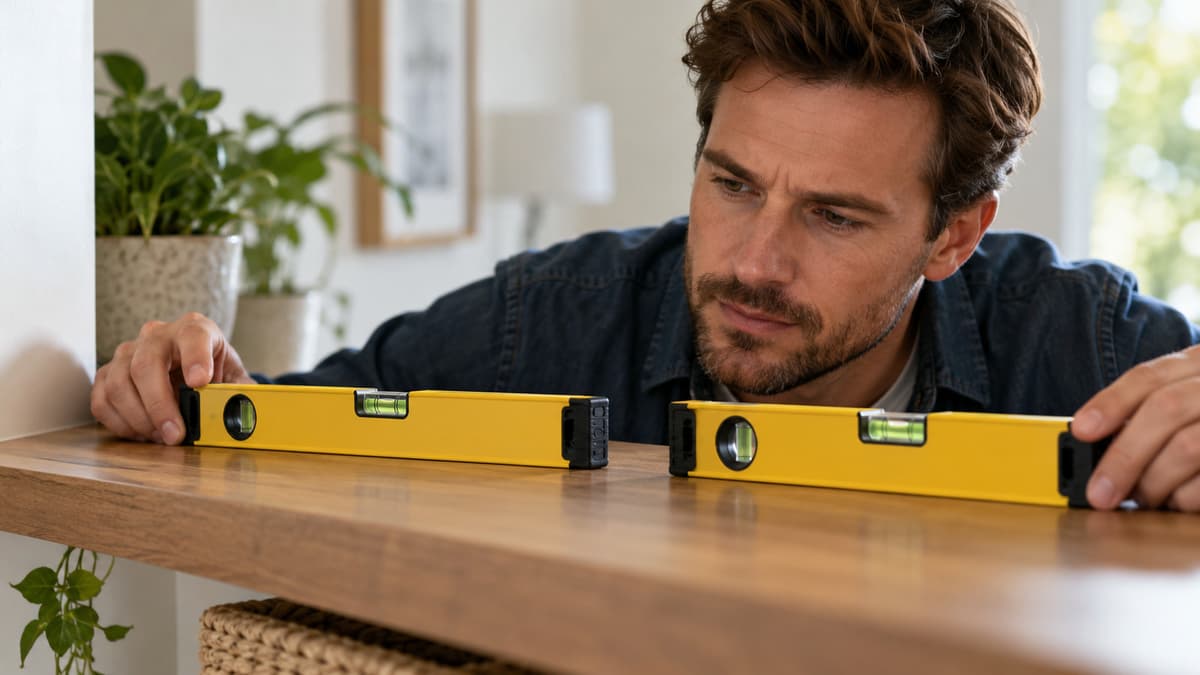
You set a new level on a shelf, turn it end for end and watch the bubble move to a different position. If the tool cannot agree with itself, you need more than a generic returns instruction: you need to know whether the Consumer Rights Act faulty goods 30 days rule applies and what evidence will make your complaint understandable.
The answer depends on the fault, the seller and the date. A smashed vial is straightforward evidence of damage. A claimed accuracy problem needs a controlled check, particularly if the listing never promised a tolerance in millimetres per metre. This guide explains the public wording of the Act and how it may apply to an order; it is not a decision on your individual case.
In short
Goods sold by a trader must be of satisfactory quality, fit for purpose and as described. During the short-term right to reject, which normally lasts 30 days, you can reject goods that do not conform and ask for a refund. Check the tool promptly, preserve the order details and tell the trader both what is wrong and that you are rejecting the goods, rather than sending only a photograph with no explanation.
The 30-day right in plain English
Section 22 of the Consumer Rights Act 2015 sets the normal time limit for the short-term right to reject at 30 days. The clock starts after the relevant requirements have all been met: ownership or possession has transferred, the goods have been delivered, and any installation the trader agreed to perform has been completed. A standard spirit level needs no installation, so delivery is usually the practical event to identify, but you should use the dates shown in your own order.
The right concerns goods that do not meet the contract standards. Those standards include satisfactory quality, fitness for a disclosed purpose and correspondence with the description. It is not merely a 30-day change-of-mind period.
Do not wait until day 29 to test a pack. Open it carefully, inspect each vial and compare each tool while the packaging, delivery label and order record are still available. If there is a problem, contact the trader in writing and state the remedy you want. The public guidance says that once the trader agrees a refund, it should be paid within 14 days.
What "not level" has to match
A spirit level is meant to provide a useful reference. If a loose vial shifts in its body, the frame is visibly bent or the bubble gives materially different readings when the same level is reversed on the same spot, those observations may support an argument that the goods are not of satisfactory quality or fit for their ordinary purpose.
"Not as described" is more specific. If the amazon.co.uk listing promised a particular accuracy, length, material or number of vials and the delivered product differs, save a copy of that statement. However, if the listing gave no numerical tolerance, you cannot fairly substitute one later and claim that the seller promised it. A tool can still be faulty without a published millimetres-per-metre specification, but your evidence should show the practical defect rather than an invented threshold.
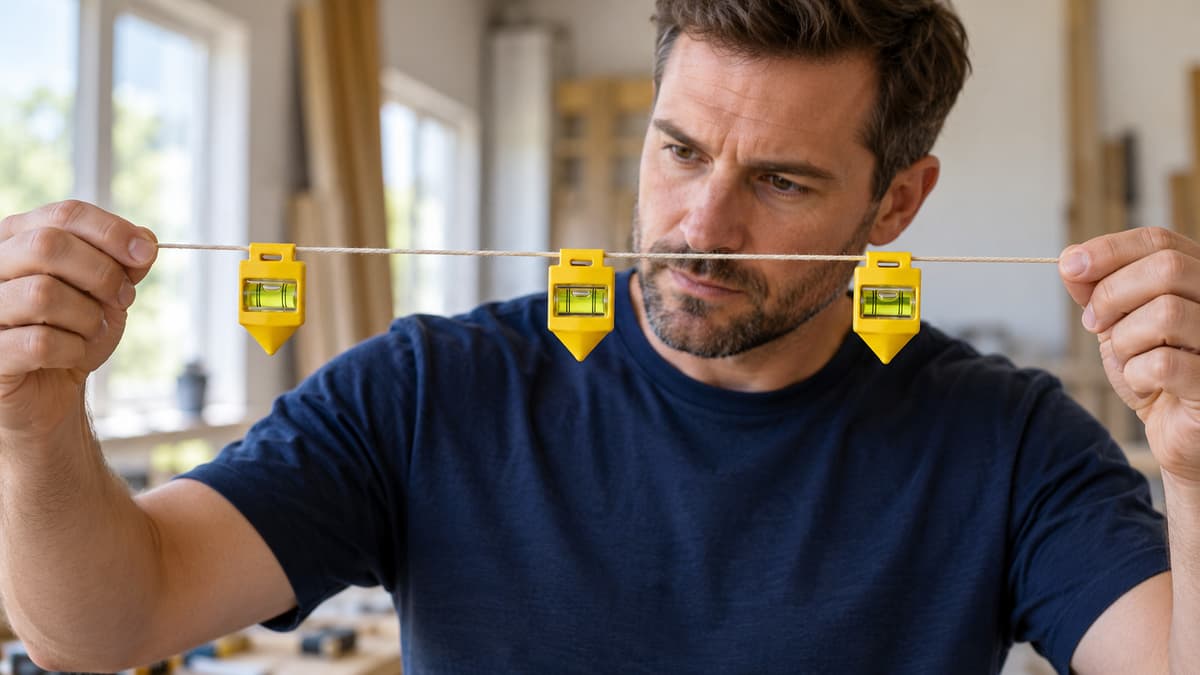
Small line levels also have limits. String sag, a twisted line, wind, a dirty contact face or viewing the bubble from an angle can change what you see. If you are still choosing a tool, the string spirit level comparison explains the types available. Its string spirit level buying guide can also help separate a design limitation from a damaged product.
Check and record the problem
Use a repeatable check before contacting the seller. This does not need to become a home laboratory, and you should not alter or dismantle the product. The aim is to demonstrate the same issue clearly enough that another person can understand it.
- Inspect the delivery first. Photograph crushed packaging, cracked vials, leaking fluid, bent bodies or loose fittings before using the tool.
- Clean the contact surfaces. Grit under one edge can produce a false result. Use a stable surface and mark the exact position of both ends.
- Take the first reading. Let the bubble settle, look squarely at the vial and photograph it without moving the level.
- Reverse the level end for end. Put it back on the same marks, allow it to settle and photograph the second reading from the same angle.
- Repeat once. A repeatable disagreement is more useful than one hurried photograph. For a multipack, label which item appears faulty.
- Save the commercial evidence. Keep the order confirmation, delivery date, seller identity and screenshots of any relevant listing claims.
Do not sand the frame, reglue a vial or continue using a damaged tool before raising the issue. Those actions complicate the evidence and may introduce a new cause.
A broken piece on arrival
A level that arrives physically broken is different from a debate about fine accuracy. Photograph the unopened or newly opened parcel, the internal packaging and the damage. If a vial has leaked, keep the product away from children and pets, avoid unnecessary skin contact and follow any safety information supplied with it.
For a pack of six, identify the damaged piece and show the complete contents. A report that says "item three has a cracked vial and arrived loose in the box" is easier to assess than "the set is bad". Do not throw away the parcel until the trader confirms whether it needs to be returned.
If you request a replacement first
You do not have to choose a replacement during the initial short-term rejection period, but you may prefer one if the tool otherwise suits the job. That choice affects timing. Under section 22, agreeing to a repair or replacement pauses the short-term rejection clock during the waiting period.
If the replacement also fails to conform, the remaining period is not simply whatever the calendar says on that day. The Act provides at least seven days after the waiting period ends, or the rest of the original short-term period if that is longer. This is why dates matter: retain the message in which you asked for the replacement, the seller's acceptance, dispatch information and the date the replacement arrived.
Test the replacement promptly using the same reversible check. If it fails, describe both sequences without muddling them: the original item's fault, when you requested replacement, and the replacement's fault. If you then exercise the short-term right to reject, use those words and ask the trader to confirm the refund arrangements.
Amazon and marketplace orders
Buying through amazon.co.uk does not erase statutory rights, but the name at the top of the website is not always the trader that sold the item. Check the order details for "Sold by". If Amazon sold the goods, your communication is with Amazon; if a business marketplace seller supplied them, that seller is normally the trader responsible for the goods under the contract.
Start through the order's return or contact route so there is a dated record. A standard return option may resolve the issue quickly, but describe a fault accurately instead of selecting a change-of-mind reason for convenience. Keep screenshots of any seller messages and return authorisation, plus proof of postage or collection.
The Consumer Rights Act framework discussed here concerns trader-to-consumer sales. A genuinely private seller is not treated in precisely the same way, although goods must still match their description. If the status is unclear, record how the seller presented itself and seek official advice.
What you cannot assume
Two vials disagreeing is useful evidence, not an automatic legal verdict. Surface error, misuse and a product's inherent limitations may be relevant, while a cracked vial or bent frame can make the issue much clearer. Equally, the absence of a stated accuracy tolerance weakens a precise description claim but does not grant permission to supply a tool that is unusable for its ordinary purpose.
A returns-policy deadline does not replace statutory rights, and a generous policy does not prove the seller accepts the goods were legally faulty. The legislation gives the framework; the evidence and contract determine how it applies. If the trader refuses a claim, ask for the reason in writing. Citizens Advice consumer services can explain options in England and Wales, Advice Direct Scotland serves Scotland, and nidirect signposts consumer help in Northern Ireland. Trading standards information can clarify the rules, but a court ultimately decides a disputed legal claim.
Common questions
Can I return a spirit level that is not level?
When does the 30-day period start?
Does requesting a replacement stop the clock?
Do these rights apply to an amazon.co.uk purchase?
What if the listing gave no accuracy tolerance?
What if only one level in a multipack is broken?
Is Northern Ireland included?

Peter F. is the editor for DIY & tools at productscompared.co.uk. Comparisons in this category are checked against amazon.co.uk listings, review evidence and public UK sources.
Related articles

Line levels not reading the same: test the pack
Two vials on one string can disagree. Test the bodies and the hooks before you average them.
How often to check a spirit level: practical triggers
There is no fixed service interval. Check on arrival, after a knock and before consequential work.

Builders line sag: how to keep your line true
A taut builder's line still curves. That sag becomes part of the datum a hanging vial reads.