Independent comparisons. We may earn from shop links. More info

How to edge a lawn with a half-moon edger

Updated: October 2026

Knowing how to edge a lawn means separating two jobs: cut a vertical soil face with a half-moon or flat-backed spade, then trim grass overhang with shears after mowing. Choose a day when the soil is moist enough to accept the blade but neither frozen nor waterlogged. Mark the line, keep the head upright, overlap each cut and lift the unwanted turf from the bed side with a spade. This method follows Royal Horticultural Society guidance and avoids using the edger shaft as a lever. If you still need a tool, compare manual options on our [lawn edger page](/hub/lawn-and-garden-equipment/lawn-edger). A qualifying purchase through our links can earn a commission at no extra cost to you.

Knowing how to edge a lawn means separating two jobs: cut a vertical soil face with a half-moon or flat-backed spade, then trim grass overhang with shears after mowing.

Our top picks

On this page

Edge the face, then trim the overhang

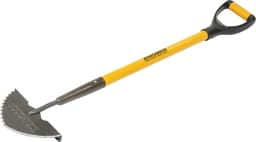
A half-moon edger defines the boundary below the grass. Its short crescent enters the soil to produce a near-vertical face beside a flower bed, path or shallow gutter. Edging shears work above that line: held upright, they remove blades that flop over after mowing. Trying to use shears to recreate a collapsed soil edge leaves the turf unsupported. Identify irrigation pipes, lighting cables and other possible services before pressing down. Wear closed, supportive footwear and gloves, and keep hands away from the crescent. Place one foot on the tread only when the head is stable and vertical. Do not jump on it. For dry clay or a tool that begins to fold, stop and use our lawn edger hard-ground guide.

Choose soil that will take a clean cut

The RHS advises avoiding frozen or very wet ground. Frozen soil resists the blade and hides the point where sensible pressure becomes abuse; sodden soil smears, collapses and compacts under your feet. Very dry summer ground can be just as unhelpful. The practical target is moist, workable soil that holds a vertical face when cut. A day or two after useful rain is often a good opportunity, but treat that as a rule of thumb rather than a national timetable. Test an inconspicuous section: the blade should enter under controlled foot pressure and withdraw without a polished smear or a crumbling, concrete-like block. If the ground is dry, water the proposed line and allow moisture to move into the soil. If it is wet enough to deform under each step, wait.

Mark, cut and lift the turf

For a straight edge, stretch a string between pegs or place a straight plank where it will not rock. For a flowing curve, lay out a garden hose and adjust it until the line looks smooth from several viewpoints. On a disputed boundary, confirm the line before removing turf. Stand so you can see the marker and place the half-moon exactly on it. Keep the shaft upright rather than leaning the blade towards the lawn or bed. Put a boot centrally on the tread and press down with controlled body weight. A small rocking motion can free the blade, but do not pull the handle sideways to prise soil out; levering is a common route to a bent head or failed connection. Withdraw the tool, move along by slightly less than the blade width and make the next overlapping cut. Where a root stops the head, expose and identify it instead of stamping harder. Once a section is defined, work from the bed side with a spade or fork to lift the unwanted strip. This keeps prising force away from the edger.

Set the drop and maintain it after mowing

RHS guidance describes a drop of about 7.5 cm, with another seasonal page using about 8 cm, both roughly 3 inches. Treat 7.5–8 cm as a practical reference rather than a demand to excavate every border to an exact gauge. Keep the face vertical. A slope allows grass to root gradually into the border and makes the next recut harder to locate. After mowing, hold sharp edging shears upright and cut only the overhanging grass. This preserves the face without removing more soil each week. A full recut once or twice a year is a useful rule of thumb, not a fixed UK schedule. Clean soil from the edger after use, dry carbon-steel surfaces and store the tool away from damp. Check bolts before the next session if the shaft comes in sections. If your choice between a smooth and serrated head remains open, the half-moon or saw-tooth guide explains when each shape helps.

Common questions

Can I edge a lawn in winter?
Yes, if the ground is workable, but not when it is frozen or waterlogged. Winter timing varies across the UK, so judge the soil rather than the calendar. The blade should enter under controlled pressure and the cut face should hold instead of smearing or collapsing.
Which side should I stand on?
Stand where you can keep the blade on the marked line and your body balanced; this is often the lawn side for the vertical cut. Remove the released turf from the bed side with a spade. Never put hands near the cutting head while your foot is on the tread.
Should the blade lean towards the flower bed?
No. Keep it close to vertical so the remaining turf has a stable face and the line is easy to maintain. A leaning cut creates a slope that encourages grass to creep and can remove more lawn than intended.
What should I do with the turf strip?
Lift it with a spade after the line has been cut, shake recoverable soil back into the bed and compost suitable healthy turf. Keep invasive weeds or diseased material out of ordinary compost where local guidance says they will survive.
When should I stop and call someone?
Stop for pain, unstable footing, suspected buried services, concrete-like obstructions or substantial tree roots. Professional help is also sensible beside paving that may be undermined or where the boundary is disputed. More force is not a substitute for knowing what lies below the blade.

Related pages

Sources

Sources from the research digest, last checked on 22 October 2026. Shelf prices, star lines, dimensions and materials are from the retained amazon.co.uk listings.

  1. RHS, how to create a lawn edge (retrieved 22 October 2026)
  2. RHS, how to maintain lawn edges (retrieved 22 October 2026)
  3. RHS, June lawns (retrieved 22 October 2026)
  4. The English Garden, best lawn edgers, updated 23 April 2025 (retrieved 22 October 2026)
  5. GOV.UK, outdoor equipment noise (retrieved 22 October 2026)
  6. Consumer Rights Act 2015, section 9 (retrieved 22 October 2026)
  7. GOV.UK, General Product Safety Regulations 2005 (retrieved 22 October 2026)
  8. HSE INDG143, Manual handling at work (retrieved 22 October 2026)