Independent comparisons. We may earn from shop links. More info

Using a lawn edger on hard ground

Updated: October 2026

When a lawn edger meets hard ground, separate a weather problem from a blunt edge or weak tool before applying more force. Dry baked soil resists any half-moon; water the line and wait, or sharpen a carbon-steel edge where the maker permits, before replacing the edger. A head that folds within minutes on an ordinary cut in moist soil is a different problem. Keep the blade vertical, never use the shaft as a crowbar and stop for concrete, substantial roots, suspected services or pain. Our [lawn edger comparison](/hub/lawn-and-garden-equipment/lawn-edger) shows construction and review evidence. A qualifying purchase through our links can earn a commission at no extra cost to you.

When a lawn edger meets hard ground, separate a weather problem from a blunt edge or weak tool before applying more force.

Our top picks

On this page

Dry, frozen or sodden ground

Dry summer clay can become too resistant for a clean manual cut. The blade may mark the surface without reaching depth, while extra stamping transfers stress to the head, weld and shaft joint. Thrive advises against beginning border work when ground is very dry, and practical edging guidance similarly warns that baked soil resists the blade. The answer is moisture and timing, not a more dramatic jump on the tread. Frozen ground presents another hard surface and should also be left alone. The Royal Horticultural Society advises avoiding frozen conditions when creating a lawn edge. At the other extreme, sodden ground smears and collapses. Aim for moist, workable soil. For the normal cutting sequence once conditions improve, follow how to edge a lawn.

What to try before buying a tougher tool

Water a dry line slowly, then allow time for moisture to penetrate. Test a short section away from roots and paving. If the head enters with steady pressure and the soil comes away as a coherent cut rather than powder or paste, conditions are closer to right. Clean the blade so you can inspect its actual edge. Carbon-steel heads may be sharpened with an appropriate file if the maker allows it; secure the tool, work away from your body and preserve the existing bevel. Keep the shaft vertical and apply weight centrally through the tread. Do not pull the handle sideways, and do not jump on the tread. Use a spade or fork from the bed side to lift the released strip. Teeth are not a substitute for these steps. Use the half-moon or saw-tooth guide when root fibres, rather than moisture, are the genuine deciding condition.

When the head itself is the problem

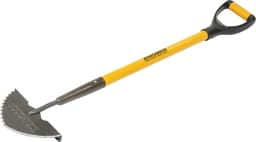
A blade can fail even when the technique and soil are reasonable. The YHZMZHY listing offers a 110 cm serrated tool at about £14.99, but its saved UK reviews include a weld that failed after an hour or two, a head bending within minutes and missing bolts. Its 3.1-star line from 24 ratings is a warning pattern, not evidence that every inexpensive edger will fold. The 96 cm Colwelt saw-tooth shows why diagnosis must stay specific. Some reviewers report that its teeth helped in clay, stones or roots, particularly after rain. Others say the teeth were blunt and would not cut. Serrations plus workable moisture and a sound head may help, while serrations alone do not solve hardness. Inspect a new tool before the first cut. Stop immediately if the head begins to rotate or metal takes a permanent bend. Weight alone is not the answer. The Byhagern is listed at 2.16 kg and remains a manual blade; the one-piece Roughneck is 1.3 kg.

Stop, return or call someone

Stop and wait when weather is the problem. Stop and return or contact the seller when a new head folds, a weld separates or essential fixings are missing during normal use in suitable ground. Under section 9 of the Consumer Rights Act 2015, satisfactory quality is assessed in context, including description and price. That is a general consumer principle, not a promise about the outcome of an individual return. Document the condition promptly with the order details and clear photographs. If someone jumped on a thin head in baked clay or used the shaft to prise a stone, the seller may reasonably distinguish that from an ordinary edging cut. Call a suitable professional when the obstruction may be concrete, buried services, structural paving or a substantial tree root. Also stop if loading the tread causes pain, instability or loss of control.

Common questions

Should I water before edging hard ground?
Yes, when dry soil is the obstacle. Water the line and give moisture time to penetrate; do not turn it into mud immediately before cutting. Test a short section first. The target is workable soil that accepts controlled pressure and holds a vertical face.
Why did my blade bend on the first try?
Possible causes include baked soil, levering the shaft, a buried obstruction or a weak head or weld. Stop as soon as deformation appears. If the tool folded during an ordinary vertical cut in moist soil, record the conditions and contact the seller rather than trying to straighten and continue.
Is a bent £15 edger faulty?
Price and description are relevant, but the circumstances matter. A head folding during normal use in suitable soil may raise a satisfactory-quality issue; damage after jumping or levering in baked ground may indicate misuse. Keep evidence and seek case-specific advice if the seller disputes the return.
What should I do when I meet tree roots?
Stop stamping and expose enough of the obstruction to identify it safely. Fine roots may yield to a sharp serrated edge, but substantial roots should not be severed casually. Move the line or seek arboricultural advice where root health or tree stability could be affected.
When should I hire someone?
Hire appropriate help for suspected services, concrete, paving that may be undermined, major roots or a boundary dispute. Professional help is also sensible when pain or balance prevents controlled use. A harder stomp is never the safe next step in those situations.

Related pages

Sources

Sources from the research digest, last checked on 22 October 2026. Shelf prices, star lines, dimensions and materials are from the retained amazon.co.uk listings.

  1. RHS, how to create a lawn edge (retrieved 22 October 2026)
  2. RHS, how to maintain lawn edges (retrieved 22 October 2026)
  3. RHS, June lawns (retrieved 22 October 2026)
  4. The English Garden, best lawn edgers, updated 23 April 2025 (retrieved 22 October 2026)
  5. GOV.UK, outdoor equipment noise (retrieved 22 October 2026)
  6. Consumer Rights Act 2015, section 9 (retrieved 22 October 2026)
  7. GOV.UK, General Product Safety Regulations 2005 (retrieved 22 October 2026)
  8. HSE INDG143, Manual handling at work (retrieved 22 October 2026)