When can I mow the lawn UK? Noise rules explained
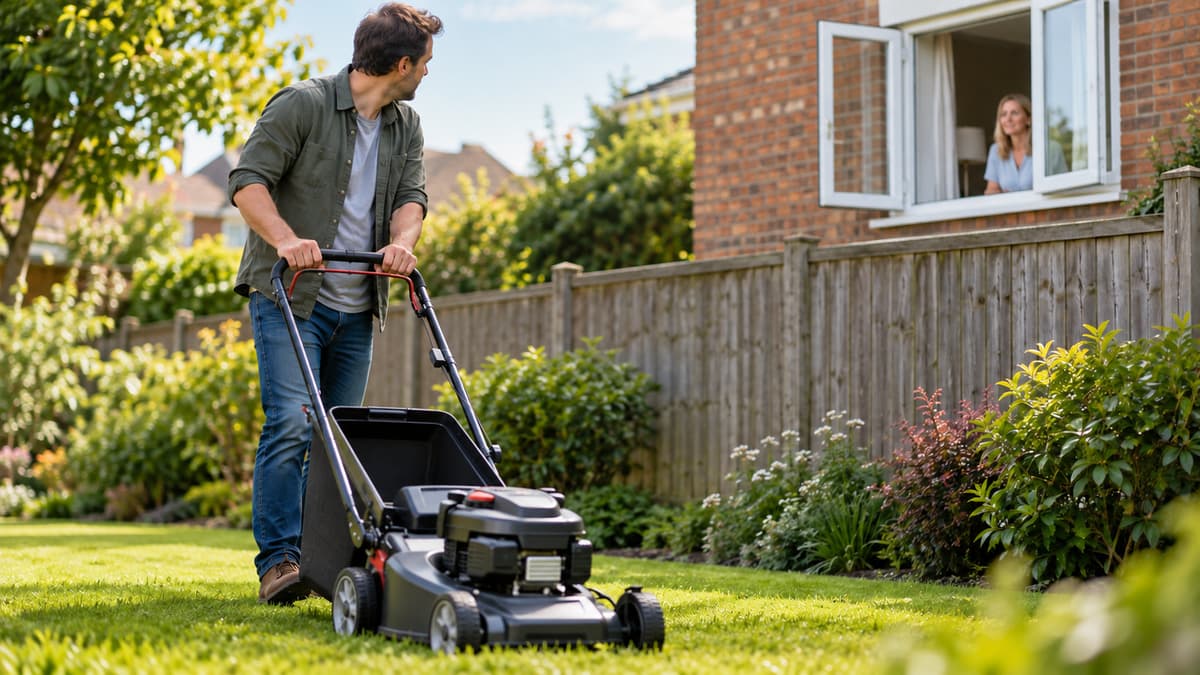
When can you mow the lawn in the UK? Sensible hours, what dB labels mean, robot schedules, and when noise may count as a statutory nuisance for neighbours.
On this page
The engine starts, the grass box is empty, and then you notice the bedroom window next door is open. If you are wondering when can I mow the lawn in the UK, the useful answer is not a made-up national timetable. There is no single UK-wide clock that makes mowing automatically lawful after one hour and unlawful before it, but repeated or unreasonable noise can still bring a complaint.
The safest approach is to mow during normal daytime hours, keep the session as short as practical and adjust for weekends, shift workers and closely packed gardens. The decibel figure printed on a mower is an equipment label, not a licence to make noise at any hour.
In short
There is no national rule saying every UK household may mow only between fixed hours such as 8am and 8pm. Councils consider the character, duration, frequency and timing of noise when deciding whether it could amount to a statutory nuisance, while local rules and contracts can add separate restrictions. A short daytime cut is very different from a petrol mower used repeatedly at dawn.
There is no national mowing clock
You will often see confident claims that lawn mowing is legal from 8am to 8pm on weekdays, with later starts on Sundays. Those hours can be a useful neighbourly convention, but they are not a single national statute. No universal mowing timetable covers every home in England, Scotland, Wales and Northern Ireland.
What matters is the context. A 20-minute cut at 11am on a weekday is ordinary domestic activity in most neighbourhoods. The same mower at 6am beside an open bedroom window, or for long periods on several consecutive evenings, creates a very different noise pattern. Volume matters, but timing, frequency, duration and the character of the area matter too.
Separate rules may still affect your property. A council can have controls relevant to particular land or activities, and a tenancy agreement, lease, caravan-park rule or managed-estate covenant may set quiet hours. Northern Ireland also has its own legal framework where Great Britain and Northern Ireland regulations diverge. If a dispute has become formal, check your council’s current guidance rather than relying on a forum timetable.
Choose hours your neighbours can live with
As a practical starting point, avoid mowing before 8am and leave a wider margin on Sundays and bank holidays. That is guidance for reducing conflict, not a statement that 8am creates an automatic legal right. In a quiet cul-de-sac, starting at 8.01am with a petrol mower may still wake several households; beside a busy road later in the morning, the same cut may barely stand out.
Aim for mid-morning to late afternoon where possible. Finish before the evening becomes quiet, particularly in summer when windows are open and people use their gardens. If you know that your neighbour works nights, has a sleeping baby or is unwell, a two-minute conversation can identify a better half-hour without turning their preference into a permanent veto over normal garden maintenance. Clear toys, stones and branches first so you are not restarting the engine.
What the noise label actually means
The number on a mower deserves careful reading. Under the outdoor-equipment noise regime, many machines placed on the market carry a guaranteed sound-power marking. For lawnmowers with a cutting width of 50cm or less, the Stage II figure in the relevant schedule is 96 dB. This is a regulatory equipment measure, not a lawn mower noise limit measured at the neighbour’s fence.
Sound power describes the total acoustic energy emitted by a source under a defined assessment. Sound pressure describes the level at a particular position and changes with distance, surroundings and measurement conditions. A hard wall can reflect sound; doubling your distance from the mower changes what reaches you. You cannot sensibly compare a 96 dB guaranteed sound-power marking directly with a manufacturer’s claim that a robot operates below 59 dB(A).
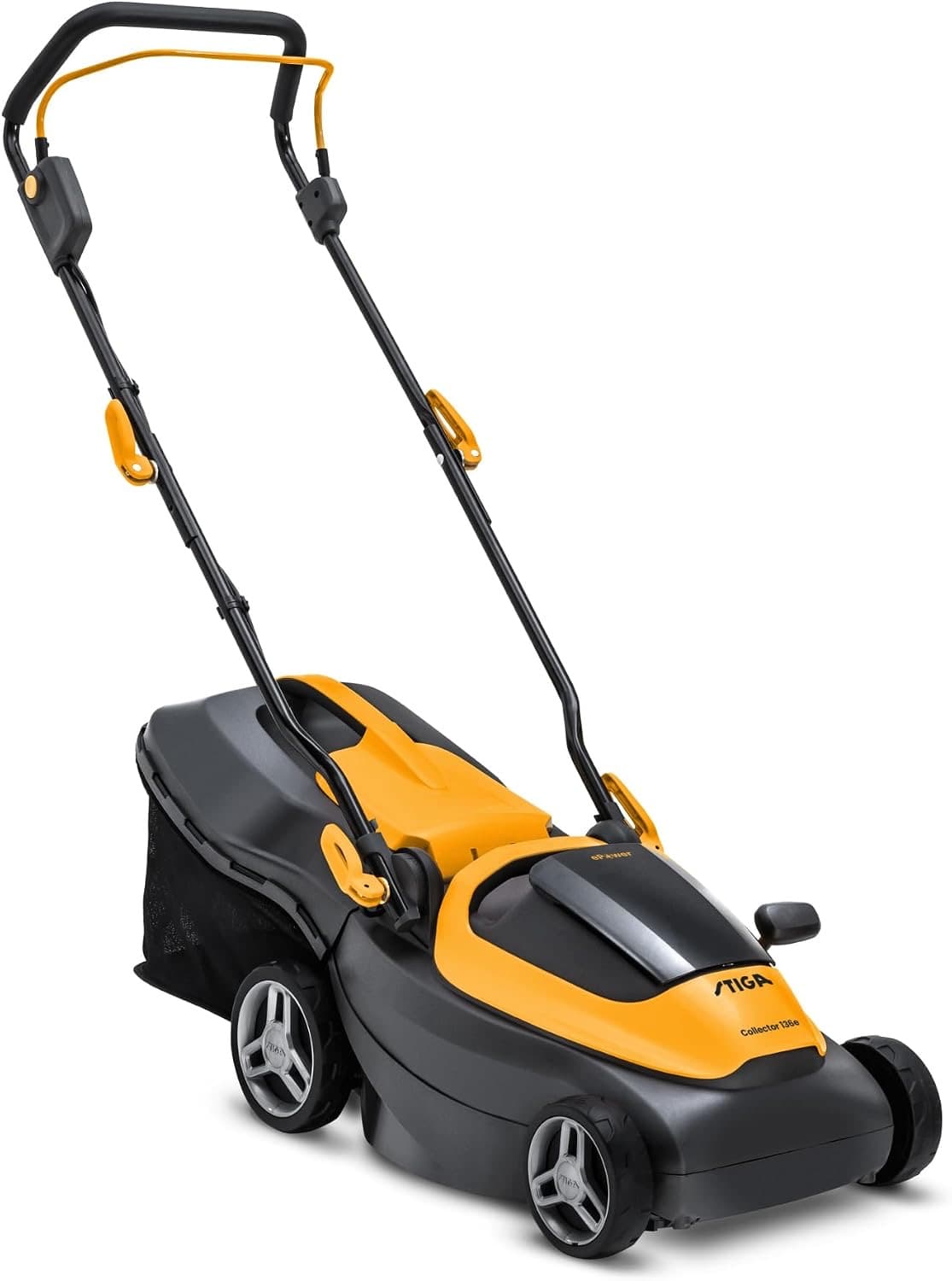
Nor is the label a hearing-safety promise. Follow the manual and use suitable hearing protection where the manufacturer calls for it. Do not remove guards or improvise a cover around the motor to make it quieter, as that can interfere with cooling, collection or safe operation. When comparing machines, check whether each specification is sound power or sound pressure. The Stiga lawn mower, Wolf Garden lawn mower and Yard Force lawn mower comparisons weigh those trade-offs. The top pick in the Stiga set is the Collector 136e Kit at about £199, with 4.4 from 264 amazon.co.uk reviews, a 34 cm cut and two 2 Ah batteries. A qualifying purchase can earn a commission at no extra cost to you.
When mowing can become a statutory nuisance
In England, councils investigate certain noise complaints under the Environmental Protection Act 1990. Government guidance on statutory nuisances says a council must take reasonably practicable steps to investigate a complaint. If it is satisfied that a statutory nuisance exists, has occurred and is likely to recur, or is likely to occur, it must generally serve an abatement notice.
That threshold is not triggered simply because somebody can hear your mower. Ordinary life produces noise, and a daytime lawnmower is often given by councils as an example of sound that may be difficult to treat as a nuisance in isolation. Officers assess how long it lasts, how often it happens, when it happens and how it affects the use of another home. Calling a mower domestic does not protect persistent use at antisocial times.
An abatement notice can require noise to stop or be restricted, and failing to comply can lead to prosecution or other enforcement. The normal path is not immediate confiscation after one Sunday cut. If somebody raises a concern, agreeing a reasonable schedule is usually faster and less damaging than testing where the formal threshold lies.
Robot mowers still need a sensible schedule
A quiet robot mower changes the sound but not the basic responsibility. Manufacturers may promote low sound-pressure figures and scheduling through an app, yet a 2am setting is a technical capability, not legal permission. A faint motor and repeated blade clicks can remain noticeable against a very quiet night-time background, especially when the machine reaches the same boundary every few minutes.
Robot mowing is also repetitive by design. A conventional mower may make more noise for 30 minutes once a week, while a robot can run for several hours on many days. Which pattern is less intrusive depends on the garden, boundary distance, docking position and schedule. Keep routine runs within daytime or early-evening periods and avoid dawn starts. For how often to run one, see how often a robot mower should run.
Position the charging station away from shared bedroom walls if the installation rules allow it, and listen from the boundary while the mower turns, docks and crosses rough patches. There is also a wildlife reason not to run a robot overnight: hedgehogs and other nocturnal animals are more active then. Daylight scheduling, a pre-run lawn check and compliance with the manufacturer’s safety instructions are sensible limits even for models marketed as autonomous.
Reduce noise before it becomes a dispute
Maintenance cannot make every mower quiet, but it can remove avoidable noise. With the machine isolated from its power source, inspect it as the manual directs. A damaged blade, loose fastener, cracked plastic part or worn bearing needs proper attention; continuing to use a mower that has developed a metallic knock is unsafe as well as antisocial.
Keep the blade sharp and appropriate for the model. A blunt blade tears grass and can make the motor work harder, while an incorrectly fitted or unbalanced replacement can cause vibration. Battery models avoid petrol-engine noise, but blade condition, deck resonance and wheel rattle still matter. Never work beneath a mower merely because its switch is off: remove the battery, disconnect the plug or follow the petrol-model isolation procedure first.
Cut regularly enough that you remove no more than roughly a third of the grass height in one pass, and do not force the mower through wet clumps. Empty the collector before it overfills. If a neighbour complains, ask which part of the pattern affects them: start time, duration, boundary passes or frequency. Moving one weekly session by an hour can settle it without a new machine.
Common questions
Is there a legal time to mow the lawn in England?
Can I mow my lawn at 8am in the UK?
Can I mow on a Sunday?
What does 96 dB on a lawn mower mean?
Is 59 dB(A) the legal lawn mower noise limit?
Can I run a robot mower at night?
Can the council take away a noisy mower?

Peter F. is the editor for DIY & tools at productscompared.co.uk. Comparisons in this category are checked against amazon.co.uk listings, review evidence and public UK sources.
Related articles
How often a robot mower should run
Little and often in the growing season, then less as growth slows, without disturbing neighbours.
When not to buy a robot mower
Long grass, no outdoor socket, or a lawn you can mow in minutes may mean a robot is the wrong buy.
Choosing a mower for a small UK garden
Measure the grass you actually cut, then compare a collector you can push with a robot.