Is a robot mower worth it for a small garden?
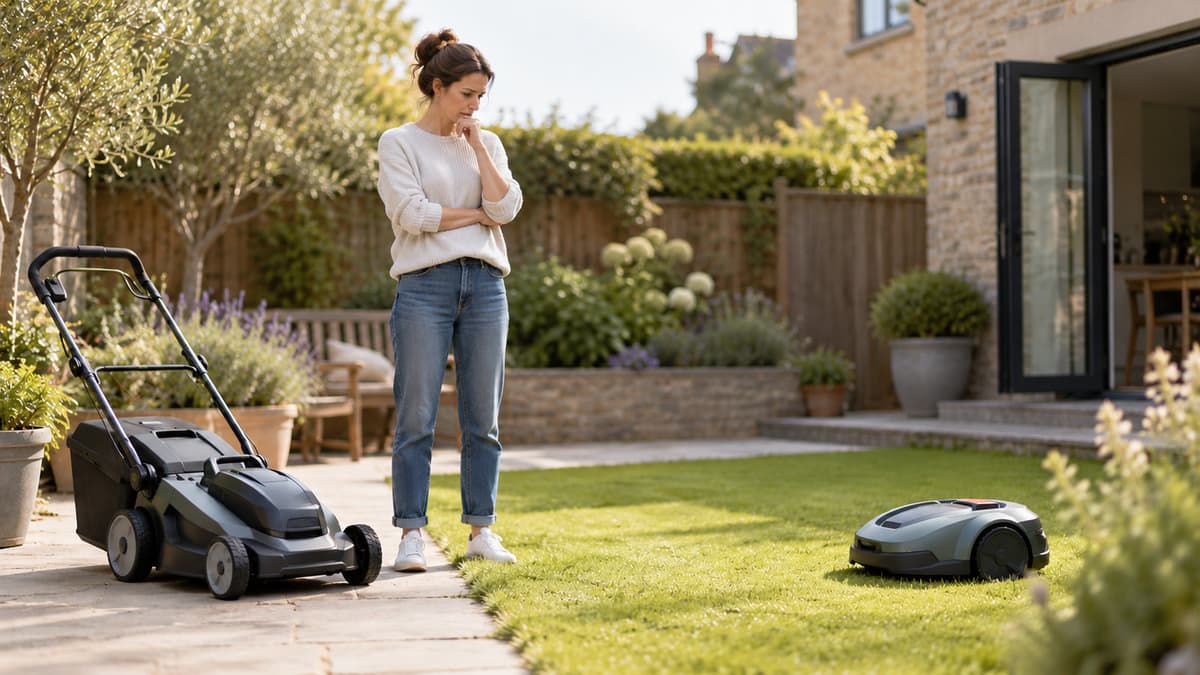
Find out when a robot mower is poor value on a small UK lawn, from tiny plots and long grass to unsafe edges, awkward charging and gardens full of obstacles.
On this page
Your lawn takes ten minutes to cut, yet the robot you are considering costs far more than a competent cordless mower. It promises to give you time back, but you would still clear the grass, trim missed edges and look after another battery-powered machine. In that situation, asking is a robot mower worth it for a small garden is more useful than asking which robot has the longest feature list.
Robot mowers work best when frequent, automatic cutting solves a genuine problem. They are less convincing when the lawn is tiny, regularly overgrown, full of movable obstacles or difficult to connect to a safe charging point. Before paying for automation, work out whether you are removing a tiresome job or adding a complicated system to a job that was already easy.
In short
Do not buy a robot mower merely because mowing is repetitive. Skip it if you can comfortably cut the whole lawn in 10 to 15 minutes, have no sensible place for a powered base, often let the grass grow long or cannot provide safe margins around water and drops. A light cordless mower is usually cheaper, easier to store and better able to recover an untidy lawn.
Your lawn takes minutes to mow
A small rectangular lawn can make a robot mower look more impressive on paper than it feels in use. If mowing takes 15 minutes, even doing it weekly for 30 weeks amounts to seven and a half hours of pushing per year. The robot does not necessarily return all of that time because the supporting work remains yours.
You must keep the lawn clear enough for unattended cutting. That can mean moving toys, a paddling pool, football goals, hosepipes, garden chairs and fallen branches before the robot starts. You may also need to brush the underside, replace blades, rescue the machine from a soft edge and trim strips it cannot reach. On a compact lawn, those jobs can take nearly as long as mowing with a small cordless machine.
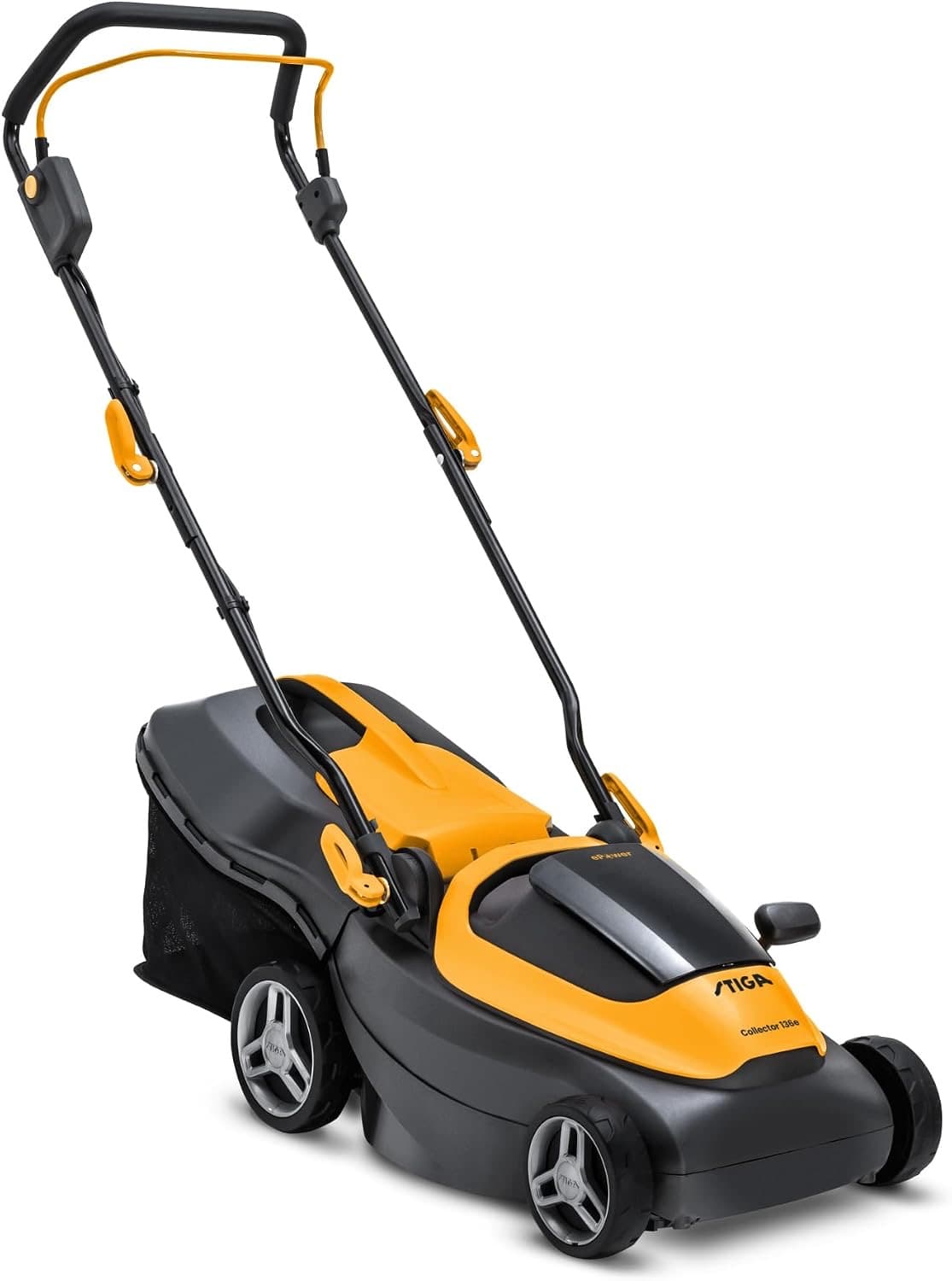
There is also a difference between avoiding work and avoiding strain. If walking behind a mower is uncomfortable, automation may be valuable even where the arithmetic looks weak. If you are mobile and do not mind a brief walk, compare the robot with a light mower that comes out of the shed and goes away again. The STIGA lawn mower comparison is a useful starting point. The top pick is the STIGA Collector 136e Kit, a hand-propelled 20 V collector at about £199, with 4.4 from 264 amazon.co.uk reviews, a 34 cm cut and a stated area of up to 300 m².
You have nowhere sensible for the base
A robot mower needs more than an empty corner. Its charging base must sit where the machine can approach it reliably, and the installation normally needs a suitable mains supply. The exact clearances, surface and cable arrangement vary by model, so check the manufacturer's installation instructions against your garden rather than assuming the base will fit wherever a planter currently stands.
No outdoor socket is a warning, not a prompt to trail an ordinary extension lead through a window. A lead across a path can create a trip hazard, while plugs and connections need protection appropriate to their location. If the only practical answer is a new outdoor electrical point, obtain suitable professional advice and count that work as part of the purchase cost.
The base itself can also be awkward on a narrow patio or tiny lawn. It remains visible, consumes useful edge space and may need a route that conflicts with furniture, gates or the line you walk to the shed. A wireless-boundary mower removes some perimeter-wire work, but it does not remove the need for charging, dependable navigation and a suitable home position. Measure before buying. Mark out the base and the required approach area with cardboard or garden canes, then use the garden normally for several days. If the mock installation blocks a route, the real one will not become less intrusive after you pay for it.
Your grass is often long
A robot mower maintains grass; it is not the right machine for reclaiming a miniature meadow. Its normal pattern is to make frequent short passes, remove a small amount and leave fine clippings as mulch. That routine assumes the grass is already at a manageable height and the machine can continue cutting often enough to keep it there.
After a long holiday, a wet month or a deliberate wildlife break, the lawn may be tall, bent and uneven. Forcing a robot into that growth can produce poor cutting, repeated stoppages or clumps rather than fine mulch. Wet grass also sticks to the deck and wheels. The practical recovery is to use a suitable push mower, raise the deck and reduce the height in stages. Never remove an extreme amount in one pass simply to reach the robot's preferred level. If the garden regularly reaches this state, look at mowers for tall grass instead.
The layout needs too much supervision
Robot mower marketing often shows one smooth, open lawn. Real British gardens may include narrow side passages, stepping stones, raised roots, a pond, a trampoline, a washing-line socket and a strip of grass beyond a gate. Each feature asks the navigation system to make another correct decision, and cheaper models may not offer the mapping or multi-zone control needed for a fragmented layout.
A flush border beside paving is relatively easy because a mower can overlap it, subject to the manufacturer's setup rules. A drop, retaining wall, pond or open stair is different. Where one wrong movement could damage the machine or put it into water, do not treat software, satellite positioning or a single sensor as the only safeguard. Allow the stated clearance and add a robust physical edge where necessary. A narrow corridor may still cause unreliable travel, and a closed gate stops autonomous access. If you must carry the mower between two lawns or stand nearby while it negotiates one patch, you are not getting fully unattended mowing.
Clutter is another limit. Toys, pet mess and hose fittings can interrupt work despite obstacle detection. Draw a map of drops, water, gates and movable objects. If it reads like a risk assessment, a conventional mower with you at the controls may suit a small but complicated garden better.
The saving does not justify the cost
Automation has two prices: the amount you pay and the attention it continues to require. Alongside the mower, allow for installation materials where applicable, replacement blades, eventual battery replacement and any electrical work. You may still want a strimmer for edges and a push mower for long-grass recovery, so the robot is not automatically a one-machine solution.
Compare that package with the cost of a cordless mower suitable for the same area. Cordless machines still need battery care and storage, but they avoid a permanent base on the lawn and can collect longer clippings in a box. The Yard Force lawn mower comparison shows another route if your priority is straightforward cutting rather than continuous automation.
Value is personal, so use time you can genuinely recover rather than the total minutes the robot spends moving. If clearing obstacles and finishing edges takes ten minutes, replacing a 15-minute manual cut saves only five minutes that day. A larger open lawn that takes an hour may create a meaningful saving even after setup and trimming. One customer review cannot show a brand's failure rate. Look for recurring patterns and whether the stated limitation applies to your layout.
When a robot does make sense
The case improves when the lawn is open, reasonably level and already kept short; the base has a safe, unobtrusive powered position; and mowing consumes time you would genuinely use elsewhere. Frequent mulching can keep growth visually consistent without filling a collection box, provided you are happy to maintain that schedule.
A robot may also be worthwhile where pushing a mower is difficult. You still need a safe way to clear obstacles, clean accessible parts and deal with edges. If you proceed, buy for the difficult part of your garden rather than the headline area rating. Check slope limits, passage requirements, boundary method, zone handling and the exact base instructions. If a cordless mower completes the work quickly and reliably, choosing it is avoiding a complicated answer to a small problem.
Common questions
My lawn takes fifteen minutes. Is a robot mower worth it?
Can I use a robot mower without an outdoor socket?
Will a robot mower cut long grass after a holiday?
Is a robot mower safe beside a pond?
Do I need to keep a push mower as well?
What if children leave toys on the lawn?
Does one bad review mean I should avoid a robot mower brand?
What should I buy instead of a robot mower?

Peter F. is the editor for DIY & tools at productscompared.co.uk. Comparisons in this category are checked against amazon.co.uk listings, review evidence and public UK sources.
Related articles
Best mower for a small garden UK: choose the right size
Measure the grass, compare collector and robot options, and check access before you buy.

Robot lawn mower cost UK: what you really pay
From a £949 STIGA A 6v to a £199 collector, budget for the lawn you actually cut.
How often should a robot lawn mower run? Schedule tips
Little and often in active growth, then less often as the lawn slows down.