Independent comparisons. We may earn from shop links. More info

Electric vs central heating towel rail

Updated: 22 October 2026

Search results blur three products: a plumbed towel radiator on the boiler circuit, a dry electric ladder on a fused spur, and a dual-fuel rail that can do both. If the listing shows pipe centres and TRV valves and you have no pipes, you need electric. That is what the [electric towel radiator comparison](/hub/heating/electric-towel-radiator) covers, after five central-heating misfits were removed. This page says when boiler-led heat wins and when independent electric drying wins. Dual-fuel is out of scope. Peter F. used the amazon.co.uk listings in the electric set. There was no lab test. A qualifying purchase can earn a commission at no extra cost to you.

Search results blur three products: a plumbed towel radiator on the boiler circuit, a dry electric ladder on a fused spur, and a dual-fuel rail that can do both.

Our top picks

On this page

How to spot the wrong listing

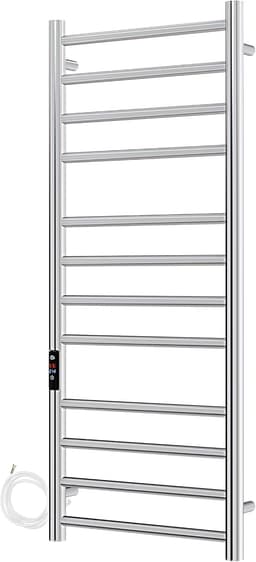
A central-heating towel radiator quotes BTU tied to flow temperature, shows pipe centres, and assumes isolating valves. A dry electric rail quotes element watts and a fused spur or, rarely, a plug. “Central heating” with no separate element means you cannot wire that rail to the mains. Listings with BSP and pipe-centre language were removed because they set a false price. A £35 plumbed rail is not the same purchase as a £69 hardwired Manissa. If the home has no wet heating, ignore BTU and filter for watts and an IP rating.

Winter and summer behaviour

When the boiler runs daily in winter, a plumbed rail piggybacks heat you are already paying for. Towels dry when the programmer calls for heat. The weakness is summer. Rails go cold when the boiler is off for months. An electric rail switches on by itself, which suits a June guest bathroom or a loft ensuite that is not on a hot-water loop all day. Cost scales with label wattage and time on. This set tops out at 136 W. Using 26.32 p/kWh as a cap-rate example, 100 W for six hours is roughly 16 p a day if the element ran flat out. Gas per kWh can look lower, but you rarely fire a boiler only for a towel rail. Electric wins on when it is on. Central heating wins on bulk heat when the system is already hot. A wet rail can stay cold with the boiler off and may need balancing. An electric rail adds a fixed wiring point, inspected like any other bathroom heater.

The dual-fuel gap

A dual-fuel rail combines a plumbed heat exchanger with an electric element for a summer boost. Sanctuary Bathrooms and trade guides treat that as the flexible choice when you already have pipes and still want drying with the boiler off. None of the seven ASINs in this electric comparison is dual-fuel. Adding an aftermarket element to a random plumbed rail is a separate job, with immersion length and leak risk to match. If you need both fuels, shop that category with a plumber. Do not buy a plumbed rail from a mixed search and assume a screw-in element will fit. Sizing the electric-only wattage is on the electric towel radiator buying guide.

When this comparison is the right shop

Stay on the electric table for mains-powered drying in the 60–136 W class, with a hardwired install on most picks. Leave for a plumber if the pipes are already at the right centres and you want a TRV on the boiler circuit. Look at dual-fuel elsewhere when those pipes exist and summer independence matters. Extending 15 mm pipe to a new ensuite can cost more than a spur from the landing. A bathroom that already has a working plumbed rail often stays wet, with the valves upgraded. Even the top Manissa at 110 W will not behave like a full-size radiator on the heating loop. Room-by-room electric picks are on best electric towel rail.

Common questions

I have no central heating. What towel rail do I need?
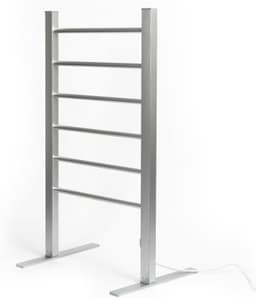
A dry electric rail with a suitable IP rating and a fused spur. If new wiring is impossible, the freestanding Status rail in this set plugs in, at IPX1, and the socket must sit outside the wet zones. Ignore BTU and pipe-centre listings. They need a boiler circuit you do not have.
Is an electric towel rail expensive to run?
It can be if a high wattage stays on all day. In this 60–136 W band, timed towel use is often pence rather than pounds. A rule of thumb at the October to December 2026 cap of 26.32 p/kWh puts 100 W flat out for six hours at about 16 p. Most elements cycle down once the rail is warm.
Can I add an element to a plumbed rail?
Sometimes, with a matched kit and a plumber. Immersion length and leak risk have to suit that rail. None of the seven electric ASINs here is that kit, and none is a dual-fuel rail. Do not assume a screw-in element from a mixed search will fit.
Why do cheap rails show a BTU figure?
They are plumbed products sitting in an electric search. A BTU or a kilowatt tied to flow temperature, plus pipe centres and valves, means central heating. Check that language before checkout. A low shelf price does not make the rail electric.
How is dual fuel different from electric only?
Dual fuel needs pipes plus an electric element, so it can follow the boiler in winter and run alone in summer. This comparison is electric only. Sanctuary Bathrooms treats dual fuel as the flexible choice when the pipes are already there. It is a different shop.
In winter, should I stay with a plumbed rail?
If the boiler runs anyway and the pipes are already in the right place, a plumbed rail can be the economical winter option. Add electric, or a dual-fuel element elsewhere, if the towels go cold as soon as the heating programme stops. The electric set here does not include that hybrid.
Do electric towel rails need radiator valves?
No. A dry electric rail has no flow and return, so it has no TRV. Valves belong on a central-heating rail on the wet circuit. Electric listings in this set talk about a fused spur or a plug, and about watts, not about pipe centres.

Related pages

Sources

Public UK sources named below. amazon.co.uk prices, stars and review counts on these seven listings were taken from the listing files dated 19 October 2026. Page updated October 2026.

  1. NICEIC bathrooms and electrics (retrieved 19 October 2026)
  2. ProCerts spurs in bathrooms (retrieved 19 October 2026)
  3. Sanctuary Bathrooms heating types (retrieved 19 October 2026)
  4. The Radiator Warehouse buying guide (retrieved 19 October 2026)
  5. Home Energy Quotes running costs (retrieved 19 October 2026)
  6. Ofgem price cap October to December 2026 (retrieved 19 October 2026)
  7. Sterlingham 230 V installation guide (retrieved 19 October 2026)
  8. BS 7671:2018+A3:2024 (retrieved 19 October 2026)