Independent comparisons. We may earn from shop links. More info

Electric towel rail bathroom zone 2

Updated: 22 October 2026

Water, bare feet and a permanent rail meet stricter rules than a bedroom socket. You do not need to memorise BS 7671. You do need to know where the zones start, what IPX4 promises on a listing, and why the fused spur almost never sits beside the shower head. This page applies that to the rails in the [electric towel radiator comparison](/hub/heating/electric-towel-radiator): Manissa hardwired ladders, the AQUAWORLD digital rail, and the freestanding Status plug-in. Peter F. used those amazon.co.uk listings. There was no lab test. A qualifying purchase can earn a commission at no extra cost to you.

Water, bare feet and a permanent rail meet stricter rules than a bedroom socket. You do not need to memorise BS 7671.

Our top picks

On this page

Bathroom zones in brief

NICEIC-style guidance divides the room from the bath or the shower basin. Zone 0 is inside the bath or the shower tray. Zone 1 runs above that to the fixed shower head or 2.25 m, whichever is lower. Zone 2 is the band around zone 1, typically 0.6 m beyond the bath rim or the shower cubicle, plus under a basin where a 30 cm radius applies. Outside those volumes is where many accessories are allowed. The wall can still get splashed. A fixed towel rail sold for bathroom use is meant for zone 2 or outside the zones, depending on the IP rating and the manual. Zone 1 asks for a higher IP grade than zone 2. Copy that only says “bathroom safe”, without naming a zone, is still marketing. If a glass panel leaves you unsure, treat the enclosed shower footprint as zone 1 and keep fixed wiring out of it unless an installer signs it off.

What these listings claim

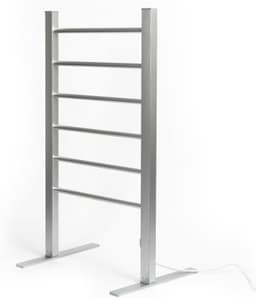
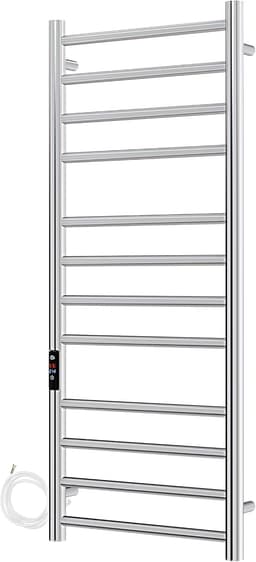
Manissa Siena sizes quote IPX4 with zone 2 suitability. IPX4 means splash protection from all directions on the enclosure, for a wall where towels drip and the rail is not immersed. IPX1 on the Status rail is vertically dripping water only, with a trailing lead. Reviews use it in utility spaces. Direct spray in a shower room mismatches both the rating and the cable. AQUAWORLD cites zone 2 and does not print an IP code beside Manissa’s IPX4 line. Check the instruction sheet. Finer controls do not fill a missing ingress rating. Filter by IP rating and connection before you compare prices.

Where the fused spur lives

Installer guidance, including ProCerts, is blunt: a fused spur does not belong inside zone 2. The usual pattern is a fused connection unit on the room side of the doorway, or on a wall outside the measured zones, feeding the rail through fixed wiring. The shopper’s rule is to put the switch and the fuse where you would not stand in the shower spray. Ordinary sockets are restricted in a UK bathroom. A shaver socket is the exception, and it is not the feed for these ladders. The Status plug-in model needs a socket outside the wet zones, with the lead routed so it is not a trip across the tiles. Part P notification applies to most new bathroom circuit work for householders who are not self-certifying. Bracket order is on how to install an electric towel rail.

When to stop and call an electrician

If an RCD trips as soon as you energise the rail, as one AQUAWORLD purchaser reported on a bench test, stop. Have earth continuity and the terminations checked. Do not bypass the RCD. If you cannot tell zone 1 from zone 2, measure from the bath lip and the shower head. Call a registered electrician before you buy if there is no spur route outside the zones, if that circuit has no RCD, or if moving the fused connection unit would cross a wet volume. Wattage and plug-in versus hardwired choices sit on the electric towel radiator buying guide.

Common questions

Is IPX4 enough for zone 2?
For a fixed rail mounted as the manufacturer instructs, IPX4 is the splash level the Manissa listings in this set quote alongside a zone 2 claim. It covers splashes on the enclosure. It does not move the fused spur or a socket into the wet volume. Those accessories stay outside zones 1 and 2.
Can the switch be on the rail?
Manissa puts a 2/4 hour timer on the rail body. That switch is part of the product. The fused spur itself still sits outside the zones. A user switch on the bars is not a fused connection unit, and it is not a reason to place the fuse inside zone 2.
Can I use a plug socket in the bathroom?
A general socket is not the supply for these towel rails. The hardwired Manissa and AQUAWORLD listings specify a fused spur. The Status rail needs a socket outside the wet area, not a shaver socket inside zone 2, and the 1.5 m lead must not trail through spray.
Is the Status rail OK in a bathroom?
Only with the limits on the listing. It is IPX1, freestanding and plug-in, with a 1.5 m lead. Reviews use it for movable drying in low-splash rooms. It is a poor stand-in for a fixed IPX4 ladder on a zone 2 wall.
What about zone 1 over the bath?
Do not mount an unverified rail in zone 1. Zone 1 needs a higher IP grade than zone 2. The ladders in this set are described for zone 2 or for placement outside the zones, and the Status rail is not a zone 2 wall product at all. If the wall might be zone 1, measure it and ask an electrician.
Do I need Part P for a bathroom rail?
Fixed wiring in a bathroom is notifiable for most householders who are not self-certifying. Use a competent, registered person for the circuit. The Status plug-in rail does not add a spur, but it still needs a socket that is already outside the wet zones.
The RCD keeps tripping. What now?
Stop using the rail and leave it isolated. Do not remount it and do not bypass the RCD. Book a professional fault-find for earth continuity and the terminations. One AQUAWORLD review reported a breaker trip on a bench test before the rail was fixed to the wall.

Related pages

Sources

Public UK sources named below. amazon.co.uk prices, stars and review counts on these seven listings were taken from the listing files dated 19 October 2026. Page updated October 2026.

  1. NICEIC bathrooms and electrics (retrieved 19 October 2026)
  2. ProCerts spurs in bathrooms (retrieved 19 October 2026)
  3. Sanctuary Bathrooms heating types (retrieved 19 October 2026)
  4. The Radiator Warehouse buying guide (retrieved 19 October 2026)
  5. Home Energy Quotes running costs (retrieved 19 October 2026)
  6. Ofgem price cap October to December 2026 (retrieved 19 October 2026)
  7. Sterlingham 230 V installation guide (retrieved 19 October 2026)
  8. BS 7671:2018+A3:2024 (retrieved 19 October 2026)