Independent comparisons. We may earn from shop links. More info

How to install an electric towel rail

Updated: 22 October 2026

Hardwired rails in the [electric towel radiator comparison](/hub/heating/electric-towel-radiator) arrive with brackets and a short factory lead meant for a fused connection unit, not for a shaver socket. This page is the sequence and the safety checks for the Manissa and AQUAWORLD wall ladders. It is not a substitute for Part P notification or a competent person’s certificate. Peter F. read the amazon.co.uk listings in this set. There was no lab test. A qualifying purchase can earn a commission at no extra cost to you.

Hardwired rails in the electric towel radiator comparison arrive with brackets and a short factory lead meant for a fused connection unit, not for a shaver socket.

Our top picks

On this page

Before you drill

Confirm the listing matches the wiring plan. Manissa bullets specify a 3 amp fused spur and hard wiring, with IPX4 on the rail. Put the fused connection unit outside bathroom zones 1 and 2, not inside a wet niche. The Sterlingham 230 V pattern keeps terminations accessible and warns against cutting a factory lead short so the tiles look neat. If you cannot self-certify Part P work, hire an electrician before you buy. They check RCD protection, cable size and spare ways. One UK reviewer energised an AQUAWORLD rail on the bench and reported a main breaker trip. Treat first power-on as a test. Do not mount a rail that fails off the wall. Use tile bits and anchors rated for the weight. Manissa lists roughly 3–6 kg by size. One review fitted the 400 × 1000 mm rail upside down for the cable route. The usual diagram puts the element at the bottom. Leave enough slack to lower the rail later.

Mounting the ladder

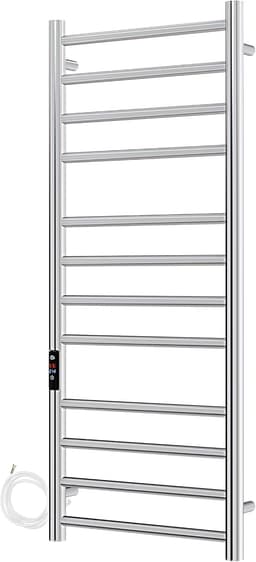
Manissa reviewers hang the top brackets first, lift the rail onto them, then mark the bottom holes while the ladder is level. That beats drilling four holes from a paper template and finding the rail crooked on uneven tiles. Check the projection, about 100 mm on the Manissa listings, so towels clear a door swing or a toilet lid. Drill the glaze slowly with a fresh bit and light pressure. If you hit hollow plasterboard behind a small tiled patch, change to cavity anchors rather than copying a solid-wall kit. With the rail hung loosely, feed the factory lead toward the spur without pinching it behind a bracket plate. Tighten only when the ladder is vertical and parallel to the floor line. The Status freestanding rail skips this sequence. Feet, a dry floor and a socket outside the wet area are covered below.

Connecting at the fused spur

Connection work belongs to someone competent with UK fixed wiring. These listings quote a 3 A fuse, which suits the 60–136 W loads. Wire the factory lead from the polarity diagram in the box. The electrician should match that sheet, not a generic colour guide alone. A timer on the bars is not a reason to move the spur into zone 2. Manissa’s 2/4 hour switch sits low on the rail. Reviews grumble about reaching it. Zone limits are on the electric towel rail bathroom page. Energise once while the rail is still accessible. Bars should warm evenly, without hot-plastic smell and without an RCD trip. A slight odour from factory oil can show on the first cycle and usually clears. A burning smell means switch off. Finish sealant only after that check.

Freestanding exception

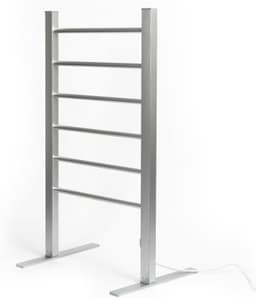
The Status AHTR-100W1PKB is not part of the hardwired sequence. Unpack it, fix the feet firmly so they do not wobble, stand it on a dry floor away from spray, and use the 1.5 m lead to a socket outside the zones. IPX1 means keep direct spray off it. There is no spur and no tile hole, and there is also no permanent zone 2 story. If the wall height, the wattage or the plug-in choice is still open, use the electric towel radiator buying guide before you drill. Hire the electrician when the circuit is new bathroom wiring. Assemble the Status yourself only when the socket is already outside the wet area.

Common questions

Can I install an electric towel rail myself?
Fixed bathroom wiring is notifiable for most householders. You can mark brackets and hang a ladder only if a registered electrician designs and tests the circuit. The plug-in Status rail is simpler: fit the feet and use a socket outside the wet area. It still is not a hardwired zone 2 install.
Where does the fused spur go?
Outside zones 1 and 2, where it stays reachable and can be maintained. A common place is the room side of the doorway or the far side of the wall that holds the bathroom door. Do not hide the fused connection unit inside a shower niche or beside the shower head.
What fuse size do these rails quote?
3 A, as quoted on the Manissa and AQUAWORLD listings in this set. That rating matches the 60–136 W elements here. Do not uprate the fuse because a larger one is already in the drawer. The electrician should follow the instruction sheet in the box.
Can I test the rail before tiling?
Yes. Energise it on the bench or on the wall before the final silicone, while the terminals are still reachable. That check matters more for the AQUAWORLD rail, because one review reported an earth-fault trip before the unit was mounted. Finish the seal only after the bars warm without a trip.
What if the RCD trips immediately?
Stop. Isolate the rail and do not mount an appliance that trips off the wall. A competent person should check earth continuity and the terminations. Do not bypass the RCD to finish the job. One AQUAWORLD reviewer saw the main breaker trip on a bench test.
Does the rail orientation matter?
Manufacturers expect the element at the bottom. One owner fitted a Manissa upside down to suit the cable route and reported that it worked. That is an anecdote, not the default. Follow the diagram supplied with the rail unless the electrician has a documented reason to do otherwise.

Related pages

Sources

Public UK sources named below. amazon.co.uk prices, stars and review counts on these seven listings were taken from the listing files dated 19 October 2026. Page updated October 2026.

  1. NICEIC bathrooms and electrics (retrieved 19 October 2026)
  2. ProCerts spurs in bathrooms (retrieved 19 October 2026)
  3. Sanctuary Bathrooms heating types (retrieved 19 October 2026)
  4. The Radiator Warehouse buying guide (retrieved 19 October 2026)
  5. Home Energy Quotes running costs (retrieved 19 October 2026)
  6. Ofgem price cap October to December 2026 (retrieved 19 October 2026)
  7. Sterlingham 230 V installation guide (retrieved 19 October 2026)
  8. BS 7671:2018+A3:2024 (retrieved 19 October 2026)