3kw heater 13 amp plug: the socket on a long session

A 3 kW heater works out at 13.0 A on a 230 V supply. See why a normal 13 amp plug is a poor plan for a long patio session, and when to ask an electrician.
On this page
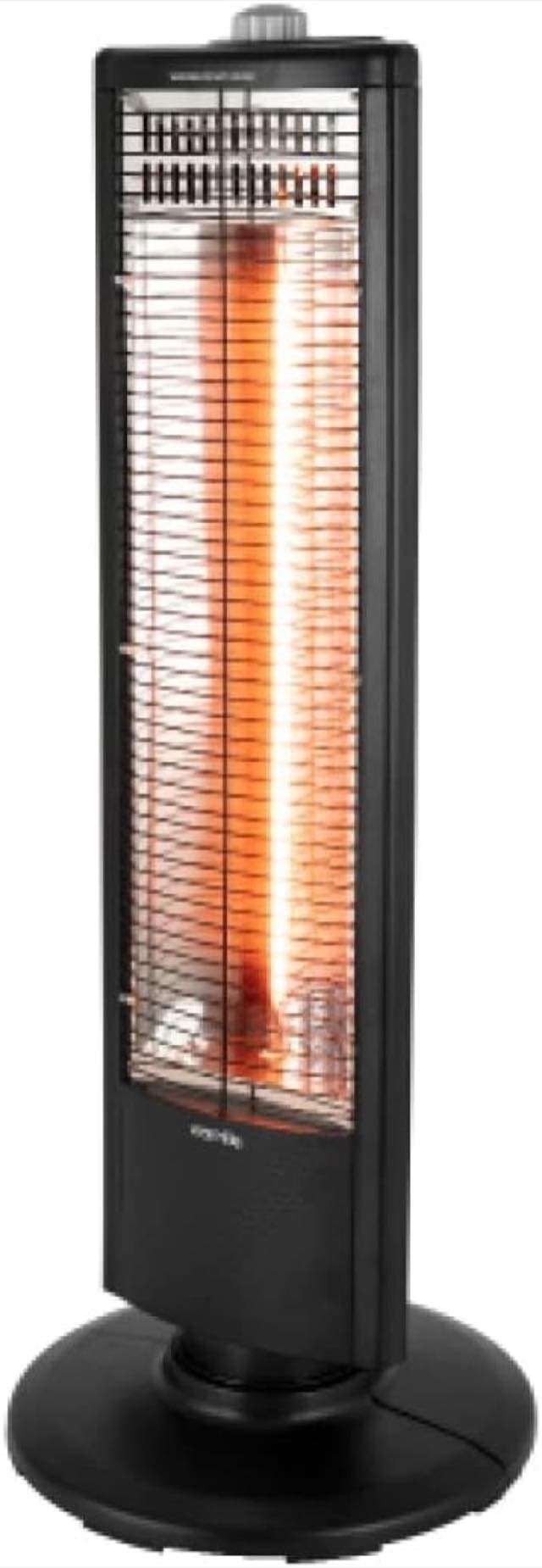
You are at the back door with a cold patio and a heater marked 3,000 watts. The flex ends in an ordinary British plug, and the socket that reaches the chairs is in the kitchen or on a short outdoor point. A patio heater extension lead looks like the Friday-night fix. The 3kw heater 13 amp plug question comes first: at a nominal 230 volts, 3,000 watts divided by 230 is 13.0 amps, the top of a normal BS 1363 plug.
That 13.0 A figure is division on the nameplate. The SOUTHEATIC TW30R listing does not publish a measured current, and its details table has no amp figure. A minute to see whether the elements warm is a different job from a long sitting. Heat Outdoors calls a 13 A socket a poor plan for long runs near 3 kW.
In short
A 3 kW heater on a nominal 230 V supply works out at 13.0 A, level with a normal UK 13 amp plug. A long session, a 13 amp extension reel, or a new outdoor circuit is a different job from that division. Ask an electrician before you settle in for the evening, and keep any rewire off your own list.
Heat Outdoors calls a 13 A socket a poor plan for long runs near 3 kW, and treats heaters above 3 kW as an electrician's job. A 3,000 W plate is the near-3 kW case. This page does not give a wiring method.
The arithmetic at 230 volts
Start with the sum on your phone. Divide the watts on the heater by 230. A 3,000 W nameplate comes out just over 13 amps, which is 13.0 A to one decimal place. People look up 230 volt heater amps because the carton is in watts and the plug is in amps.
Use the plate in your hand. A 2,800 W or 3,200 W heater needs its own division. In the infrared heater comparison the SOUTHEATIC TW30R is listed at 3,000 W, and the details table has no amp figure. The 13.0 A sum stands in for a measurement the listing does not give.
A 2 kW follow-up is 2,000 divided by 230, about 8.7 A. It is still a sum, not a measured draw, and it does not clear an extension reel. Nominal 230 V is the UK mains figure used here. This page gives no correction for a higher socket reading or a long flex.
What a normal socket is built for
BS 1363 is the ordinary British plug and socket. The BS 1363 maximum people mean, when they ask how hard a normal plug can be pushed, is 13 amps. A 3 kW nameplate lands on that number, so a 13 amp plug shows no spare on the label.
A 3000W fused plug is the household name for that object. The fuse sits in the plug, and calling it fused does not raise what a long evening can draw. One SOUTHEATIC reviewer mentions a 13 A plug and a short lead. That describes the box. The details table still has no amp figure.
A short trial is what a moulded plug invites. A 13 amp socket continuous load, left on for a sitting, is a different job, and the sources give no permitted number of minutes and no legal verdict. Leave any rewire with a competent person.
Reels, spurs and a new circuit
A short lead puts a patio heater extension lead in the basket first. A 13 amp extension reel then runs from the kitchen socket to the stand. The notes here give no permitted length, no cable size, and no layout for the reel. Ask an electrician before you uncoil it. The heater's own IP mark is a separate question from the socket: see an outdoor socket for a patio heater.
A fused spur is the other connection Heat Outdoors names: a fused point for the heater, rather than a flex you add. A hard-wired patio heater means a competent person connects it on that fixed point. You give up storing it in the shed after every weekend. This page has no wiring method.
A commando socket sits beside the fused spur in that note. It is an industrial connector, heavier than a household BS 1363 plug, of the kind used on sites and some outdoor supplies. A commando socket heater feed still has to match the load. The source names the connector and gives no current, no pin arrangement, and no fitting method.
If a new outdoor circuit is the proposal, the IET Part P FAQ for England and Wales says a new circuit is notifiable. Adding a point on an existing circuit often is not, unless the work is in a special location. NICEIC points householders to outdoor sockets, IP protection, RCD protection, and a competent person. This page will not decide if your garden is a special location.
The 3 kW listing in this comparison
The 3 kW listing is the SOUTHEATIC TW30R. The digest records 3,000 W, about £179.97, and 4.7 from 11 reviews on amazon.co.uk. IP65 is claimed, the remote is included, and the battery is not. None of that is an amp reading, so 13.0 A is the watts divided by 230 V. Eleven reviews is a short list, and a 4.7 average can miss a fault that shows up in a wet month. Check the live amazon.co.uk price before you treat £179.97 as this week's figure.
The comparison's top pick is a different heater. The Warmlite WL42013 is a freestanding indoor carbon tower at 500 W or 1,000 W, about £56.46, with 4.4 stars from 1,197 reviews. At 1,000 W the same division is about 4.3 A. The amazon.co.uk file states no IP rating. It is a chair heater, not the 3 kW patio bar.
IP65 on the SOUTHEATIC does not fill the empty amp cell or move the 13.0 A sum. NICEIC treats IP protection of outdoor accessories separately from the mark on the heater. A weatherproof-looking heater on a kitchen reel is still that long run near 3 kW.
One reviewer mentions a 13 A plug and a short lead, which is why an extension appears on the first evening. Have a battery for the remote, or the first switch-on is a dead handset. The socket and the session length need a competent person.
Before a long session
Read the watts and divide by 230. For the SOUTHEATIC TW30R that is 13.0 A, from 3,000 W at nominal 230 V. A different plate produces a different current. The details table has no printed amps, so the division is the figure you have.
A patio heater extension lead or a 13 amp extension reel is the long run near 3 kW. Above 3 kW, Heat Outdoors treats the work as an electrician's job, and 3,000 W sits in the near-3 kW wording. Ask before the reel leaves the packet, and keep a DIY rewire off the table.
Tell the electrician you have 3,000 W, a 13.0 A sum at 230 V, a review describing a 13 A plug and a short lead, and a sitting rather than a quick test. Say whether power would come from indoors, an existing outdoor socket, or a new point. That brief is for the visit, not a building method.
The IET Part P FAQ says a new circuit is notifiable in England and Wales. Adding a point on an existing circuit often is not, unless it is a special location. NICEIC points householders to a competent person for outdoor sockets, IP protection, and RCD protection. One hour at a true 3 kW is 3 kWh. What that costs depends on your unit rate, which what an infrared heater costs to run sets beside a panel. Wiring steps stay with that competent person.
Common questions
How many amps is 3 kW at 230 V?
Is a 13 A plug legal on that heater?
Can I use an extension reel?
What is a commando socket?
Is a new outdoor circuit notifiable?
Does IP65 change the plug question?
What about a 2 kW heater?
Which listing in the comparison is 3 kW?

Products Compared publishes British-English buying guides based on amazon.co.uk listings and public UK sources. We do not run a lab and we do not invent test scores.
Related articles

An outdoor socket for a patio heater
The heater IP rating does not make an indoor extension reel safe in the rain. Sort the socket before a lead goes outside.

Electric patio heater or a gas bottle
Gas can throw more heat. Electric is simpler and has no combustion under a gazebo. How to choose for a covered seat.

What an infrared heater costs to run
Nameplate watts are not a bill until you multiply by your unit rate. Compare a panel with a patio heater.