Outdoor socket patio heater: the plug needs its own rating

An outdoor socket for a patio heater is a second product. Match IP66, a 30 mA RCD and the real lead length before a reel goes through the window in the rain.
On this page
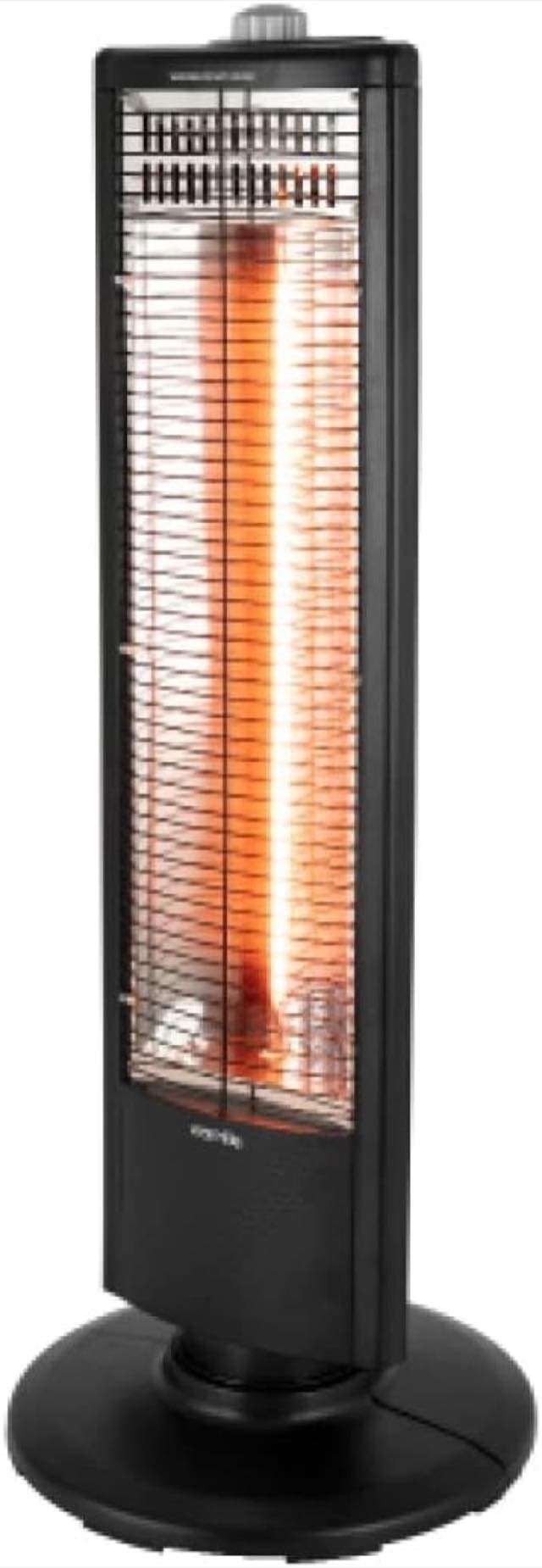
The heater is out, the cushions are dry, and the only spare socket is on the kitchen wall. The lead in the box stops before the door. A reel from the cupboard would close the gap if the sash came down on the cable. An outdoor socket patio heater search usually starts in that gap, while the patio is still dry enough to pretend the problem can wait. What you decide here is the plug, the lead and the outlet.
That outlet is a second product. The heater can carry a weather rating and still arrive with an indoor plug and a short heater lead. NICEIC’s notes for householders treat the outdoor socket, RCD protection and a competent person, where the work is notifiable, as garden electrics in their own right. The carton settles the appliance. The wall settles the socket.
In short
The socket needs an IP rating of its own, beside whatever is printed on the heater. Outdoor sockets are commonly IP66, garden guidance expects RCD protection, and a new circuit is the notifiable case in the IET Part P FAQ for England and Wales. A short supplied lead is a reason to place that socket within reach, with the indoor reel left in the dry.
Two IP ratings, not one
An IP code describes one enclosure. The first digit here is 6, dust-tight, and the second is water: 5 for jets, 6 for stronger jets. IP65 and IP66 stop at the housing with the mark. Rain on the slabs leaves the kitchen plug on the rating it already had.
Pro Breeze splits the products in its own text. The heater is IP65 when used with an IP65 outdoor socket, so that socket is a second item you provide. A dry-room socket follows only the appliance half of the sentence.
NICEIC’s garden notes treat outdoor sockets as commonly IP66. Where the heater asks for IP65, an IP66 outdoor socket meets that minimum. The higher mark stays on the socket that earned it. A wet lead, a joint in the bed and a reel on the slabs keep the rating they were built with.
A weatherproof socket cover is easy to confuse with a mark. A flap throws drip off a faceplate, and the usable rating is the socket as you leave it, plug seated. A loose cover inherits nothing from the heater. IP65 is the Pro Breeze minimum, and IP66 is the figure NICEIC commonly cites, sometimes in a deeper, dearer box.
The cable route can still be wrong after either purchase. Which models claim outdoor use sits in the infrared heater comparison. A better outlet leaves an indoor-only heater indoors.
The socket and the RCD
A heater left on all evening is a continuous load. Heat Outdoors links high continuous loads with 13 A sockets. A 13 A plug is the ordinary British plug. At about 230 volts, 13 amps is roughly 3 kilowatts, the top of that plug, and a patio heater can sit there for a meal rather than for the few minutes a kettle needs. The hours are what make the circuit work hard.
NICEIC pairs an outdoor socket with an RCD, and outdoor-electrics guides, including Total Skills, quote 30 mA as the usual sensitivity. Keep the notification question with the IET Part P FAQ. Many boards already protect socket circuits at 30 mA, some protect only part of the board, and older boards still have none. Ask which of those is the circuit that will feed this heater.
An RCD opens on a leak to earth. A trip in the rain is a clue that water reached a dry place, and it can also leave you with a reel that was never meant to be outside. RCD garden electrics back up a sound outlet. Put the socket within the heater’s own lead, clear of standing water, and leave cable size and the breaker with the competent person. You bring the plate wattage, the hours and the 30 mA question.
Short leads and reels
Harrier, Devola and SOUTHEATIC are among the models whose reviews mention a short heater lead, and no single length fits every box. Fix the heater where it will stand or hang, then measure to the plug with the cable off the step and clear of the puddle line. A lead that looked long on the floor often fails once the head is above the socket.
Put the socket inside that measurement. The indoor reel is the quick substitute, and it is built for dry rooms: drum outlets, switch and the plug back to the house. A coiled drum holds heat under a continuous load, so run the cable fully off even indoors. Unwinding does nothing about rain. An unwound indoor reel on wet paving is still an indoor reel.
The reel is available tonight. A proper outdoor socket can mean a wait, and a competent person if the work is notifiable. Move the heater, or move a sound outdoor socket, when the only problem is reach.
An outdoor extension, fully unwound, with a rating you can read, is a different product, and every extra joint is still out in the weather. The patio heaters in the comparison set the short-lead notes beside the outdoor claims. A short lead on an indoor-only model is a reason to keep that model inside.
An extension lead through the window
The sash comes down on the cable, the reel stays on the worktop, and the heater faces the chairs. It looks easy to undo after breakfast. By then the sheath has taken the pinch, and rain on the sill has a path to a plug built for a dry room.
The frame bears on one spot until the cores fatigue, and water follows the lead onto the indoor socket. The outdoor half, including a connector taped for the night, sits in weather the heater’s rating never claimed. Tape holds a wrapper in place. An IP code is a test result on an enclosure.
An ajar window saves the sheath and opens a gap, so heat leaves the room and rain can reach the indoor socket. A dry afternoon with the door held open only postpones the shower. For one clear forecast you can wait, or sit indoors with a heater that belongs there. By the third autumn weekend an extension lead through the window has become the circuit.
A garden circuit electrician then costs less than a cut sheath and a wet indoor plug. One improvised evening is a delay you can still abandon. A season of the same lead is an installation you never designed.
When the job is notifiable
In England and Wales the IET Part P FAQ treats a new circuit as notifiable. A new garden circuit, because the patio has nowhere honest to plug in, is that case. NICEIC’s advice is that this work belongs with a competent person, and cable routes and breaker choices stay on site with them.
Adding a point on an existing circuit is often outside notification, once special locations are set aside. A room with a bath or shower is the special location people already know. A patio still needs someone competent to say whether you are adding a point or building a new circuit, including when the trench looks small. The person standing at your consumer unit is the one who classifies the job.
Unnotified work is still fixed wiring and still has to be safe. Scotland has its own building standards, and the IET page is England and Wales, so an English note travels badly to Edinburgh. Ask a competent person for the nation where the socket will be fixed.
Write down the plate wattage, whether the supplied lead reaches a dry indoor socket without leaving the building, and whether you want a new circuit or an extra point. Photograph the consumer unit with the cover closed. If the work is notifiable, the heater waits. A Saturday delivery changes nothing, and a patio reel until Thursday is the arrangement a weather mark on the heater cannot carry.
Common questions
Is the heater’s IP rating enough?
What IP rating should the socket have?
Can the lead run through a window?
Is a new garden circuit notifiable in England?
Do I need an RCD?
What if the supplied lead is too short?
Is Scotland the same as England?
Which heaters in the comparison are outdoor?

Products Compared publishes British-English buying guides based on amazon.co.uk listings and public UK sources. We do not run a lab and we do not invent test scores.
Related articles

Electric patio heater or a gas bottle
Gas can throw more heat outdoors. Electric skips the bottle and the combustion under a covered seat.

A 3 kW heater and a 13 amp plug
A 3 kW load sits at the top of a normal UK plug. Hours of running are a different job from a short burst.

What an infrared heater costs to run
Nameplate watts become a bill only after you multiply by your unit rate and the hours you actually run.