Stab vest price UK: what you actually pay for

What a stab vest costs in the UK, from amazon.co.uk titles at £25.99 to £325 and specialist listings above £400, and why the price is not a certificate.
On this page
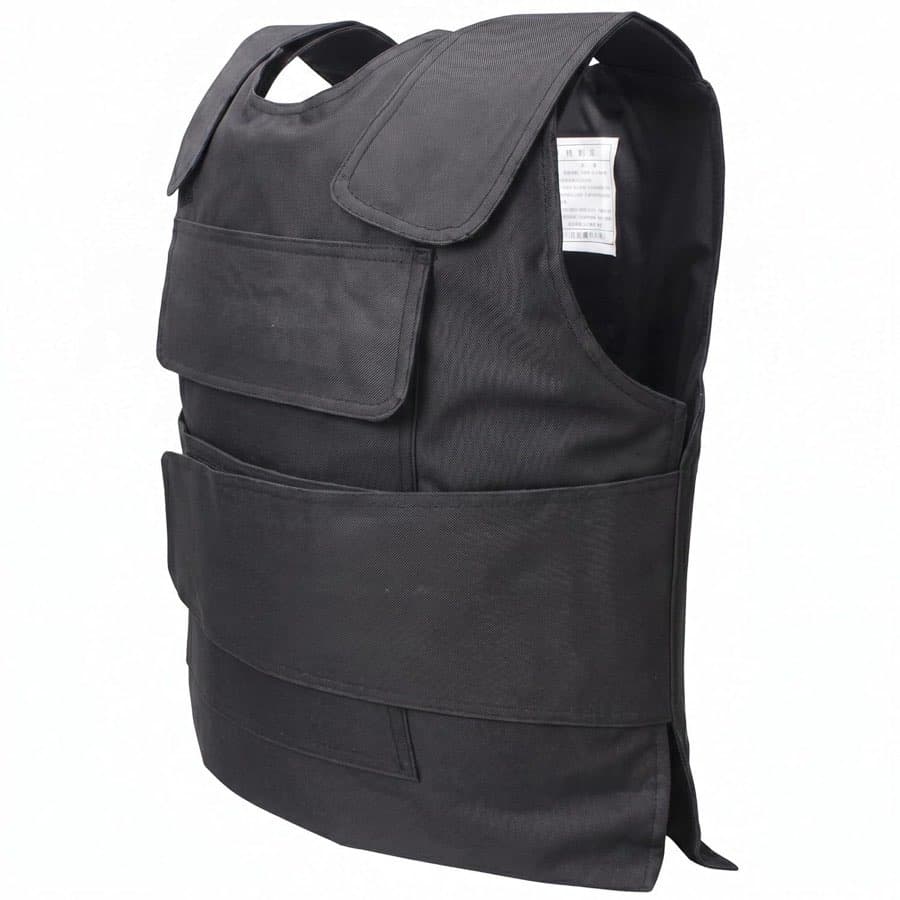
You see one vest for about £26 on amazon.co.uk and another above £400 from a specialist supplier. The immediate question is whether the expensive one is overpriced or the cheap stab vest is a bargain. The useful answer is that a stab vest price in the UK only makes sense alongside the product's intended threat, documented test standard, coverage, fit and supplier evidence.
In short
Our 15 October 2026 capture found stab-claim amazon.co.uk listings from £25.99 to £325, while specialist pages showed certified vests at prices above £400. Prices will move, and neither a high figure nor a product title proves certification: compare the exact model, supporting documents and intended use before you compare pounds.
Stab vest prices on amazon.co.uk
The lowest stab-claim prices in the captured file were £25.99, £27.49, £27.89 and £29.98. Another listing was £47.99, followed by a soft shirt described as “Level 4” at £89. At the other end, a covert-style title mentioning “Level IIIA” and “Stab Level 1” was £325. These are snapshots of shelf prices on one date, not permanent offers or a survey of the whole UK market.
That spread shows why a single average would be misleading. Four products clustered below £30, but averaging them with the £325 listing would produce a neat-looking number that describes almost nothing you can confidently buy. Different titles may refer to a carrier with a rigid insert, a soft garment, a product making an unverified resistance claim, or armour intended for a different threat.
The stab-protection vest comparison can help you separate listing types and current claims. Use it as a shortlist, not as a substitute for documentation where failure could cause serious injury.
What specialist vests cost
Specialist pages occupied a different price bracket on the same date. Interconnective listed certified KR1 SP1 vests at £412.92 and £504.18. CopShopUK advertised a certified covert vest from £407 excluding VAT. The ex-VAT wording matters: £407 becomes £488.40 when 20% VAT is added, before any charge for delivery, options or fitting.
Those figures are examples from two sellers, not a claim that all certified armour costs £400 to £500. ArmorLite, another seller, says certified kit starts nearer £150 to £300, but that is the seller's price guidance rather than an independent market average. PPSS showed certified KR1/SP1 products, but the page reviewed for this research did not provide a shelf price, so attaching one would be guesswork.
What price does not prove about protection
A £325 title can look more credible than a £26 title, but price does not award a resistance level. In the captured marketplace file, the £325 product title mentioned ballistic Level IIIA and Stab Level 1. The capture still did not show a Home Office certificate, and combining ballistic and stab language in a title does not demonstrate either claim.
The same caution applies to precise numbers. “24J”, “Level 4” or a steel thickness may sound technical, but a material claim or impact-energy number is not automatically a certificate for the finished vest. Testing depends on the stated standard, test method, blade or spike, backing material, conditioning and permitted penetration. Coverage and weak points also matter when you wear the complete product.
Ask the seller for four things: the full standard and level, the certificate or test report, the model name covered by that document, and photographs of the matching product labels. Check whether the evidence covers stab, spike, slash or ballistic threats; those terms are not interchangeable. Our buying guide explains the checks to make before relying on a listing.
There is a limit in the other direction too. A low price is not proof that a seller has committed an offence, and the available evidence does not support making that accusation. The practical conclusion is narrower: if you cannot verify the claim, do not rely on it for a safety-critical risk.
Sports protectors are a separate purchase
Price searches can mix protective sports clothing into body-armour results. In the captured file, rugby protectors cost £36.84 to £42.99, while Salomon products were £67.99 and £97.95. Those prices overlap both the cheaper stab-claim listings and the £89 soft shirt, but they are not stab-vest prices.
A rugby vest is designed around bumps and impacts encountered in the sport. A ski or cycling back protector addresses another defined use. Padding, hard shells and substantial-looking panels may reduce some everyday knocks, yet appearance and thickness do not establish resistance to a knife or spike. The relevant evidence must match the threat, not merely use the word “protection”.
This category confusion can make a cheap product look reassuring. A recognised sports brand at £40 may be a sensible purchase for rugby while still being the wrong product for personal security. Conversely, wearing rigid improvised material for sport can impede movement and create different hazards. Buy for the stated activity.
When comparing search results, read beyond the image and price. Look for the intended use in the product title and manufacturer information, then exclude sports items from your armour shortlist. The comparison of vest types shows why products sharing a search page should not share a safety conclusion.
If the vest is for work
If you face a knife-related risk while doing your job, the cheapest online option is not simply a personal shopping decision. The employer should assess the actual work, foreseeable threats, tasks, environment and people exposed. Any selected protective equipment then needs to suit that assessment, fit the wearer and work with the rest of the uniform and equipment.
That process matters because paying more cannot correct a mismatched specification. A certified product for one threat may not address another, while poor fit can leave coverage gaps or make the vest so hot and restrictive that it is worn incorrectly. Covert armour may help discretion but can increase heat under clothing. Overt carriers may allow adjustment but can snag or interfere with radios and body-worn cameras.
Do not quietly spend £30, £300 or £500 and assume the problem is solved. Report the concern, ask what standard and level the risk assessment requires, and request the employer's approved model and fitting process. Keep records of issue dates, inspections, damage and replacement criteria. Our guide to stab protection for security work covers those purchasing questions in more detail.
How to set a realistic budget
Start by defining what you need evidence for. If this is a costume, training prop or carrier for non-protective use, say so and avoid paying for claims you do not need. If it is intended to reduce a real stab or spike risk, write down the required standard, level, coverage and whether the vest must be covert. For workplace use, that specification should come from the employer's risk process.
Next, compare like with like. Put VAT-inclusive prices in one column and record whether each offer includes front and rear protective panels, a carrier, fitting and delivery. Add the evidence supplied for the exact model. A £407 ex-VAT starting price and a £412.92 VAT-inclusive listing cannot be compared correctly until tax and included components are clear.
Common questions
How much does a stab vest cost in the UK?
Is a £26 stab vest genuine protection?
Does a £325 price prove that a vest is certified?
Why do certified stab vests cost more?
Is a rugby protection vest a cheap stab vest?
Should I buy body armour for work myself?
Where can I compare current stab-protection products?

Products Compared publishes British-English buying guides based on amazon.co.uk listings and public UK sources. We do not run a lab and we do not invent test scores.
Related articles
KR1 KR2 body armour: what the UK knife levels mean
Learn what the UK resistance levels mean before treating a product claim as proof.

24 joule stab vest: why 24J is not a certificate
A test-energy number can sound precise without proving that a complete vest is certified.

Employer provide stab vest PPE: who pays and who decides
See why occupational risk and protective equipment should be handled by the employer.