Employer provide stab vest PPE: who pays and who decides

If a risk assessment says door staff need armour, your employer provides it free. See what to ask for, and why an SIA licence is not product approval.
On this page
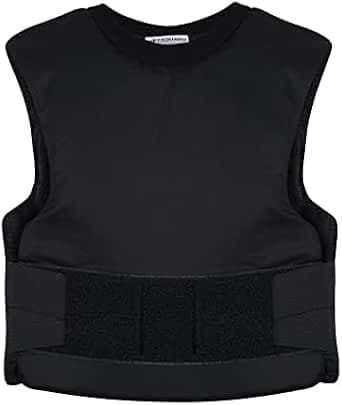
You are on a Friday night door shift in a week when the venue has had two incidents, and the person on the radio tells you to bring something stab-resistant. By the end of the evening you have found a £27 vest on amazon.co.uk with a respectable star rating and a review from a "door supervisor". The question that matters is not which vest to buy. It is why you are buying it at all. In the UK, if an employer's risk assessment says body armour is needed, the employer should provide suitable PPE free, and the job of choosing it belongs in that assessment.
In short
Armour is a workplace control, not a personal shopping decision. HSE says that where PPE is required it must be suitable, free, explained to the people wearing it, and maintained. NPSA, which advises on protective security, treats body armour as the last line of defence and says it is never 100 percent proof. An SIA licence is about the person, not the product. Take the assessment and the certificate back to your manager before you pay for anything, and use our stab-protection vest comparison only to check what a listing does and does not document.
Assessment before Amazon
Start with the order in which workplace safety is meant to work. An employer is expected to look at the risk of violence at a particular site, then ask what can be done to remove or reduce it. Better lighting, a second person on a door, a clear policy on refusals, a camera that works, radio checks and training all come before anyone reaches for armour. Armour is what is left when the threat is real, named and cannot be designed out.
That is the logic NPSA follows. Its guidance for civilian security staff describes armour as the last line of defence, and it tells managers to choose an accredited level rather than an attractive product page. It is also candid about limits: no vest is completely proof, and none protects the head or neck. Those are not small print. A vest that covers the torso does nothing for a cut to the throat, so the assessment has to say what threat is being addressed and what the armour will not do.
Free PPE, including limb (b) workers
The rule that surprises people is the simplest one. Under the PPE at Work Regulations, where PPE is required for a risk that cannot be controlled another way, the employer provides it, and the employee does not pay. HSE's guidance adds three expectations that are easy to miss: the equipment must be suitable for the job and the person, people must be trained to use it, and it should be worn even for short tasks. A quick "I'll just step outside for five minutes" does not suspend the assessment.
The 2022 amendment widened who is covered. It extends the duty to what the regulations call limb (b) workers. These are people who are not employees in the traditional sense but work under someone else's direction, which can include some casual or agency arrangements. Whether you personally fall into that group depends on the facts of your contract, so check HSE's current wording or ask your manager or union rep rather than assume. The point for a door team is that "you're self-employed" is not an automatic way for the cost to land on you.
What a manager should write down
If you are the person buying kit, treat the specification as a short document that someone else could pick up in a year and understand. NPSA's published guidance for security officers is the right starting point, and you should read its current text rather than rely on a summary like this one. In practice, a sensible specification covers the points below, and each needs a written answer rather than a tick.
SIA is the person, not the product
Door staff often assume an SIA licence means the kit has been vetted. It does not. The Security Industry Authority licenses people who carry out certain regulated activities, and GOV.UK's guidance is about whether a person needs a licence for licensable guarding. In-house staff often do not need one, depending on the role. The page does not say anything about vests, and nothing in the licensing regime certifies body armour.
That distinction matters most when you read reviews. A comment such as "great for SIA work" or "wore it on the door for a month" tells you the reviewer's job. It tells you nothing about the test the vest passed, because there may not have been one. In the amazon.co.uk listings we captured for the stab-protection vest comparison, reviews mentioning door work or SIA were treated as user comments, not accreditation.
We are not able to tell you whether you personally need an SIA licence. That depends on your role, whether you are employed in-house or by a contractor, and what you do on shift, so check GOV.UK's current licensing guidance or ask your employer. What you can say with confidence is that holding or not holding a licence does not change who has to supply and specify PPE.
Why a private listing does not close the assessment
Imagine the assessment is done and says armour is justified. Your manager says, "Just find one online." This is where cheap listings cause damage, because a title and a price can look like a specification.
The vests in our captured amazon.co.uk file are a good example. A £27 listing may mention 24 joules, a steel layer and a security use, yet none of the 24J listings showed a test-house reference or a certificate number. Our piece on why 24 joules is not a certificate explains why a test-energy figure on its own cannot identify a complete certified vest. A £27 vest does not meet a security risk assessment merely because it exists, is black, and has some reviews.
Closing the assessment means matching three things. The assessment names the threat. The specification names the level and coverage. The certificate shows that the exact product, not a similar one, was tested to that level. If any of the three is missing, the assessment is still open, however many stars the listing has. When you compare candidate products, our stab-protection vest comparison separates stab-claim items from sports protectors and shows what each seller actually documents.
If you have already bought one
Plenty of readers arrive after the purchase, and it is not a disaster. Do the following in order.
- Do not wear it as the only control. If the assessment is not done, the vest is not part of a documented system, and you should not rely on it as if it were.
- Keep the listing, the receipt and anything printed on the label. Photograph the label and any markings inside the carrier. These help whoever has to check the claim.
- Take it to your manager with a question, not a demand. Ask whether it can be assessed against the specification and whether the employer will reimburse or replace it if it does not match.
- Stop using any panel that has been struck. Report it and keep it out of service until someone competent has looked.
Common questions
Do I have to buy my own stab vest for a shift?
When is armour actually required?
Does SIA approve body armour?
What should the manager specify?
What if a colleague's Amazon vest has good star ratings?
Who replaces a damaged panel?

Products Compared publishes British-English buying guides based on amazon.co.uk listings and public UK sources. We do not run a lab and we do not invent test scores.
Related articles

Is body armour legal in the UK? What buyers should know
What buyers should know about private purchases, workplace duties and honest product descriptions.
KR1 KR2 body armour: what the UK knife levels mean
Learn what the UK resistance levels mean before treating a product claim as proof.

24 joule stab vest: why 24J is not a certificate
A test-energy number can sound precise without proving that a complete vest is certified.