Is body armour legal in the UK? What buyers should know

Is body armour legal in the UK? See what retailers say about private purchases, workplace PPE duties and why accurate product descriptions matter.
On this page
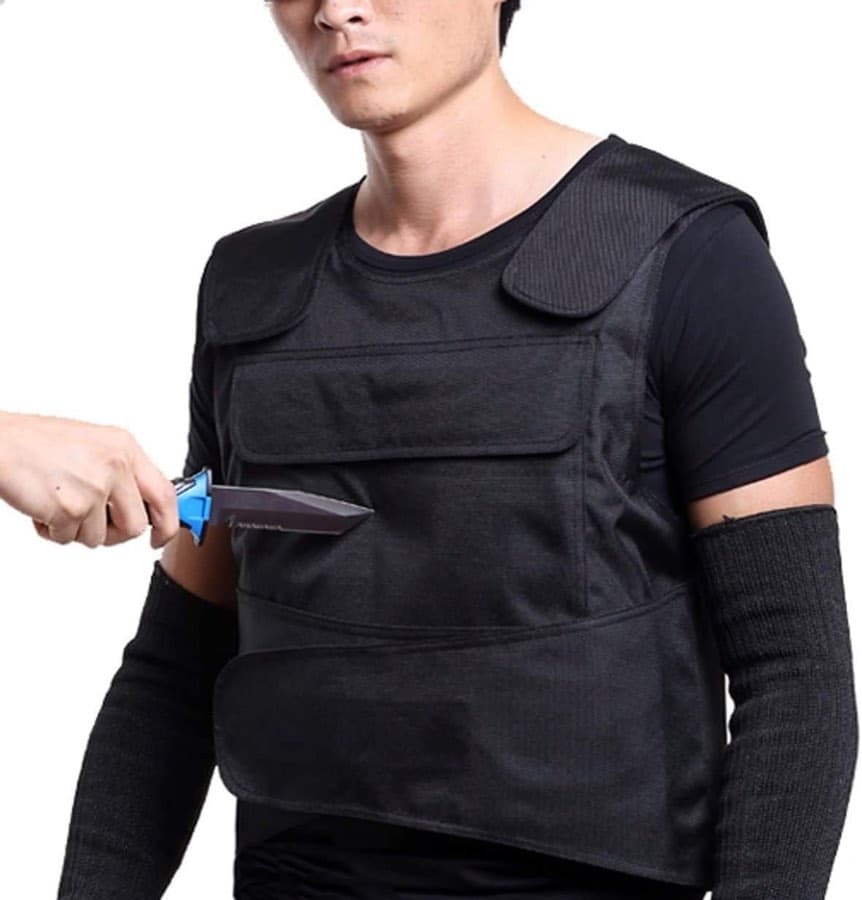
You find a stab vest online, but before comparing its weight or fit you stop at a more basic question: is body armour legal in the UK for a private buyer? Retailers say civilians in Great Britain can buy and wear armour without a special licence, but that short answer does not settle every legal or safety issue. Private ownership, workplace PPE duties and the accuracy of a seller's protection claims are three different questions.
In short
Retailer FAQs say civilians do not need a licence to buy body armour in England, Wales or Scotland. At work, an employer may have to provide suitable PPE free of charge when a risk assessment requires it, while the Consumer Rights Act 2015 requires goods sold by description to match that description. This is a high-level explanation, not a ruling on Northern Ireland or advice for a particular incident.
What retailers say about a licence
Armasure and Sarkar Tactical both state in their customer guidance that a civilian may buy and wear body armour and does not need a firearms certificate or separate armour licence. Their account covers England, Wales and Scotland. That is useful evidence of how specialist sellers understand ordinary private purchases, but it remains retailer guidance rather than a citation to one statute that answers every possible scenario.
This distinction matters because the question is often phrased too broadly. Buying a vest online, wearing one during lawful work and wearing one in an unusual public situation are not necessarily the same legal question. A seller's answer about an ordinary purchase cannot account for your conduct, the place you enter or another rule that may apply to a specific setting.
For an ordinary Great Britain purchase, the evidence available here does not identify a stab vest licence that a private customer must apply for. You should still check what you are actually buying. The stab-protection vest comparison can help you separate a product title from the more important details behind its claimed protection.
What UK law clearly covers
The clearest legal sources in this area do not create a general body-armour licence. Instead, they address particular relationships and duties. Section 11 of the Consumer Rights Act 2015 concerns goods sold by description. Workplace legislation and HSE guidance concern an employer's responsibility where personal protective equipment is required. Government guidance on SIA licensing concerns the person performing licensable security work.
That last point prevents a common misunderstanding. An SIA licence is not an approval stamp for a vest. It tells you that a person is licensed to perform specified security activities where the licensing regime applies; it does not tell you that their armour has passed a test, matches a protection class or is suitable for the hazards of a particular job.
You should therefore resist attempts to combine unrelated credentials. A seller cannot demonstrate a vest's protective performance by referring to the wearer's SIA badge. Equally, the absence of an SIA licence does not by itself answer whether a private person may buy the product. The wearer, the work and the equipment each raise their own questions.
Why workplace PPE is a different question
A private purchase begins with your choice to spend your own money. Workplace PPE begins with the employer's assessment of risk. HSE guidance says that when PPE is required following that assessment, the employer must provide it free of charge. The Personal Protective Equipment at Work Regulations were extended in 2022 to include relevant limb (b) workers as well as employees.
The Health and Safety at Work etc. Act 1974 also prevents employers from charging employees for measures required by particular health and safety duties. The practical point is straightforward: an employer should not simply tell a worker to buy their own protective vest when the employer's assessment has identified that equipment as a required control.
An employer comparing equipment can start with the stab-protection vest guide, but a shopping comparison is not a workplace risk assessment. The final choice has to suit the work, the wearer and the risks the employer has actually identified.
Product descriptions have to be accurate
Section 11 of the Consumer Rights Act 2015 says that goods supplied by description must match that description. For body armour, wording matters because buyers cannot reliably judge protective performance by looking at a panel or carrier. If a listing makes a specific stab-resistance claim, that claim is not merely decorative text.
Save a copy of the listing before ordering, including the title, photographs, stated level, test references and any limitations. Keep the order confirmation and packaging as well. Online listings can change, and a record makes it easier to show what description influenced your purchase if the delivered product differs from it.
Read qualifying language with the same care as the headline. “Protective”, “cut resistant”, “stab resistant” and “body armour” are not automatically interchangeable. A claim may cover a particular threat or test condition rather than every sharp object, impact or area of the body. The research for this article does not establish the meaning of a particular level, so check the seller's evidence instead of filling gaps with assumptions.
What to check before you buy or wear armour
Begin by defining why you want the vest. A private buyer seeking reassurance has a different context from an employer selecting PPE after a risk assessment. If the purchase is for work, ask for the assessment and selection rationale before spending your own money. Required workplace PPE should not be shifted onto the worker as a personal shopping decision.
Next, separate the legal status of the purchase from the quality of the product. Retailer guidance that no licence is needed does not prove that a particular vest performs as advertised. Look for a precise protection claim, the limits of that claim and evidence tied to the exact model rather than a general statement about the brand.
Check who is making each claim. The retailer is responsible for the words used to sell the goods; an employer is responsible for workplace PPE decisions; the SIA licenses people carrying out relevant security activity. One party's role does not substitute for another's evidence or duty.
For product selection, use the comparison of stab-protection vests as a starting point, then verify the current seller description and supporting information yourself. A comparison can organise the claims; it cannot turn an unsupported claim into a tested fact.
What this guide cannot decide
This guide does not give a definitive ruling on wearing armour in every public setting. It also does not decide the law in Northern Ireland, advise on armour connected with criminal conduct or establish that an uncertified vest is illegal to own. Those claims would go beyond the sources used here.
It does not certify any product or decide whether a particular vest is suitable PPE. That requires evidence for the exact item and, at work, an assessment of the actual hazards. A seller's mention of UKCA marking or another compliance point should not be silently converted into proof of a specific stab-resistance level.
The strongest high-level conclusion is narrower: specialist retailers say no civilian armour licence is required in Great Britain; consumer law requires described goods to match their description; and workplace rules can require an employer to provide assessed PPE free of charge. Keeping those propositions separate gives you a more reliable answer than a sweeping yes or no.
Common questions
Do I need a licence to buy a stab vest in the UK?
Is an SIA badge a licence for body armour?
Can a civilian wear body armour in public?
What if a vest does not match its product description?
Does an employer have to pay for protective body armour?
Is an uncertified vest illegal to own?
Does a UKCA mark prove that a vest is stab resistant?

Products Compared publishes British-English buying guides based on amazon.co.uk listings and public UK sources. We do not run a lab and we do not invent test scores.
Related articles

Employer provide stab vest PPE: who pays and who decides
How workplace risk assessment and PPE duties differ from a private purchase.

Stab vest price UK: what you actually pay for
What a stab vest costs in the UK, from amazon.co.uk titles at £25.99 to £325 and specialist listings above £400, and why the price is not the protection.
KR1 KR2 body armour: what the UK knife levels mean
KR1 KR2 body armour sets KR1 at 24 joules and KR2 at 33 on the UK Home Office E1 knife test. Those letters belong on a certificate, not only in the product title.