Rugby protection vest: why it is not stab armour
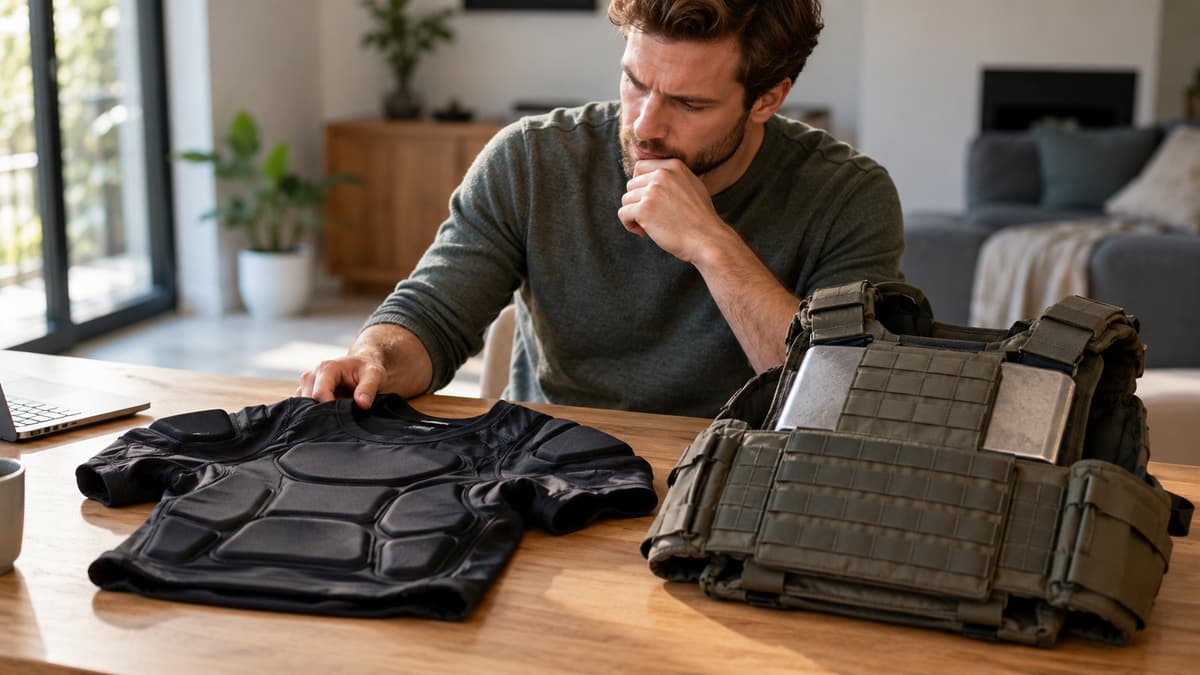
A rugby protection vest is foam for shoulders and chest. See what Canterbury's pads and World Rugby's rules cover, and why a knife needs different kit.
On this page
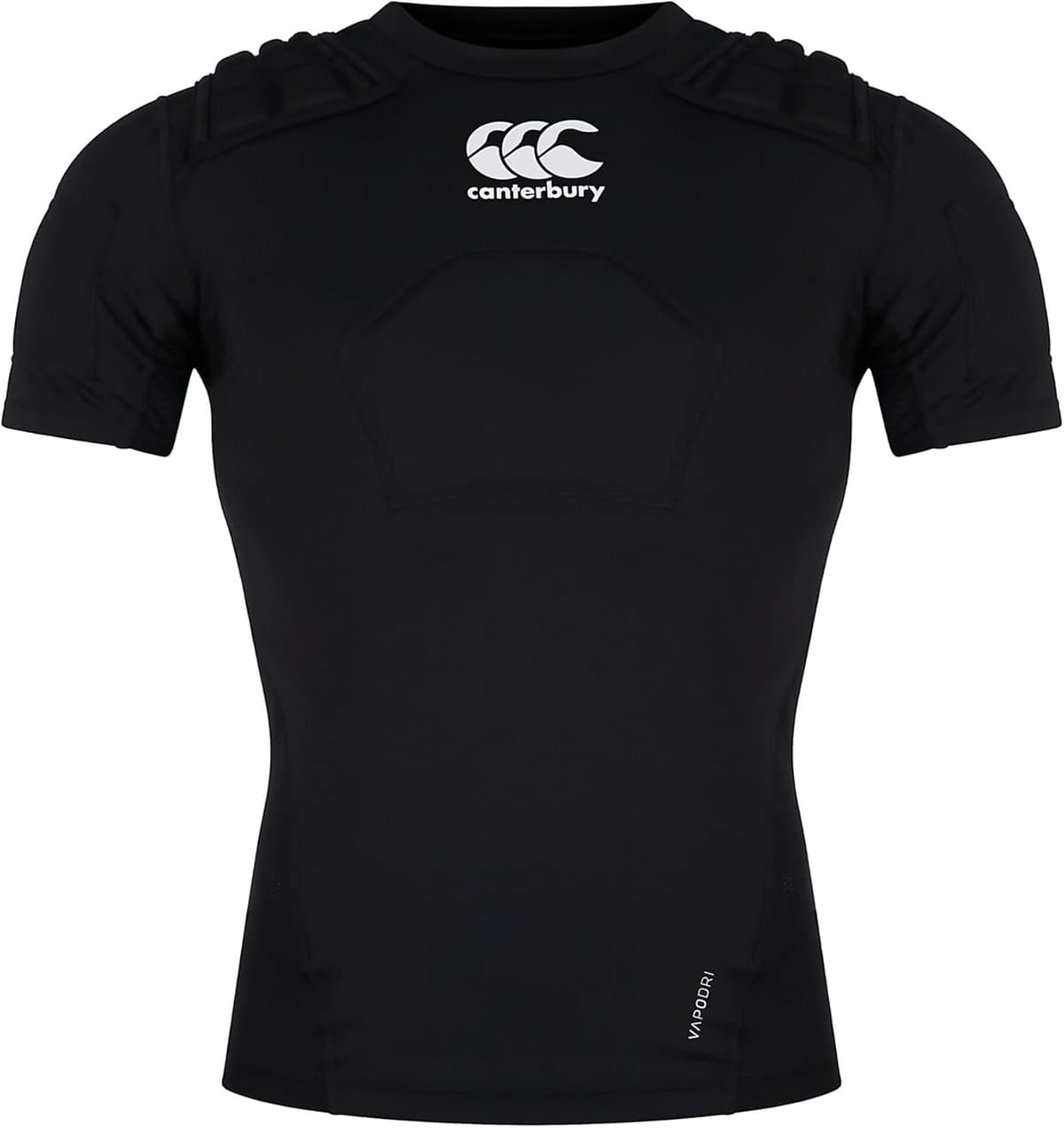
You are scrolling Amazon for a stab vest and a neat black Canterbury top appears three times, at £36.84, £39.95 and £42.99. It looks like body armour, it sits in the same results, and the price makes it tempting. It is a rugby protection vest, and the foam inside it was never meant to meet a blade.
In short
The three Canterbury Pro Protection listings are light rugby pads, between 167 g and 230 g, covering the shoulders and chest. World Rugby limits this padding to cuts and abrasions, and none of the listings claims any knife resistance. If a knife is the threat you are shopping against, use the stab protection vest comparison and look for a certificate that names the model.
What these three listings are
Three rows in the comparison come from the same maker and the same pad family. Size S is ASIN B092PDF2J1, at £36.84, 167 g, rated 4.6 from 171 ratings. Size M is B092P8VT99, at £39.95, 230 g, rated 4.8 from 20 ratings. The women's version is B09XJ6X2FW, at £42.99, 197 g, rated 4.7 from 40 ratings. Those figures are from the listings as we captured them, and Amazon prices move, so check the live page before you rely on any of them.
The materials are foam, elastic and polyester. That is a sports garment: a stretchy base layer with padded zones sewn or bonded onto it so you can wear it under a match shirt. The listings describe cover for the shoulders and the chest, and on two of the three the upper arms too. None of them describes a plate, a ballistic or stab-resistant panel, or a test against an edged weapon.
What World Rugby says padding is for
World Rugby publishes a body-padding specification, and it is blunt about the purpose. The injuries it has in mind are cuts and abrasions. Reducing the force of an impact is a secondary aim, and the Approved mark is what the rules require when the regulated use applies. In other words, the standard behind this kind of padding was written around grazes on a pitch, not around a weapon.
World Rugby's Passport guidance on equipment goes the same way. It says padding may reduce minor cuts and bruises, and that it is not a route to returning from an injury early. If you are coming back from a broken collarbone, a vest does not reset the clock. The guidance on that point is for players and coaches, but it is a useful sanity check for any shopper tempted by a bold claim in a product title.
What the reviews actually talk about
UK reviews of the Canterbury vests are mostly about comfort. Buyers say the vest feels fine under a jersey, that the shoulder padding does its job, and that it is easy to forget it is there once the game starts. That is the praise you want from a rugby pad, and it fits the foam-and-elastic build.
The complaints are small and practical. One reviewer on size S reported a tear after a single wear, and that is the sort of thing you would want to know if you play every week. The women's version is described as a little short in the body, so if you are between lengths it is worth reading the size information carefully before you order. Neither point is a safety scandal. Both are the usual hazards of a lightweight garment that gets pulled on and off in a changing room.
Why it appeared beside stab vests
A shopper can be forgiven for the mix-up. Amazon's category pages sort by keyword and sales rank, not by the standard a product meets. A search for a protective vest pulls in anything with "protection" in the title, whether that is a rugby pad, a ski back protector, a cycling top or a steel-plated carrier. Our comparison keeps the sports rows in view so you can see them for what they are, and so you do not have to find out later.
The Canterbury title also leans on the word "protection". A reader who has a knife in mind, and who sees "Pro Protection" and a snug black vest, may fill in the rest. The listing does not say it protects against knives, but the page does not say it does not, and the absence of a disclaimer is not a test result. The safest habit is to treat any claim you cannot find in the listing as a claim that was not made.
Our stab protection vest comparison separates these on purpose. It lists what each captured listing claims and what it leaves out, so a rugby pad is never counted as armour just because of where it turned up.
What to buy instead if the threat is a knife
If you genuinely need protection against an edged weapon, the first rule is to leave the sports aisle. A rugby vest, a ski back protector and a cycling pad are all built for falls and knocks. They are not a cheaper version of a stab vest, and pretending otherwise puts the person wearing it at risk.
Start with the certificate, not the title. A claim worth trusting names the exact model and the level it passed, and it comes from a test report you can read. A joule figure or a phrase such as "stab proof" in an Amazon title is a description, not evidence. Our guide to stab protection vests shows how each captured listing handles that point, including the ones that give no certificate at all.
Next, think about what you need the vest to do. A steel carrier and a soft panel behave differently, and each suits different jobs and different amounts of tolerance for weight and bulk. A heavy carrier is rarely something you would wear for long hours under a shirt, and a soft panel is usually easier to live with, but the right answer depends on the threat you face and the rules of your workplace. If it is for work, ask your employer what standard they require before you spend your own money.
Checks before you pay
A few minutes with the listing before you order can save you a return, or a bad assumption. Run through these steps in order.
- Read the product title and the first bullet for the word "knife", "stab" or a named standard. If none is there, treat the product as having no knife claim.
- Look for a certificate or test report that names the exact model. A generic image of a certificate is not a match for this product.
- Check the weight. A vest under 250 g, like the three Canterbury rows, is padding and not armour.
- For rugby, look for the World Rugby Approved mark on the garment or in the listing, and do not assume it is there.
- Read the one- and two-star reviews. A single tear after one wear, as in the size S reviews, tells you more about durability than any average score.
None of these steps needs special knowledge. They only ask you to take the listing at its word and not to fill the gaps with hope.
Common questions
Will a rugby protection vest stop a knife?
Is a rugby vest allowed in a match?
What do reviewers say about the Canterbury vests?
Which size has the most reviews?
Can I wear a stab vest to play rugby?
Does a rugby vest cover the ribs and sides?
Can padding prevent a collarbone break?
How do I check that a stab vest is the real thing?

Products Compared publishes British-English buying guides based on amazon.co.uk listings and public UK sources. We do not run a lab and we do not invent test scores.
Related articles

Steel stab vest or soft armour: what weight tells you
A heavy steel carrier and a light soft panel solve different problems. Here is how to tell which one a listing is selling.
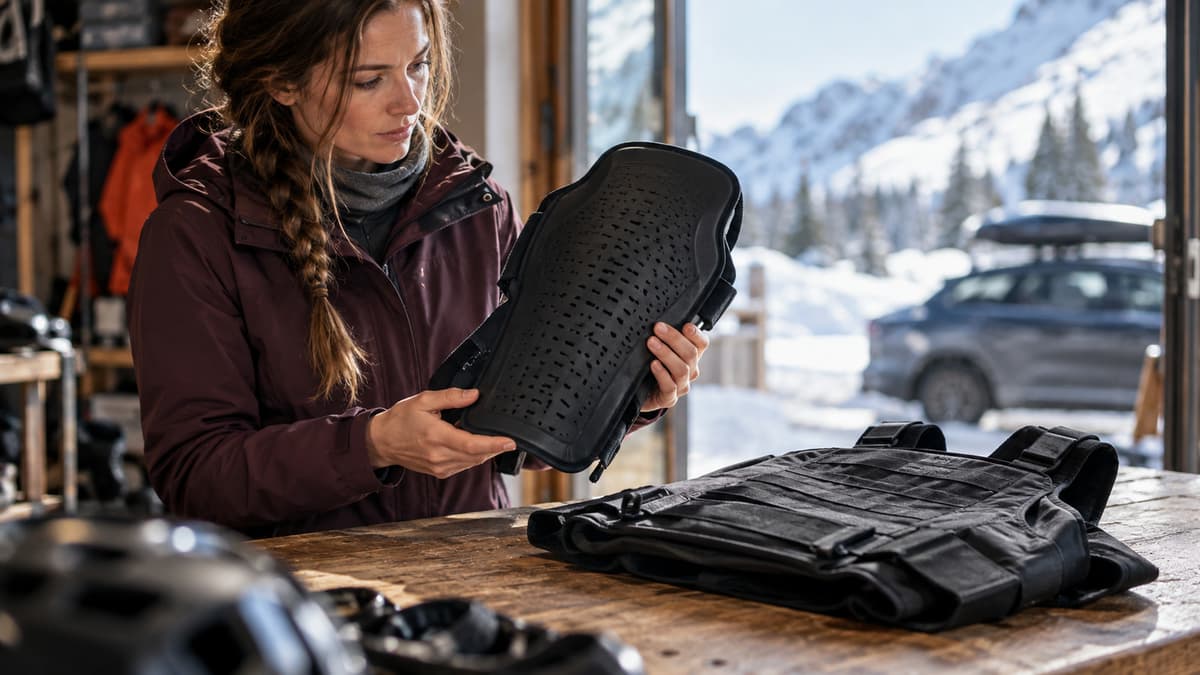
Back protector vs stab vest: why a ski pad is not armour
Back protectors for snow sports are built for falls, not blades. Why the two should never be swapped.

24 joule stab vest: why 24J is not a certificate
A joule figure in a title describes a claim. It does not tell you which model was tested, or by whom.