VDE insulated screwdriver meaning: what the stamp allows

VDE on a screwdriver names an IEC 60900 insulation claim, not permission to work live. UK rules still want the circuit dead unless three conditions all hold.
On this page

The socket screws are out, and the driver in your hand carries a red and yellow handle stamped VDE beside a double triangle and 1,000 V. A VDE insulated screwdriver meaning is narrower than that stamp looks. The letters name a certification route for the tool. They do not decide whether the conductors may stay live, and they do not prove the circuit is dead.
This page is from the Products Compared editorial team. It follows the Electricity at Work framing quoted for electricians, the published scope of IEC 60900:2018, and HSE publication HSG85, then the amazon.co.uk listings in our VDE screwdriver comparison. We have not laboratory-tested any driver. A purchase through our links can earn a commission at no extra cost to you.
In short
VDE is a certification body, not a brand of screwdriver. On a marked insulated driver it points to IEC 60900, commonly with a double triangle and a 1,000 V rating. UK guidance still expects the circuit dead unless three conditions are all met. A nick, a missing mark, or an ordinary household handle takes the tool outside that claim.
What the letters on the handle point to
Shop pages often treat VDE as a grade of safety you buy by the word. The letters belong to a German electrotechnical association that also certifies products. The hand-tool standard is IEC 60900, in the edition BS EN IEC 60900:2018, the British adoption of IEC 60900:2018. The BSI catalogue entry sets the same limits: hand tools for use up to 1,000 V AC and 1,500 V DC.
That scope covers insulated, insulating and hybrid hand tools for work on live parts, or close to them, used by skilled persons with a safe method. Buying the set does not supply that skill. An ordinary household screwdriver sits outside the scope. If the covering stops short, the metal runs bare, or there is no voltage figure, leave it for furniture and jars. A red handle is unmarked plastic unless the stamp is actually there.
What has to be printed on the tool
Professional Electrician, on when an electrician needs insulated hand tools, says tools you rely on should meet BS EN IEC 60900:2018, be checked before each use, and carry the double triangle and 1,000 V on the tool. A title, a bullet, or a photograph of another set can say VDE while the driver in the box is bare of both.
A missing triangle, a missing voltage figure, or a stamp worn past reading means you cannot treat that driver as the marked tool. Give the shaft a minute under a decent light before the first screw. Tip family is a separate decision: a sound sleeve on the wrong tip still chews the head and slips toward the terminal.
Why 1,000 V is not the mains voltage
UK mains are nominally 230 V AC. The 1,000 V figure is the tool's rated limit under the standard, not a label for the supply in the wall. A domestic socket sits under that number, and being under the number does not decide whether the conductors may stay live.
The 1,500 V DC figure is the other half of the same rating. You will not meet it on a ring final. It is in the scope because IEC 60900 covers a range of live working. Both numbers stay limits on the tool. They do not shrink to 230 V because that is what the house uses.
A tool marked 1,000 V is a poor reason to take on higher-voltage work, and a tool with no mark is not made fit for 230 V by subtraction. The rating is also silent about the screw. A sound sleeve can still take a Phillips tip to a Pozidriv faceplate screw, cam out, and put your hand on the terminal.
What the regulations still require
Regulation 14 of the Electricity at Work Regulations 1989 is the line cited for electricians. As Professional Electrician states it, work on or near a live conductor is allowed only when three things are all true: it is unreasonable for the conductor to be dead, it is reasonable to work on or near it while live, and suitable precautions prevent injury. Two out of three is still a refusal. A stamped handle is not a private exemption.
If you cannot apply all three tests, the circuit stays dead and the job waits for someone who can. The mark is, at most, one piece of equipment among the precautions, and only when the tool is the right standard, marked, and sound. Faceplates and fittings in a house can be isolated. This article stops short of opening a consumer unit, and it does not turn the legal test into a home method for live work.
HSG85, the HSE guidance on electricity at work, expects robust insulated tools and cites BS EN 60900. It treats test instruments separately, under GS38. Tools should not be stored where they can fall onto live parts, and live work should not be done alone. A screwdriver does not prove a circuit dead, and a neon in a handle does not stand in for that test.
The IEC scope asks for skilled persons and a safe method, starting with whether the work should be live at all. Owning a marked set does not make a householder that person. For a socket, the working assumption is a circuit proved dead by a proper test.
Check the insulation before you trust it
Check the tools before each use. You are looking for reasons the covering can no longer be trusted, not repeating a factory test on the kitchen table. The sources used here give no depth of scratch that is still acceptable. Damage takes the driver off the bench.
Look from the handle shoulder to where the bare tip is supposed to start. A nick, a cut, a crack, a burn, or a soft swollen patch is enough. So is metal showing on the covered shaft, a blade that twists in the handle, or a triangle and voltage figure worn past reading. Wipe the shaft with a dry cloth first. Grease, filler dust or shed damp hides a cut.
Leave tape in the drawer. A repaired cut is still a cut, and a damaged driver kept in the same roll as the sound ones is how the failed tool gets picked up next time.
A bent or chewed tip cams out and stabs a terminal even when the sleeve is intact, so retire whichever part has failed. Box the drivers away from an open board: HSG85 warns against tools falling onto live parts, and other steel in a bag will nick the covering. Price, and a house with the lights off, repairs neither an unmarked driver nor a marked one with a split sleeve.
Where to look at the drivers themselves
The next page for actual products is the VDE screwdriver comparison. It lines up amazon.co.uk listings by form, tip family, and the insulation wording on the page. It is a buying table, not a sequence for a consumer unit.
The set whose components list matches Pozidriv faceplate screws and slotted terminals is the Wera six-piece, model 05051576001, at £25.94 in the extract, with 4.6 from 438 reviews. The components line is PZ1, PZ2 and four slotted sizes. The listing says VDE and individually tested, which is the retailer's claim, not a test we repeated. The attribute line says Phillips, which contradicts that list. Confirm the marks on the handles when the parcel arrives.
Phillips screws point to model 05051575001, at £26.98 in the same extract, with PH1, PH2 and slotted sizes and no Pozidriv. That set is the top pick on the comparison page: 4.7 from 1,072 reviews, with snapped blades scarce in the English comments read. Reviewers of the Pozidriv set report snapped or chipped PZ tips. If that is a deal-breaker, walk past it. Job-by-job picks are on the best VDE screwdriver page. When the insulation mark is not why you are buying Wera, use the Wera screwdriver comparison.
Common questions
Does a VDE mark mean the screwdriver is legal for live work?
What should be printed next to the double triangle?
What are the three conditions in regulation 14?
What if the insulation is nicked?
Is 1,000 V the UK mains voltage?
Does a VDE screwdriver replace proving the circuit dead?
Which comparison lists VDE screwdrivers?
Are ordinary household screwdrivers covered by IEC 60900?

Products Compared publishes British-English buying guides based on amazon.co.uk listings and public UK sources. We do not run a lab and we do not invent test scores.
Related articles

What a neon screwdriver cannot prove
A glowing neon in the handle is not the two-pole test safe-isolation guidance expects before you touch a circuit.
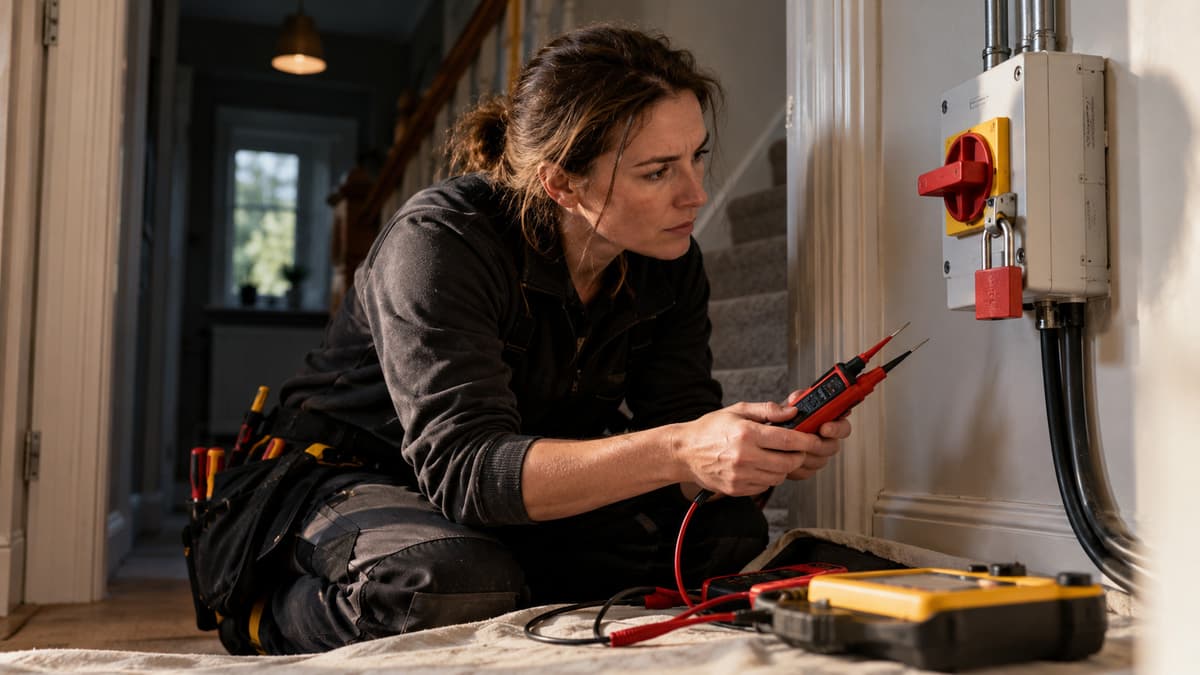
Prove a circuit dead before you open it
Lock off, prove the tester, test, then prove the tester again. A VDE screwdriver is not that sequence.
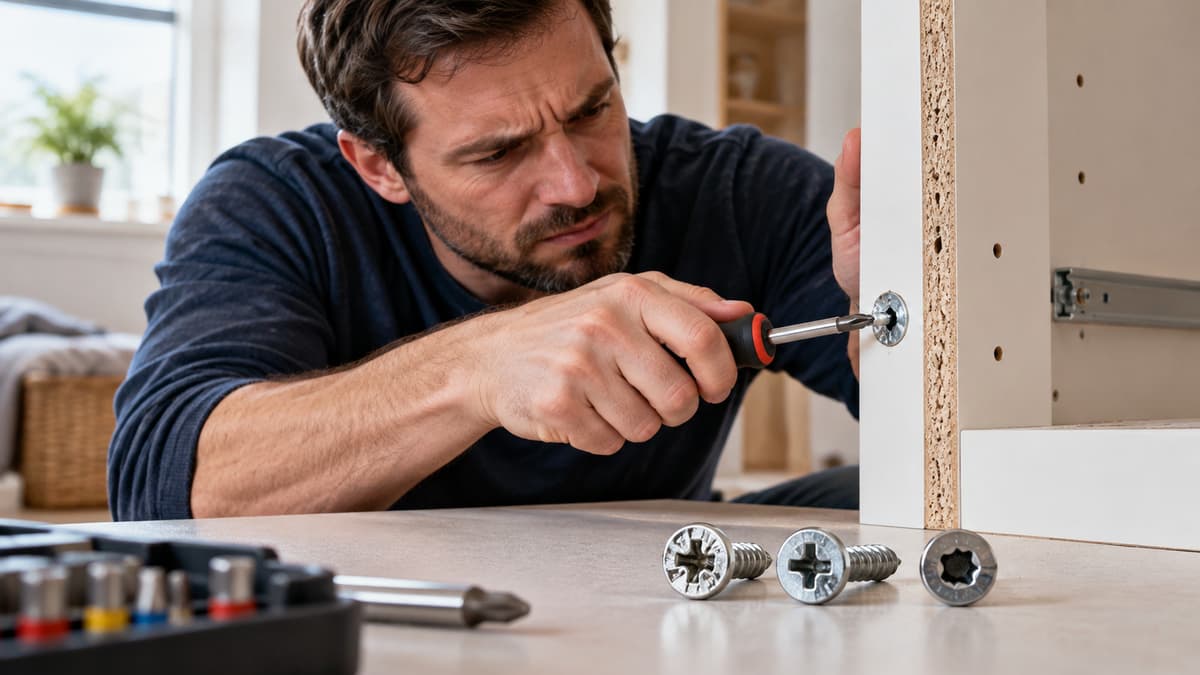
Torx, Pozidriv or Phillips on UK kit
Pozidriv, Phillips and Torx look related and are not. The wrong tip chews the screw even on an insulated driver.