Voltage tester screwdriver safe isolation: the limit

A glowing neon screwdriver is not safe isolation. GS38 wants a two-pole tester proved before and after. A dark lamp still does not prove the wire is dead.
On this page
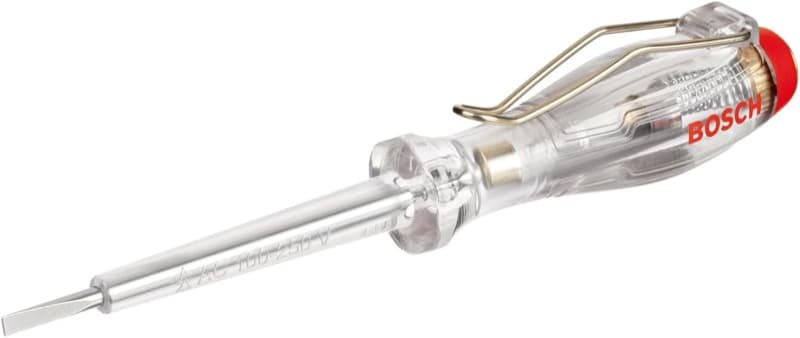
You are on a step at the landing, the breaker for the light is down, and the screwdriver in your pocket has a clear window with a neon lamp that has stayed dark. That dark window is the decision this page is about.
Voltage tester screwdriver safe isolation is a procedure with a proved two-pole indicator. A neon screwdriver can offer a single-pole hint that a conductor may be live. A dark lamp leaves the fitting unproved.
HSE GS38 is the UK guidance electricians use for this distinction. It treats single-pole devices, and non-contact devices, as a way to identify live equipment. Proving a circuit dead wants a suitable indicator proved before the test and again after it. Electrical Safety First and SELECT describe the same order. If you only own the neon screwdriver, leave the fitting closed.
This page is from the Products Compared editorial team. The sources are HSE GS38, Electrical Safety First Best Practice Guide 2, SELECT's safe-isolation steps, Gas Safe Register technical bulletin 118a, and amazon.co.uk listings for screwdriver-shaped testers. We have not run a laboratory test.
In short
A lit neon is a reason to treat the conductor as live. A dark neon leaves the conductor unproved. Voltage tester screwdriver safe isolation, in the GS38 sense, uses a two-pole indicator that you check on a proving unit before and after the test, on a circuit you have locked off. If you cannot do that, leave the fitting closed and get an electrician.
What a voltage tester screwdriver can suggest
A neon screwdriver is a single-pole phase tester in a driver-shaped body. On many of these tools the lamp needs a path from the tip, through the neon, and through your hand towards earth. When that path exists and the conductor is energised within the printed range, the lamp can glow. UK domestic mains is a nominal 230 volt supply. Listings often claim 100–250 volts or 120–250 volts alternating current.
A glow is a hint. Treat the conductor as live and take your hands off the fitting. The lamp does not name the voltage, and it does not say whether the other conductors in the same rose match it. It can also light from voltage coupled onto a conductor that a proper dead test would still need to clear.
Screwdriver-shaped testers on amazon.co.uk sit beside instruments that can support a dead test. One listing in our voltage tester screwdriver comparison is the Bosch Professional SL3x65, a glow-lamp phase tester at £5.99, with AC 120–250 volts and DIN VDE 0680-6 named on the listing. That is a phase-tester claim. It is not a ranking of which lamp to open a ceiling rose with.
A dark lamp and safe isolation
The dangerous reading feels like a result. The breaker is off, the neon stays dark, and the fitting looks available. GS38 states the failure underneath that feeling: a device you are using to prove dead can itself fail. A dark failed indicator agrees with you on every conductor, and you may open a fitting that is still live.
A single-pole neon has extra ways to stay dark on a live conductor. The return path on many of these designs is your body. A dry trainer, a glove, or a wooden floor can leave too little current for a visible glow. You can also be on the switched live while the permanent live in the same cable is still energised.
Many glow-lamp testers have no battery, so a failed lamp and a dead circuit look identical. A toolbox rattle or a damp British winter does not print a warning in the handle. The window stays clear either way.
Safe isolation is built to survive those failures. Identify the circuit, switch it off, and lock it off so nobody can restore it while the fitting is open. Test with an indicator you have already proved, between the conductors that matter, then prove the indicator again. SELECT's order is check the tester, lock off, test, and check the tester again. A dark neon skips those checks and the second pole.
What GS38 wants
GS38 wants the indicator proved before you decide that equipment is dead, and proved again afterwards. The preferred check is a proving unit, which presents a known voltage to the probes so the lamps or LEDs can respond. Watch that response, test the locked-off circuit, then watch the response again. If either check fails, the test is void and the fitting stays closed.
Without a proving unit, GS38 allows a known live source of similar voltage. A tester that wakes on a low bench supply has not shown it will wake on a nominal 230 volt domestic circuit. SELECT calls that live-source check a last resort for a two-pole indicator. It is not a job for the neon driver, and this page does not describe how to put a tester on a live conductor.
Electrical Safety First names a proprietary test lamp or a two-pole detector for the dead test. Two probes show the voltage between two points, without asking your body to complete the circuit. Line to neutral, line to earth, and neutral to earth catches a supply a single tip will miss. The same guide sets aside multimeters, a domestic bulb on leads, and non-contact sticks.
A zero on an unproved multimeter is the same class of mistake as a dark neon. Use the meter only after a circuit is already proved dead. Gas Safe Register technical bulletin 118a puts non-contact sticks with single-pole testers. A beep is a reason to stop. Silence leaves the cable unproved, in plaster or in a ceiling rose.
Why the screwdriver shape fails
The screwdriver shape is why this tool wins the wrong job. It looks like the driver you were going to use, so the test and the dismantling feel like one motion. A two-pole tester stays awkward inside a ceiling rose. That awkwardness keeps the proving unit, the test, and the unscrewing as separate acts.
A single tip asks one question of one spot, and on the common neon design it asks that question through you. Two probes ask a question between two spots, and the instrument answers on its own lamps. Single-pole and non-contact devices identify live equipment. The test lamp or two-pole detector proves dead only after you have proved it.
A VDE claim on a handle is about the driver as a hand tool. DIN VDE 0680-6 on the Bosch SL3x65 listing is a single-pole phase-tester line, and it leaves the GS38 dead test untouched. Ordinary drivers and the insulation mark belong with VDE screwdrivers.
A glow is a reason to walk away and fetch the right instrument while you are still clear of the conductors. When you need to know the circuit is dead, put the neon down.
Lock off, or stop
If you are competent to isolate a domestic circuit, SELECT's order is short. Check the two-pole tester on a proving unit, identify the circuit, switch it off, and lock it off so the key stays with you. Test the conductors you are about to touch, then check the tester again before you pick up an ordinary screwdriver.
With no proving unit, GS38 allows a known live source of similar voltage, and SELECT marks that as a last resort. You do not invent that step with a neon driver.
Most readers of this page are one tool short of that sequence. Leave the rose, the pendant, the socket, or the switch as you found it. Taking the faceplate off to look is the exposure the procedure exists to prevent. A qualified electrician brings the two-pole tester, the proving unit, and the lock-off hardware.
Stop when the consumer unit is unclear: mixed labels, a blank breaker, a second board, or a supply you do not understand. Stop when the tester fails either proving check. Stop when someone else could restore the breaker while you are on the step. Stop when the only electrical tool there is a neon screwdriver sold as a voltage tester.
GS38, Electrical Safety First, SELECT, and the Gas Safe bulletin answer what you may rely on before you open equipment that might still be live. A single-pole neon sits outside that answer. If you are not going to follow the procedure, leave the fitting closed.
Common questions
If the neon lights, is the wire live?
If the neon stays dark, is the wire dead?
What instrument does GS38 want for proving dead?
What is a proving unit for?
Why not a multimeter for safe isolation?
Is a non-contact stick under the same limit?
Which comparison covers the screwdriver-shaped tester?
When should I stop and call an electrician?

Products Compared publishes British-English buying guides based on amazon.co.uk listings and public UK sources. We do not run a lab and we do not invent test scores.
Related articles

What VDE means on a screwdriver
VDE on a handle is an insulation standard. It does not mean live work is now allowed.
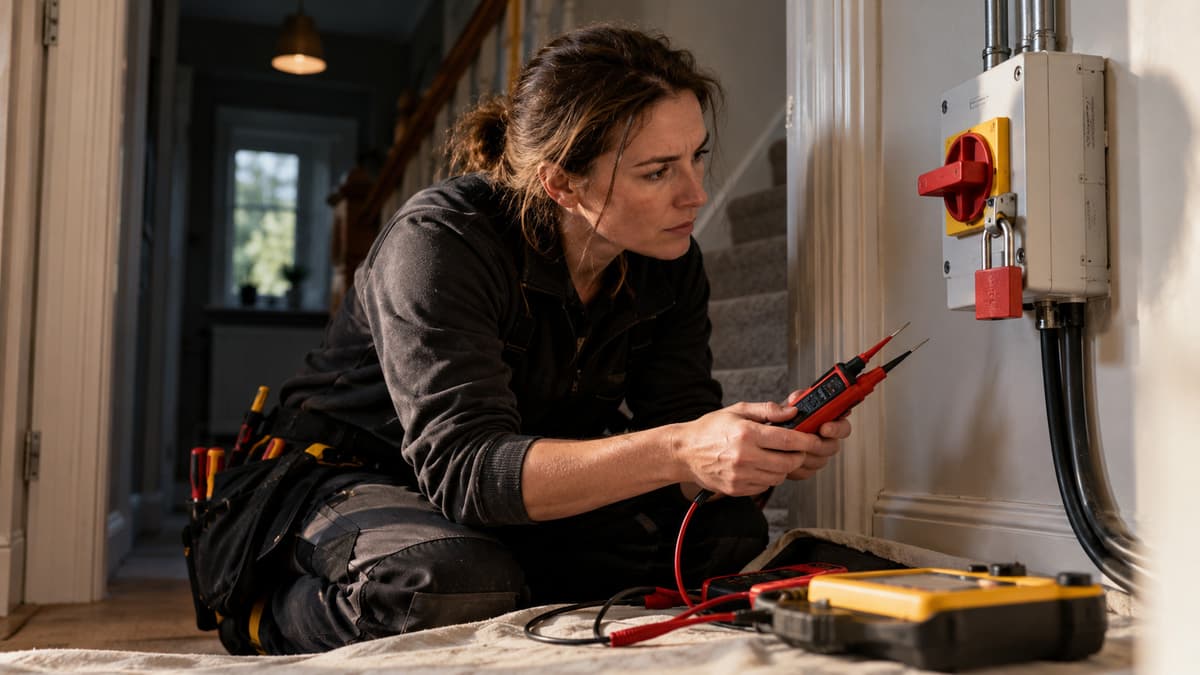
Prove a circuit dead before you open it
Isolation is lock off, prove the tester, test, then prove it again. A screwdriver is not that procedure.

Solder fume at a home bench
A clip stand holds the joint. It does not remove rosin flux fume from the air you breathe.