Click torque wrench or beam: pick the signal you can use
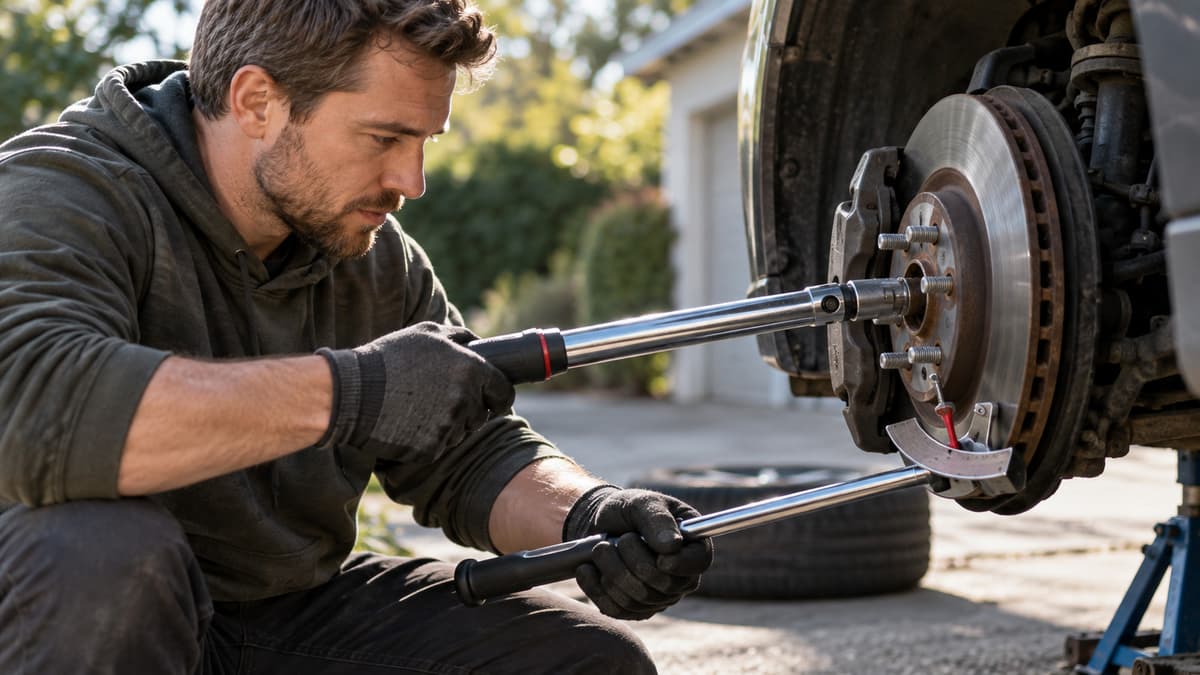
A click torque wrench signals a preset you may not see. A beam shows a pointer you must read. Choose by the space you work in, then still have the tool checked.
On this page

You are on the driveway with the wheel off, the socket on the hub stud, and one wrench's scale facing the brake disc. Choosing a click torque wrench or beam is about which signal you can actually use in that space. A click tells you, with a sound and a kick in the handle, when a preset is reached. A beam asks you to read a pointer, and it has no coil spring left wound up in a drawer. A crisp signal is not a recent check of the tool.
Products Compared has not laboratory-tested these wrenches. The points below come from DM Systems' account of ISO 6789 calibration and from Norbar's guide in Fastener + Fixing. The visible zero on a pointer beam is a feature of that mechanism, not a UK laboratory ranking. A qualifying purchase on amazon.co.uk, through links from the comparison pages, can earn us a commission at no extra cost to you.
In short
Pick a click when the fastener sits in a wheel arch, under a wing, or anywhere the scale would face away from you. Pick a beam when you can watch the pointer for the whole pull, and when you can glance at zero after a knock. Both are hand torque tools under ISO 6789, so a beam stays in the same checking habit as a click.
Two signals, and the space you work in
A click wrench is what ISO 6789 calls a setting torque tool. You set the newton metres, then pull, until an internal clutch gives a click and a small kick. Philip Brodey's guide for Norbar, in Fastener + Fixing, calls that the signal the setting has arrived. You follow the handle, so the shape still works beside a brake disc.
A pointer beam is a different instrument. DM Systems describes two members that move separately: the handle beam bends as you apply force, and a second beam stays put so its end can point at a scale marked in newton metres. If the scale is in shadow, or the pointer aims at the hub, you have lost the only signal the tool gives you.
The place you work decides the shape. A wheel nut in an arch, a sump plug from the side, or a caliper bolt around a disc favour a signal you can hear and feel. A stem bolt in a workstand, or a fastener at chest height, favours a scale you can watch.
Where a click earns its place
Use a click when you set the number before you reach in. Set the handbook figure, seat the socket squarely, and pull on the grip at right angles to the tool. If you yank, Norbar says the torque is already high when you hear the click and stop. DM Systems loads a setting tool slowly and evenly on a calibration bench, over roughly half a second to four seconds. A snatch turns a correct setting into an overtight joint.
Norbar says the force should be smooth and at 90 degrees to the wrench. A pull that cocks the socket, or a hand slid toward the head, changes what the fastener sees and can lift the socket off the nut. In a tight arch the click still happens, and the clutch has only reported that it fired.
The same click hides drift. The sound can stay crisp after the spring has moved. Leave the interval, the overload cases and the start date at first use to when a torque wrench needs checking. Under the arch you cannot watch a pointer wander.
A full-size click is the wrong range when the manual asks for only a few newton metres. Laptop hinges and small appliance screws belong with a torque screwdriver. Forcing a 3/8-inch wrench onto a tiny screw does not make the clutch more delicate.
Where a beam earns its place
Use a beam when the pointer and the scale face you for the whole pull. Stop when the pointer meets the mark. There is no clutch, and no coil spring storing yesterday's setting. If you cannot see the scale, you are guessing with a bent bar.
After a knock, look at the pointer before you fit a socket. A pointer off zero shows the two members no longer agree, while a dropped click wrench can still click at the number on the handle. A beam in the arch, scale toward the disc, never puts the pointer in your view. The pointer keeps moving if you keep pulling, so a heave past the mark overshoots like a late click.
A dial wrench records a torque in a quality check. An electronic wrench adds a display. A split-beam flexes and then gives a break or a click of its own, so follow that listing's instructions on their own.
What you do between jobs
A beam can go back in the box at any point on the scale, because there is no spring to leave wound up. Wipe road salt and rain off the scale. A damp British garage will rust a bare pointer, and a rusty scale is an unreadable signal. The habit for bare steel is a thin film and a dry cupboard, covered in oil and a dry place for steel tools.
A click is the wrench with a spring in the handle. Norbar reports that winding a well-designed wrench back to its minimum between ordinary jobs has little effect on calibration. For a long period unused, set the lowest marked value, often about 20% of the maximum, and never go below that mark.
If the click has sat unused for a day, Norbar's step is to exercise it about five times before you trust it on a fastener, so the grease inside is spread again. Five free pulls do not show that the click still lands on the printed newton metres.
Keep either wrench in its case, not as a breaker bar. Norbar says these tools have moving parts and should not be taken apart without a calibration afterwards. A load above the maximum, a repair, or rough handling is a reason to calibrate again. Free a seized nut with a breaker bar, then use the torque wrench only for the final pull to the handbook figure.
What neither shape lets you skip
ISO 6789-2 covers hand torque tools as a class. The workshop line that a beam never needs calibration, because you can see the pointer, is a shop opinion. With no control procedure of your own, take 12 months or 5,000 cycles from first use, whichever comes first. Shorten that if a loose or snapped fastener would be serious, and start again after an overload, a repair or bad handling.
DM Systems cites a reading deviation of ±4% to ±6% inside the calibration method, and it depends on the tool. Beam torque wrench accuracy sits in that method only while the tool is in check. A bicycle bolt does not, by itself, place you under a duty to book a UKAS laboratory. DM Systems describes that route for a business that needs a traceable certificate. For a wheel stud, a suspension fastener or a fork clamp, have a dropped, overloaded or long-neglected wrench checked before you trust the sound or the pointer.
The calibration method DM Systems describes is run between 18°C and 28°C. A January shed near freezing is a different room. You can still tighten a wheel there. Treat the click you hear in the cold as a driveway signal, not as that laboratory result.
Norbar notes that lubrication, washers, thread finish and any locking device change the tension you get from a given torque. Follow the handbook on oil or dry threads. Grease on a stubborn nut is a different assembly from the one the figure was written for.
Which comparison to open next
Open the 3/8-inch torque wrench comparison when you want that drive and a click you can use in the arch. Look at the marked range against the handbook figures you actually tighten, and at whether you can read the setting scale in daylight before you reach in.
Open the Wera torque wrench comparison when you are already choosing inside that brand. You still need a preset you can hear, a spring brought down to the low mark for a long lay-up, and a checking habit the brand name does not replace.
Common questions
What does the click on a torque wrench mean?
When is a beam torque wrench easier to use?
Can I use a click torque wrench where I cannot see the scale?
Should I store a click torque wrench at the last setting I used?
Does a beam torque wrench skip calibration?
What does a fast pull do to a click wrench?
Is a split-beam torque wrench the same as a pointer beam?
Which page lists 3/8-inch torque wrenches?

Products Compared publishes British-English buying guides based on amazon.co.uk listings and public UK sources. We do not run a lab and we do not invent test scores.
Related articles

When a torque wrench needs checking
The click can still sound after the spring has drifted. The usual interval is 12 months or 5,000 cycles.

A torque screwdriver for small screws
Feel is a poor measure below a few newton metres. A full-size wrench is the wrong tool on a small screw.

Oil and a dry place for steel tools
Bare steel rusts in a damp British shed. A thin film and a dry cupboard store it better than vegetable oil.