Torque screwdriver small fasteners: when feel fails

Feel fails on torque screwdriver small fasteners below a few newton metres. Check from first use, and take the screw's figure from the maker's sheet.
On this page

The cover screw on a laptop, or a small fastener in an appliance housing, has just spun its head or taken the thread with it. You were on a full-size driver, and the wrist felt only slightly firm. Below a few newton metres, that feeling is a poor measure for torque screwdriver small fasteners. A setting screwdriver is the tool for this work. The newton metres stay on the maker's sheet, and the interval starts at first use.
This page is from the Products Compared editorial team and was updated in October 2026. We have not laboratory-tested a driver, and we have not measured a phone screw or a laptop lid. A qualifying purchase can earn a commission at no extra cost to you.
In short
Below a few newton metres, wrist feel is a poor guide, and a torque screwdriver is the setting tool for small fasteners. With no calibration procedure of your own, the usual benchmark is 12 months or 5,000 cycles from first use, whichever comes first. The 5,000-cycle endurance test in ISO 6789-1 is a different sentence from that service interval. The figure for a laptop lid stays on the maker's sheet, and overload needs a fresh check.
Why small screws die
A full-size screwdriver puts your forearm into a large head. On a laptop cover, or the last screw in a plastic appliance boss, that leverage arrives before your fingers register much load. The thread or the recess gives way at the end of the turn, which is why the damage feels sudden. The driver is usually the one from the kitchen drawer. The mismatch is the tool, against a fastener that only had a small budget of torque.
Feel still works when the resistance climbs over a long turn, as it does on a coarse wood screw in soft timber. A small machine screw in a thin boss gives you almost none of that rise. Below a few newton metres, seated and stripped can sit inside the uncertainty of a bare hand. A setting screwdriver lets you choose a number, and the handle signals when that number is reached.
The usual mistake is a lighter touch on that same long driver. A lighter touch is still a guess. A tip that misses the recess, whether Pozidriv, Phillips or Torx, chews the head while you are thinking about force. Our guide to Torx, Pozidriv or Phillips on UK kit owns that choice. The limit is the number itself. A forum figure on a setting driver is a wrist guess with a numbered collar.
The same standard, a smaller tool
ISO 6789 is the name people attach to torque wrenches. The public description of ISO 6789-1:2017 covers indicating and setting hand torque tools, so a torque screwdriver sits in that family. UK readers meet the British adoption as BS EN ISO 6789. The screwdriver is the smaller object. The job is the same kind of job: deliver a chosen torque and tell you when you have arrived.
With no control procedure of your own, the ISO 6789-2:2017 preview allows 12 months or 5,000 cycles, whichever comes first, from first use. AWS Torque states that line for torque screwdrivers, and shortens it for critical work. First use is the day you set the tool and load a fastener. An unopened box does not spend the year. Write the date on the case. One cycle is one use up to the set torque.
A laptop you open twice a year meets the twelfth month long before 5,000 operations. That is a rule of thumb for occasional home use. It flips if several people share one driver. A crisp click is a weak reason to stretch the year. Overload closes the interval early: forcing past the signal, or driving the adjuster off the marked scale. The sources used here name overload, not a fall, as the event that ends the interval.
What the 5,000-cycle figure is
The number 5,000 is two different sentences. In ISO 6789-1:2017, endurance testing cycles tools 5,000 times. That is a type test of the design. It is not your service diary, and it is not a claim that the screwdriver in the drawer was clicked 5,000 times for you. Your copy still needs its own checks once you start using it.
In ISO 6789-2:2017, 5,000 cycles is the cap between calibrations when you have no control procedure, paired with 12 months from first use, whichever comes first. A few hundred operations at home still meet the year first. A busy year of assembly can meet the cycle cap first. Either event ends the default. Counting your own clicks does not repeat the type test, and reading about the type test does not start your 12 months.
A certificate in the box is the last known check of that sample. Read its date and its range. Your 12 months start at first use. When the driver has sat in a shop and then in a drawer, count from the day you actually load a screw.
Stop when the screwdriver signals
Fastener + Fixing notes that pulling a manual torque wrench too fast overshoots the click. A torque screwdriver is a setting tool of the same kind, so the same habit applies on a tiny screw. The click, cam or break means the set torque has been reached. Torque after that signal is extra load. A yank is enough, because the budget was already small. The click did its job. The extra twist spends the margin.
Turn smoothly enough that you can stop on the signal, with the bit seated and your hand on the grip the maker intends. Start a fine thread by hand, so the setting tool only does the final tightness. When it signals, stop. Clicking the same screw again is another operation, and another chance to overshoot. Smooth hands do not show whether the scale has drifted. The interval covers that.
The figure stays on the maker's sheet
No source used for this page gave a newton-metre value for a phone screw or a laptop lid. A single typical laptop number would be wrong for the next model, and it would look like a measurement this desk did not make. The figure belongs on the device maker's service sheet, in the appliance manual, or on the fastener specification for the assembly you are opening. Set the screwdriver inside its marked scale and stop at the signal.
If the sheet is missing, the middle of the scale is still a guess. A driver whose lowest mark sits above the only figure you have been given is the wrong range. Forcing the adjuster off the marked scale is a reason to stop trusting the tool. With no figure, leave the full-size driver in the drawer. A stripped boss is a parts problem.
Screwdriver or the 3/8-inch wrench
A torque screwdriver drives a bit into a small fastener. A 3/8-inch torque wrench drives a socket on a bike or a car. If the job wants a square drive, the 3/8-inch torque wrench comparison covers drive size and range. If the fastener is a small screw, stay with the torque screwdriver comparison. A car wrench can already sit above that screw at the bottom of its marked scale.
AWS Torque states the same 12-month or 5,000-operation default for torque screwdrivers. The fastener still chooses the handle. What a certificate dates, and the rest of the wrench habit, sits in when a torque wrench needs checking. Read that when the tool is the wrench.
How we prepared this guide
The Products Compared editorial team used the AWS Torque white paper on calibration interval, the ISO catalogue previews for ISO 6789-1:2017 and ISO 6789-2:2017, and Fastener + Fixing on selecting and using a manual torque wrench. We did not laboratory-test a screwdriver. No newton-metre figure for a phone screw or a laptop lid appears here, because those sources do not give one.
Sources: AWS Torque, ISO 6789-1:2017, ISO 6789-2:2017 and Fastener + Fixing.
Common questions
When is feel not enough on a small screw?
Is a torque screwdriver just a small wrench?
How often should a torque screwdriver be checked?
What is the 5,000-cycle figure?
Does a click still overshoot if I yank the handle?
Where are the newton metres for my laptop?
Which page compares torque screwdrivers?
When do I use the 3/8-inch wrench page instead?

Products Compared publishes British-English buying guides based on amazon.co.uk listings and public UK sources. We do not run a lab and we do not invent test scores.
Related articles

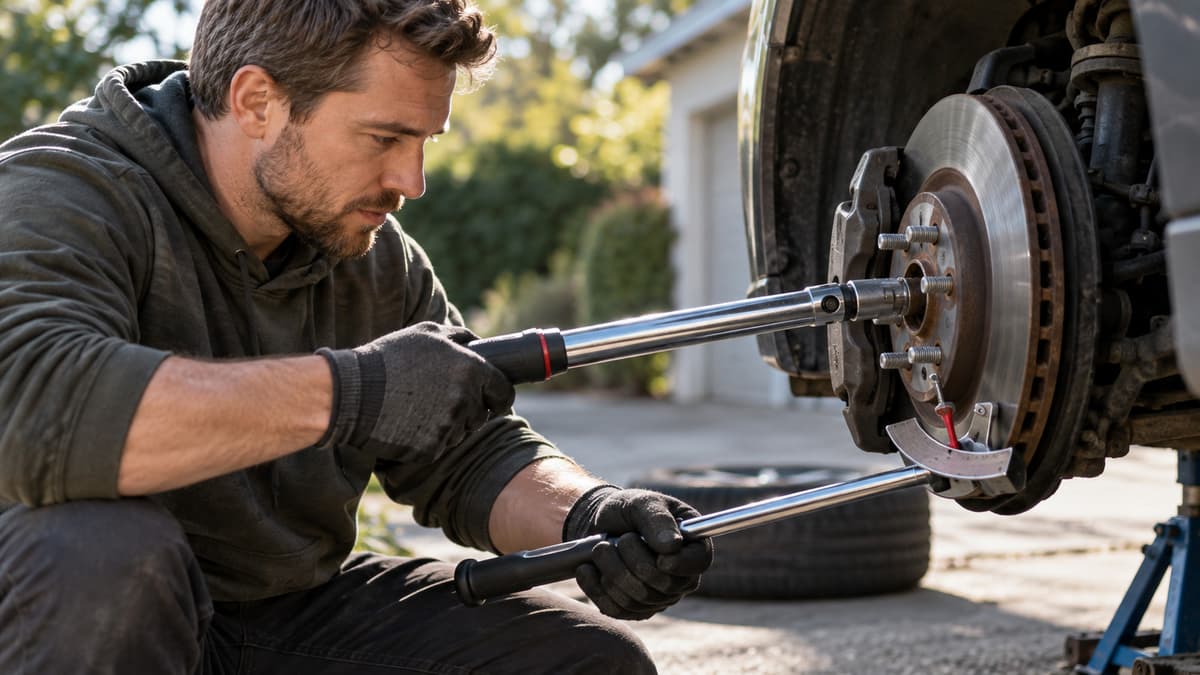
When a torque wrench needs checking
A crisp click can hide a drifted spring. The usual benchmark is 12 months or 5,000 cycles from first use.
Click torque wrench or beam
A click is easy where you cannot watch a scale. A beam has no spring to leave wound up, and the two fail differently.
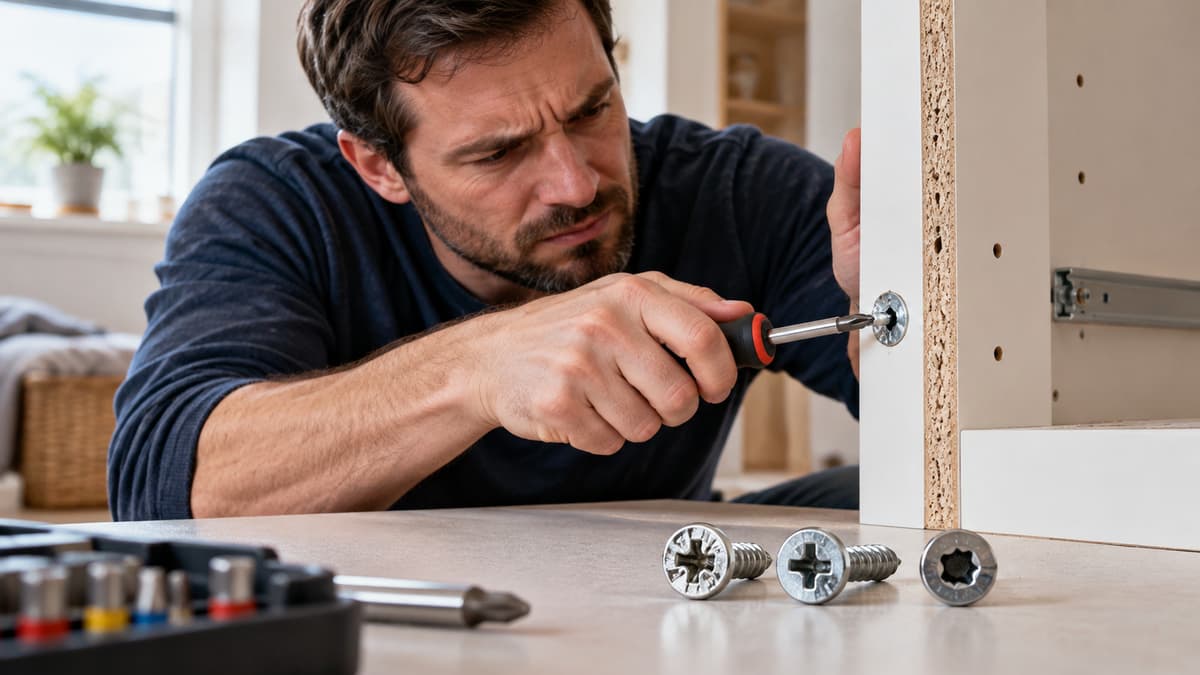
Torx, Pozidriv or Phillips on UK kit
Pozidriv, Phillips and Torx look related and are not. The wrong tip chews the head even when the torque setting is right.