Dirty water vs clean water submersible pump
You are staring at amazon.co.uk bullets that promise dirty and clean water, a solids figure in millimetres, and residual water down to a few centimetres or even 1 mm. It is unclear which claim matters for a muddy pond versus a patio flood. Dirty water vs clean water submersible pump choice is a free-passage and residual-depth decision, not a brand test. This page explains the types, when dual or flat suction wins, and which lookalikes to avoid. The full criterion order sits in the [buying guide](/hub/garden-watering/submersible-pump/sub/submersible-pump-buying-guide). The matrix is on the [submersible pump comparison](/hub/garden-watering/submersible-pump). A purchase through our links may earn us a commission at no extra cost to you.
You are staring at amazon.co.uk bullets that promise dirty and clean water, a solids figure in millimetres, and residual water down to a few centimetres or even 1 mm.
You are staring at amazon.co.uk bullets that promise dirty and clean water, a solids figure in millimetres, and residual water down to a few centimetres or even 1 mm. It is unclear which claim matters for a muddy pond versus a patio flood. Dirty water vs clean water submersible pump choice is a free-passage and residual-depth decision, not a brand test. This page explains the types, when dual or flat suction wins, and which lookalikes to avoid. The full criterion order sits in the buying guide. The matrix is on the submersible pump comparison. A purchase through our links may earn us a commission at no extra cost to you.
Our top picks
| Badge | Product | Solids passage | Residual water | Job type | Note | Price | Offer |
|---|---|---|---|---|---|---|---|
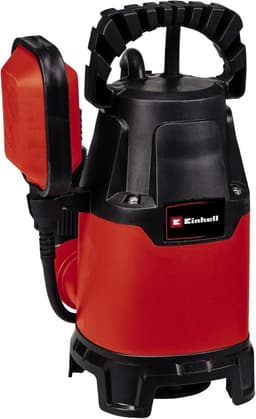
| Best overall |  Einhell Einhell GC-DP 3325 | 25 mm | Not stated | Dirty/clean drainage | 8.0 | about £37.97 | View offer |
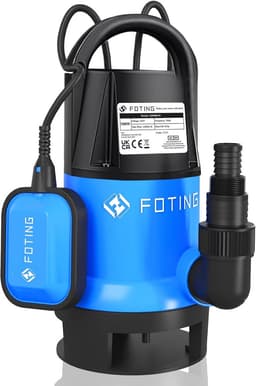
 FOTING FOTING 900W 14000 L/h | 35 mm | 3 cm claimed | Dirty/clean drainage | 8.6 | about £46.99 | View offer | |
| Alternative |  KATSU Tools KATSU 400W with 10 m hose | 35 mm | 5 cm minimum depth | Dirty/clean drainage | 8.3 | about £48.98 | View offer |

On this page
Dirty water and solids size
Clean water and flat suction
Dual pumps
Lookalikes to avoid
Common questions
What counts as dirty water for a garden pump?
When is clean water enough?
What does 25 mm or 35 mm solids mean in practice?
What is flat suction for?
Is a pond fountain pump a dirty-water pump?
Related pages
Sources
Public UK sources from the research digest, plus the amazon.co.uk prices, stars and review counts in the display file for these eight listings. Last reviewed 22 October 2026.
- Electrical Safety First, garden electrical advice (retrieved 22 October 2026)
- HSE, electrically powered equipment and RCDs (retrieved 22 October 2026)
- GOV.UK, check if you need a licence to abstract water (retrieved 22 October 2026)
- BSI Knowledge, BS EN IEC 60335-2-41 (retrieved 22 October 2026)
- Generators Direct, submersible water pumps buying guide (retrieved 22 October 2026)
- Kärcher GB, drainage and submersible pumps (retrieved 22 October 2026)
- Einhell UK, dirty water pumps (retrieved 22 October 2026)
- GOV.UK, Electrical Equipment (Safety) Regulations 2016 (Great Britain) (retrieved 22 October 2026)