Pond liner leaking: a hole, overflow or evaporation
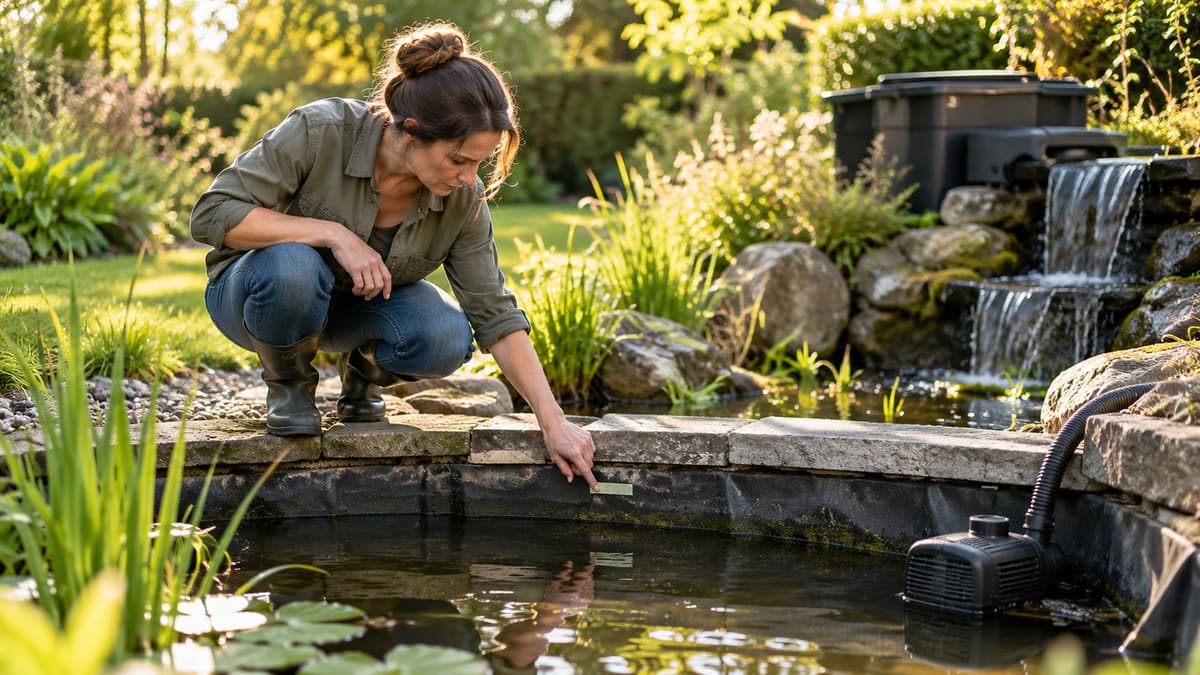
Pond liner leaking is often a low rim or a running pump. Mark the waterline, switch the pump off for a day, and patch only a small hole you can get dry.
On this page

The water sits below the mark on the coping, and the filter is still running. Pond liner leaking is the search that follows. Three losses look the same from the house. A low rim lets the pond overflow, then the level rests there. Sun and wind take water off the surface. A puncture, a slipped sheet, or a crack in a hard shell lets water into the ground. They stay mixed while a pump lifts water onto a waterfall or a stream.
Peter F. used the Royal Horticultural Society's January pond notes and its pond-care guidance, the BBC's pond-care page, and Pond Planet's guide to a leaking liner. We have not cut a liner, timed a repair, or lab-tested a patch. This page quotes no roll price, because a price without your length, width, and overlap would be a guess. A qualifying purchase from the comparison links can earn a commission at no extra cost to you.
In short
Treat a pond liner leaking as the answer only after the rim and the pump have been checked. An edge that is out of level, or a liner slipped below the water, overflows, and that is the BBC's first check. Turn the pump off for about a day, as Pond Planet describes. If the level holds, look at pipework and streams. If it keeps falling, patch only a small hole you can clean and dry.
A low level is not yet a hole
Start at the rim. The BBC's pond-care guidance asks you to check that the edge is level, and that the liner has not slipped below the water, before you assume a puncture. Water leaves at the lowest point of that rim. If one side of the garden has settled, or the liner has crept down the bank, the pump can spill there on every return. The pond then sits at that low lip, and the sheet in the floor can still be whole.
Walk the coping for a wet streak, a flattened plant, or a fold of liner that now finishes in the water. Lifting the sheet above the water, and levelling the edge, stops the overflow. A patch in the base leaves the spill in place, so the level falls again once you refill past the low side. Walk the rim before you drain.
The notes from the RHS, the BBC, and Pond Planet give no millimetre figure for pond leak or evaporation on a hot British day, so this page will not invent one. A fountain throws water onto the paving. A drop after a warm week, with dry soil and a level rim, is a reason to run the pump-off test. Treating every drop as a hole is the shortcut these checks refuse.
Frost is separate. The Royal Horticultural Society's January notes say a frost-related fall can mean a fault in the liner or in concrete. Top the pond up and repair in spring, once you can dry the job. Topping up keeps water over the fish. It does not show where the fault is, and breaking the ice for a look sits outside that advice.
Turn the pump off to find the leak
Pond Planet's test is how you turn the pump off to find the leak. Leave it off for about 24 hours. If the level still falls, suspect the liner. If it holds, the loss was moving water: pipework, a weeping union, a waterfall throwing water outside the liner, or a stream over its channel. Do not top the pond up during that day. A top-up erases the mark.
Mark the line before you switch off, with tape on dry coping or a pencil on a stone that will stay put. Next day, read the surface against it. A hold sends you round the circuit that was running: the unions, the pipe entry, and any wet path that appears only when water flows. A leak that exists only while the waterfall runs is plumbing or splash.
A fall puts the liner, or a hard shell, first, and the new waterline is where you look next. These notes give no temperature and no depth at which it is safe to leave a filter off. A low, warm, crowded pond is a poor day for the test. Top up, keep filtration on, and repeat it in milder weather.
Where the water stops
Let the level settle, then inspect the waterline. Pond Planet puts that inspection after the pump-off day. A hole in the wall usually stops taking water once the surface drops below it. The damage sits on that line or just under it. Folds, the sleeve where a pipe passes through, and any place a stone, a root, a spade, or a heron's weight has pressed the sheet are worth a slow look on both banks.
A hole in the base behaves differently. The level keeps falling and never draws a neat line, because the opening is still below the water. You see that damage when the water is low enough to reach the floor. If the line has stabilised, lower the water only below that band and leave the rest of the pond full. If the level never settles, a deeper empty may be the only way to see the hole.
Use the low water to look at the rim again. A liner that has slipped below the surface can still be whole. Reseating the sheet above the water is the repair in that case. While the level is down, take out the stone or the root that made any hole you do find. Left underneath, it makes the next puncture.
Patch only what you can dry
A butyl liner repair has to stay inside a narrow claim. Pond Planet says to patch small holes, and to patch them dry. The Royal Horticultural Society's January notes say butyl and fibreglass can often be repaired with kits. You want a small hole, a surface you can clean and dry, and a kit that names the material in your pond. A wet, dirty, algae-covered band at the waterline fails that test. Drop the water below the damage, wipe the sheet, and let it dry.
Work on the spot you marked from the settled line. These sources do not give a household recipe for a pond sealant, and this page will not invent one. A tube sold for a bathroom is not a kit for butyl. If you cannot tell butyl from PVC, or either of them from a fibreglass shell, name the material before you buy. The cure time is the time printed on the kit in your hand.
A preformed pond is a different object. Fibreglass is the rigid material the RHS links to a kit. A thin plastic preformed shell is not named there, so a butyl patch is the wrong assumption on that plastic. If a label is missing and you cannot say what the shell is, stop before you glue. Sheet materials for a lined pond are set out on the pond membrane comparison, which does not claim one patch for every moulded tub.
When to replace a pond liner
Replace the liner when the pump-off test says the sheet is losing water and a dry patch cannot cover the damage in front of you. New sheets sit on the pond liner comparison. This page does not quote a roll price. A single figure, with no length, no width, no depth, and no overlap under the coping, would be a number we made up. Measure the hole, including shelves and the margin that must finish above the water, and take those figures to the comparison.
Season still binds the job. When frost has shown a liner or concrete fault, the RHS January advice is to top up and repair in spring. Wait until you can dry the work, or until the fish have a safe hold if the pond must be emptied. A new membrane laid on the stone that punctured the old one leaks again for the same reason.
A patch that was cleaned, dried, and left for the cure on the tin, and that still loses water, means the closed hole was not the only path, or the rim is still spilling. Go back to the pump-off mark before you order a roll the same afternoon. Replacement fits a sheet that is finished: several splits, a seam you cannot dry, or a liner so brittle that each new patch tears the edge.
Common questions
Is a dropping pond water level always a leak?
How do I know the pond liner is leaking?
Can I patch a butyl liner while it is still wet?
When do the fish have to come out?
Is a preformed pond repaired like a liner?
What if the level holds once the pump is off?
When should I replace a pond liner?
Can a frost-related drop mean the liner has split?

Peter F. is the editor for DIY & tools at productscompared.co.uk. Comparisons in this category are checked against amazon.co.uk listings, review evidence and public UK sources.
Related articles

What to do when the pond freezes
A frost-related drop can be a liner fault. Top the pond up until spring, and leave the ice intact.

What a garden pond costs before you add fish
Liner, pump, and plants are separate buys, so one figure for a whole pond is easy to invent.

Why pond water turns green
Green water is algae in the water column. Topping up after a leak is a different job from clearing it.