Green pond water: what to do before you drain it
Green pond water is suspended algae, not blanketweed you can rake. Use plants, a filter or UV, and only then a clarifier, before you empty the pond.
On this page
You filled the liner in May. By the end of June the water is the colour of pea soup, the fish are only shapes, and someone has told you to pump the pond out and start again. Green pond water is algae hanging in the water, and a drain throws away the pond as well as the colour.
The cloud and the green strands on your net are not the same problem. One is suspended. The other you can lift. The Royal Horticultural Society separates them, and the next step depends on which one you are holding.
Peter F., editor for DIY & tools at productscompared.co.uk, wrote these notes in October 2026 from the RHS pages on pond algae and pond care, Froglife's caution on treatments, and the amazon.co.uk listings in our pond clear comparison. There is no lab trial behind them. Prices and star lines are the UK listing figures recorded here. A qualifying purchase through those links can earn a commission at no extra cost to you.
In short
Green pond water is free-floating algae in the water column, not the strands you can rake out as blanketweed. The Royal Horticultural Society treats a full drain as a last resort, not the first weekend's job. Shade, plants, and a filter or UV clarifier come before a bottle, and a bottle still will not clear every pond or every kind of green growth.
Green water and blanketweed are different
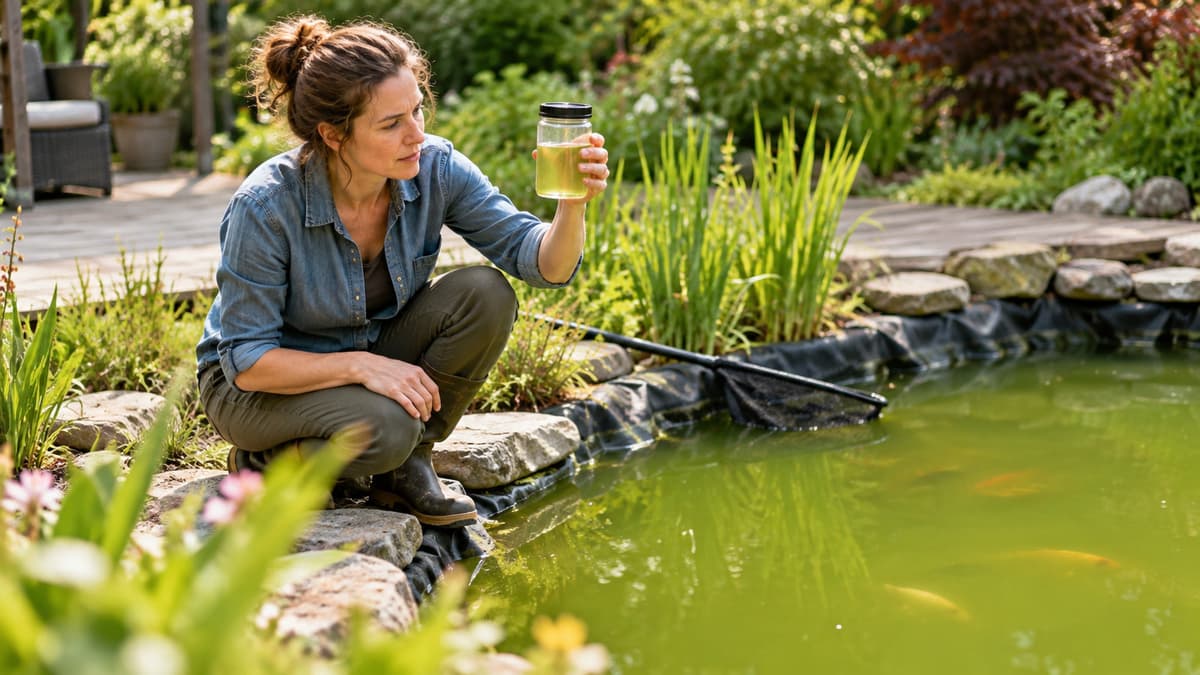
Stand at the edge with a net and a white jug. If the water in the jug is green and you cannot see the bottom of the pond, you are looking at algae suspended in the water. If the jug is fairly clear and the net comes up full of green threads, you are looking at blanketweed. The RHS algae page draws that line on purpose. Mixing the two names is how people buy a green-water liquid for a mat they could have lifted.
Blanketweed sits on the liner and in ropes you can wind onto a stick. The RHS notes that removal by hand often has to be repeated, and that treatments vary and also need repeating. Green water will not wind onto a stick. You can skim floating debris and still have a green pond. Our blanketweed treatment comparison is the strand problem. This page is the cloud. A pond can carry both at once.
Why a new pond turns green
A new liner is a bare bowl of water in full sun. Nutrients are already there from tap water, soil on the marginals, the first handful of food, and dust that blew in while you were building. Free-floating algae use that light faster than a young planting can. The RHS describes this green water as a common pond problem, not as a sign that the liner was a mistake. The RHS pond-care guidance warns that a full clear-out disturbs the system you are trying to grow.
Work out the volume before you buy anything measured in litres. A practical estimate is length in metres times width times average depth times 1,000. Use the average depth, not the deepest pocket by the pump. US gallons (about 3.785 litres) and UK gallons (4.546 litres) describe different ponds. That figure is a rule of thumb for dosing and for a UV unit, not a survey. A wildlife pond with no fish still goes green if it is shallow, new, and unshaded. Froglife warns that a treatment sold as natural can still upset the pond.
Uneaten pellets and extra fish add nutrients the algae will use. A hose every hot afternoon is a steady feed.
What you can take out by hand
Start with what a net can catch: blanketweed, fallen leaves, and the scum along the downwind edge. Spread the strands on the bank for a few hours so creatures can crawl back, then compost them away from the pond. The RHS says this removal may need repeating in warm weather. You cannot net green water. Skim what is solid, and leave the colour for shade, plants, filtration, or a clarifier that clumps particles.
A full drain is the step to refuse first. If you do empty a pond, early autumn is the calmer window, not the first week of a heatwave. In England, great crested newts and their breeding places are protected. If you think they are present, stop and take advice before you pump anything out. Fish that gasp at the surface, or that die after a dose, are outside a DIY clear-up.
Where a filter and a UV clarifier sit
A filter and a UV clarifier do different work. A pond filter catches solids and houses the bacteria that process waste. It does not knock out the single-celled algae that make the water green. A UV clarifier sits on the flow, and water has to pass the lamp. A unit beside a still pond is a light in a box. We will not invent a number of days until a pond clears. Wattage and flow belong in the comparison of UV clarifiers.
Bulbs fade before they look dead. A green pond that used to stay clear is often a lamp that has aged. Replace it on the maker's interval before you conclude that UV does not work here. UV will not pull blanketweed off the liner, and it will not compensate for twice the fish the filter was sold for. Blagdon's treatment guidance points ongoing clarity at a UV clarifier rather than at bottle after bottle. That is a choice for a filtered fish pond, and a poor first purchase for a tiny wildlife puddle with no pump.
What plants will not promise
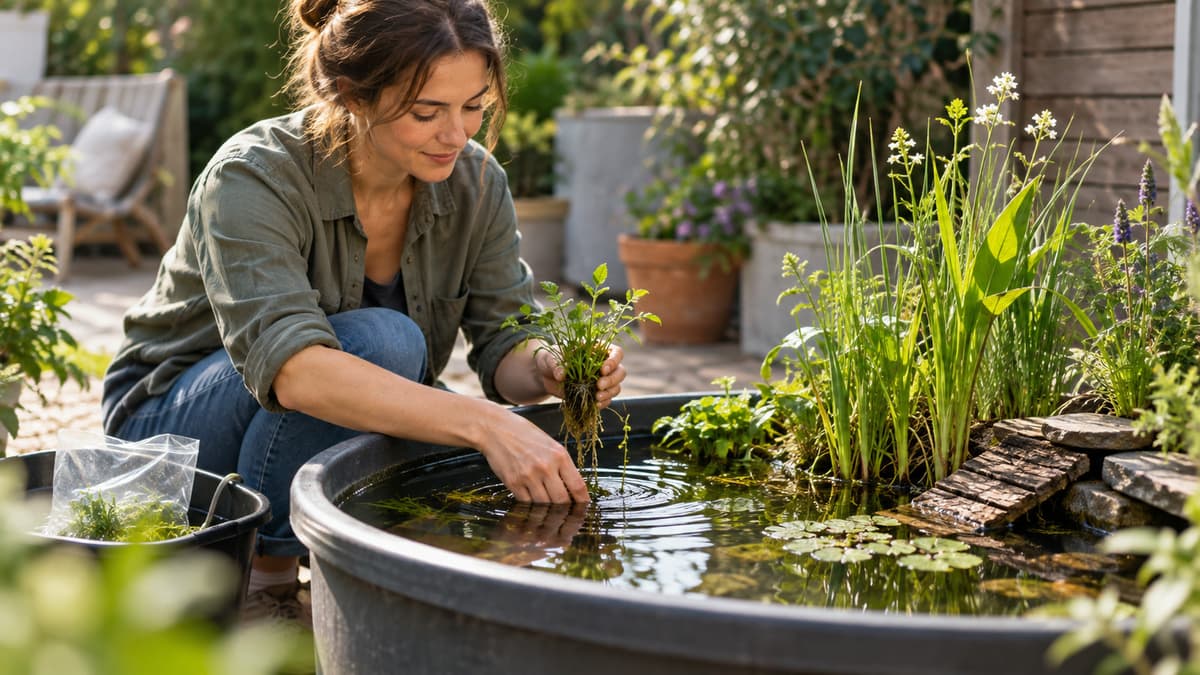
Plants earn their place because they shade the surface and compete for the nutrients algae use. That is the mechanism worth trusting. It is not a stopwatch, and we will not pretend a basket clears a pond in a set number of days. The RHS planting guidance flags the night-time oxygen drop when oxygenators are overstocked. A pond that is green at noon and distresses fish at dawn can be that mistake. We also will not claim that plants clear nitrate. A new pond planted in May may still be green in June.
The aquatic plant comparison is the shopping list. Floating cover helps shade. A solid carpet of one fast species can trade green water for a different mess, so leave gaps. For a pond with few or no fish, shade, planting, and rainwater top-ups come before any treatment. Froglife's warning still applies if the bottle says natural. Fish ponds that are fed daily do not get the same patience.
When a bottle helps, and when to stop
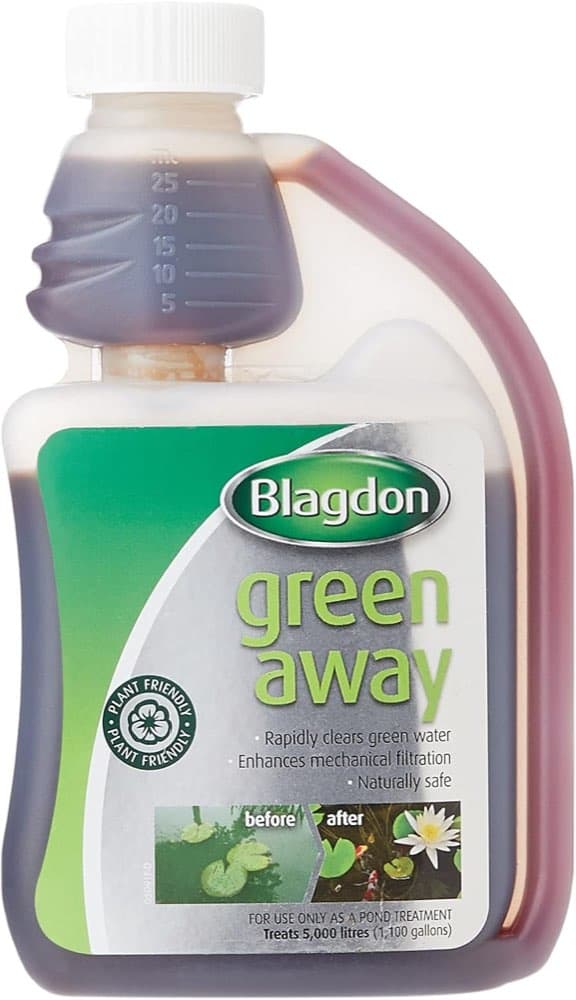
A clarifier is a gap-filler once the job is suspended algae and you know the litres. The top pick is Blagdon Green Away, 250 ml at £7.95 on amazon.co.uk, stated to treat 5,000 litres by clumping algae so the particles sink or catch in the filter. It is 4.0 from 6,612 reviews. The listing claims results within a few hours. UK review texts we read often describe pea-soup water clearing within a few days, with a second dose finishing a partial clear, the fish fine, and the filter needing a clean afterwards.
Blagdon's FAQ gives a pH window of 6.5 to 8.5. That figure is not printed on the amazon listing we scored. The dosing chamber's ball bearing lets the measured liquid run back into the bottle. Too much is described as brown globules, and some ponds stay green, including in a very hot sunny spell. A 250 ml bottle aimed at 5,000 litres is the wrong pour for an 800 litre tub and only half a stated dose for a 10,000 litre pond.
Tetra Pond CrystalWater, about £11.30 for 500 ml and 4.2 from 4,374 reviews, is sold as a particle binder. Tetra's UK page describes flocculation at 50 ml per 1,000 litres, wants carbonate hardness of at least 6°dH, and says the product is not for combating algae. Our review sample includes reports of dead or distressed fish after a dose, often in small ponds. A bacterial clearer such as Envii's works over weeks. None of the six listings printed an HSE approval number. If a label says it kills algae, look for that number. Barley straw is not a guaranteed fix. We did not run a straw trial.
Common questions
Why is a new pond green?
Is blanketweed the same as green pond water?
Will plants clear green pond water?
Do I need a UV clarifier for green pond water?
Should I empty the pond to fix green water?
Is barley straw a guaranteed fix for green pond water?
Will Blagdon Green Away clear every green pond?

Peter F. is the editor for DIY & tools at productscompared.co.uk. Comparisons in this category are checked against amazon.co.uk listings, review evidence and public UK sources.
Related articles

Blanketweed: when raking is enough
Green strands you can lift on a net are not the same problem as pea-soup water you cannot see through.
How to plant a small wildlife pond
Shade and nutrient competition from plants are part of the plan. They are not a timed cure for a green cloud.

How often to clean a pond filter
A clumping dose can fill the foams for a few days. How often you rinse them is a separate job from clearing the water.