Blanketweed in the pond: when raking is enough

Blanketweed in a pond is the green strands you can rake out, not pea-soup water. Repeat that lift through a warm spell. A bottle is not a one-shot cure.
On this page
The net comes up heavy, and the green ropes hang off the frame. That is blanketweed in a pond: filamentous algae, also called string algae, and you can wind it on a stick. If the water in a white jug is still clear, you are holding the weed. If the jug is green and the bottom has vanished, the next purchase changes.
What you do this weekend is physical. Twirl or rake the strands out, and expect to come back while the weather stays warm. Do not buy a tub on the promise that one dose ends it. The Royal Horticultural Society treats blanket weed as hand removal that may need repeating, with treatments that do not behave the same on every form of algae.
Peter F., editor for DIY & tools at productscompared.co.uk, wrote these notes in October 2026 from the RHS pages on pond algae and pond care, the Be Plant Wise warning on dumping pond growth into the wild, and the amazon.co.uk listings in our blanketweed treatment comparison. This is not a lab trial. A qualifying purchase through our links can earn a commission at no extra cost to you.
In short
Blanketweed in a pond is the green strands you can rake or twirl out, not the suspended algae that turns the water to pea soup. The Royal Horticultural Society expects that removal to be repeated in warm weather, and treats bottled treatments as uneven from one growth to another.
What the green strands actually are
Strands on the mesh, the liner, or the waterfall are blanketweed. RHS algae guidance separates that filamentous growth from free-floating algae, the cloud that turns the whole volume green. A green-water clarifier will not wind a mat onto a stick, and a net will not strain a cloud that runs back through the holes.
String algae is the same growth under another label. Keepers say blanketweed when the threads lift in a sheet, and string algae when they are finer and caught in the plants. Green pond water fails the lift test. Our pond clear comparison is the cloud. This page is the ropes on the net.
A pond can carry both in the same week. Pea soup in the open water and threads around the marginals are two jobs. A thick cover cuts light, and a large mass that dies back in a hurry uses oxygen as it decays. Fish at the surface, or wildlife calm at dusk and distressed at dawn, is the moment to get advice.
Raking is the first move
Raking comes first because the weed is already a solid you can lift. The RHS describes twisting blanket weed around a stick, or taking it out with a rake, and says the job may need doing again in warm weather. Work from the bank and wind a modest bundle, so you do not drag the silt across the liner. The repeat is maintenance, not proof the net was the wrong tool.
The RHS does not print a seven-day interval. A pass about once a week is a fair rule of thumb while the threads keep returning in warm weather. A cool, dull fortnight may need nothing. If the same corner is full again in three days, leave the net by the pond. A garden pond you can walk around is still this job when your arms ache.
In Great Britain, great crested newts and the places they breed are protected. Skimming strands from the bank is not the same as pumping a pond out. If you think newts are using the water, stop and take advice before a clear-out. A full strip in midsummer, while oxygen is already tight, is the job to refuse.
Why a bottle is not step one
Weed you can already hold does not need a chemical to become removable, and the products do not share one result. The RHS is plain that treatments are inconsistent from one form of algae to another, and that they often need repeating. The ranking comes from amazon.co.uk listings and reviews, not from a pond trial of our own.
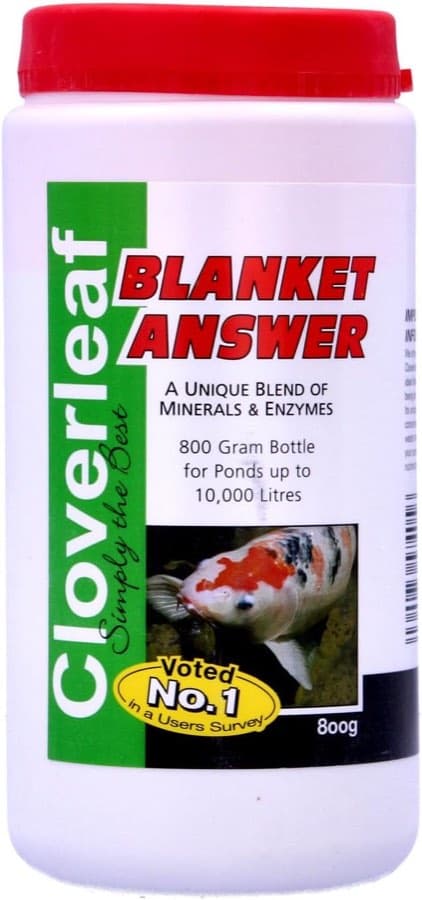
The top pick for a fish pond around a stated 10,000 litres is Cloverleaf Blanket Answer, the 800 g tub, ASIN B0037QLLMA. On amazon.co.uk it was £19.47, with 4.5 from 4,486 reviews, and the bullets agree on about 10,000 litres. The form field still says liquid and powder on an 800 g tub, so read the parcel. Milky water follows while the weed breaks down, and you still clean the filter.
Leave that tub if you want the pond clear the same afternoon, or if you will not run the pump when the sludge arrives. The 4 kg Cloverleaf Blanket Answer, at £64.99, is stated around 50,000 litres, with 4.6 from 111 reviews. You still net and rinse, with the pump left on. A patio pond under 10,000 litres does not need that sack.
Estimate litres as length in metres times width times average depth times 1,000. Use average depth, not the pocket by the pump. A US gallon is about 3.785 litres and a UK gallon is 4.546, so the wrong unit describes a different pond. A green-water clarifier clumps suspended algae. It is not a rake you pour.
A UV clarifier treats water a pump pushes past a lamp. It will not peel blanketweed off the liner or out of the lilies. The UV clarifier comparison is for cloudy water you already circulate. A lamp beside a still pond does not stand in for the net.
envii Algae Klear Xtra, 500 ml at £20.95 with 4.1 from 4,188 reviews, is a poor match for a floating mat, and one review reports newt deaths. That report is not a controlled test, so leave a wildlife pond undosed.
Plants shade the pond and still leave the mat
Plants earn a place because they shade the surface and use some of the nutrients algae would otherwise take. That is not a date by which the mat must be gone. Oxygenating plants will not stop blanketweed on any number of days we can cite. The morning after you lower a basket in is too soon to call the planting a failure.
The aquatic plant comparison is the list for a UK pond. A cheap aquarium bunch is not a wildlife plan, and a species that carpets the surface can trade string algae for a closed lid. Leave gaps. Oxygenating plants packed solid can leave the pond short of oxygen overnight. If fish are distressed at dawn, thin the bunch.
We will not claim that a lily clears nitrate, and we will not call barley straw a guaranteed fix. The RHS treats pond treatments as variable, and many need repeating. We did not run a straw trial. A fish pond fed every day keeps adding nutrients, so shade does not cancel the pellets. A wildlife pond is the worse place to copy a dose a koi pond happened to tolerate.
Where the weed goes, and when the pond is too big
Do not tip blanketweed into a ditch, a stream, a drain, or a wild pond. Be Plant Wise is the UK campaign on that point: fragments and nutrients travel. Compost the heap away from drains, or use council green waste, so the next rain cannot wash it back into the liner or the street gully.
Leave the heap on the bank for a few hours so snails, larvae, and anything else in the strands can find the water again. Then move it. A pile left overnight in a warm spell slumps back in, and the same blanketweed gets raked twice. Do not hose it toward a border drain.
A garden pond you can reach from the path is still your job. A lake, or a middle you cannot reach without a boat, is the case the RHS points toward an aquatic weed contractor. Multiplying a garden tub is not that job, and we are not offering a chemical rate for that water.
If you mean to thin plants as well as weed, keep that heavier clear for early autumn, which is where RHS pond care puts it. Heat and a full strip in the same week is how fish are lost. Skim the strands now. If the growth is only in one corner, do not dose the whole volume.
Common questions
Is blanketweed dangerous?
How often should I rake blanketweed?
Will oxygenating plants stop blanketweed?
Do blanketweed treatments work the first time?
When is the pond too big to rake?
Where should I put the blanketweed I pull out?
Is string algae the same as green pond water?
Will a UV clarifier remove blanketweed?

Peter F. is the editor for DIY & tools at productscompared.co.uk. Comparisons in this category are checked against amazon.co.uk listings, review evidence and public UK sources.
Related articles
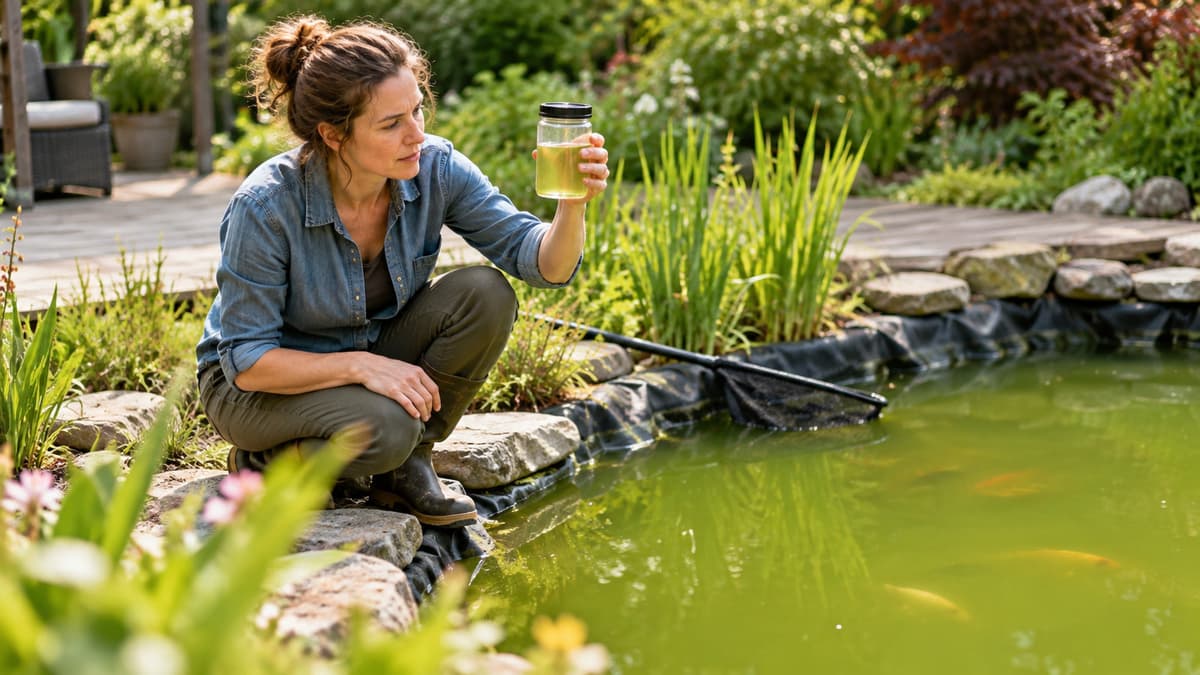
Green pond water: what to do before you drain it
Pea-soup water will not wind onto a stick. Sort that cloud from the strands on your net before you buy a clarifier.
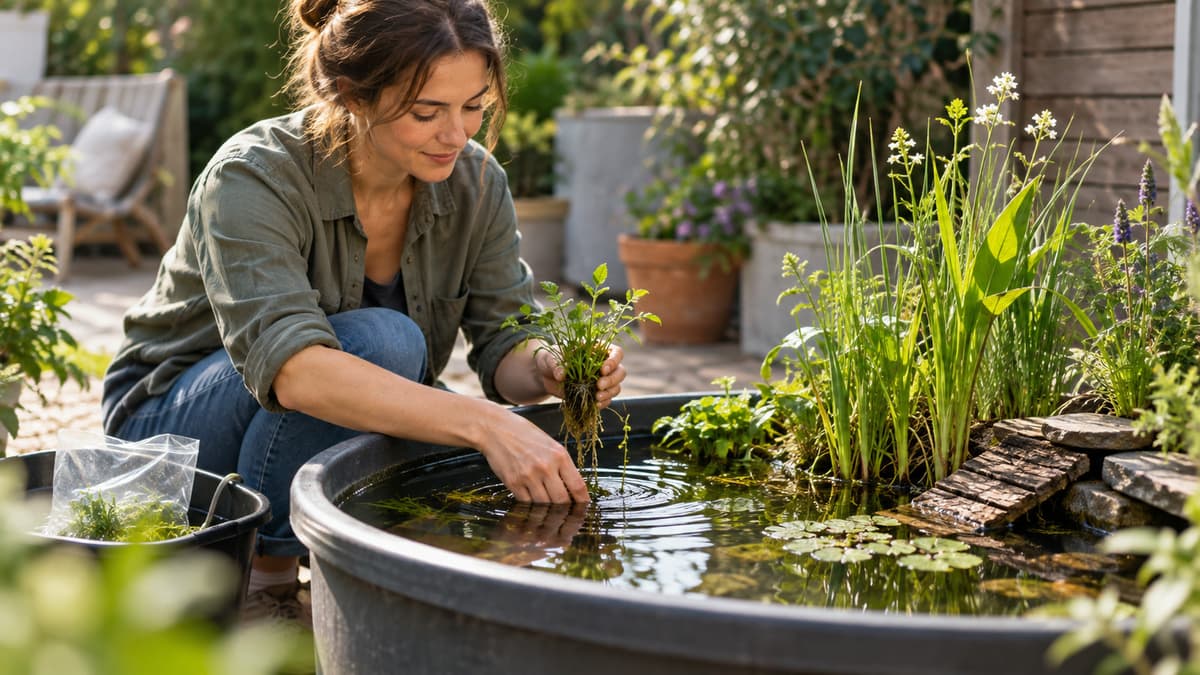
How to plant a small wildlife pond
Shade and nutrient competition belong in the plan. A basket of plants is not a timed cure for string algae.

How often to clean a pond filter
A treatment that breaks the mat down can fill the foams. Rinsing them is a separate job from raking the weed.