Wildlife pond plants: a clear plan for a small tub
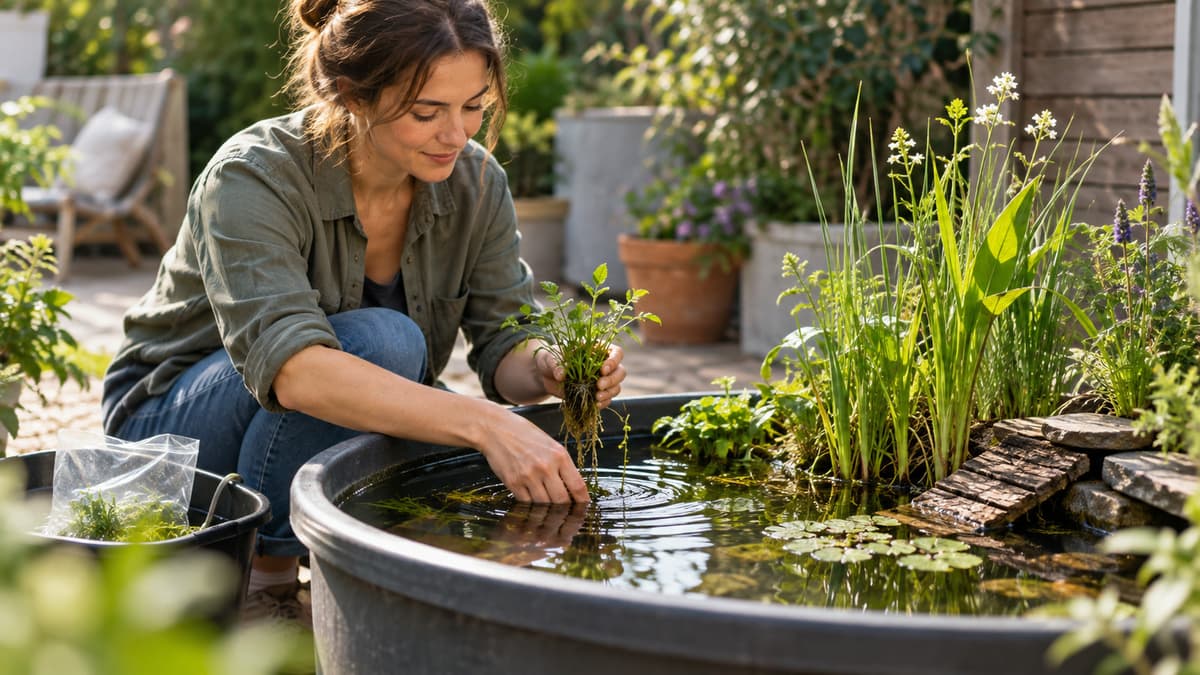
Choose wildlife pond plants for a small tub: rainwater, one submerged native, a few marginals, half the surface clear, and aquarium bunches kept indoors.
On this page

You have a tub on the patio, or a small lined hole, and no fish. The bag in your hand may still be an aquarium bunch. Wildlife pond plants for this water are a short list: one submerged native, a few marginals, and a climb out for a frog or a hedgehog.
This page follows the Royal Horticultural Society’s container-pond steps, the Natural History Museum’s pond FAQ, and the amazon.co.uk listings in the garden-pond comparisons. Nothing here was grown in a lab. Shelf prices and review counts are the figures stored for those listings, and they move.
In short
Plant in spring, use rainwater, and leave about half the surface clear. Add one submerged native and a few small marginals, and build a way out before the baskets go in. Keep aquarium bunches, frogspawn, and water from another pond out of the tub. Five small plants is the RHS cap, and a smaller start is a complete one.
A way out before you add plants
A wildlife tub fails when the sides are smooth and the rim is high. The RHS container steps treat a way out as part of the build. A plank, a stack of stones, or a branch that breaks the waterline gives a frog, a newt, or a small mammal a grip. Put that exit in before the plants. A full basket on the only shallow ledge blocks the route.
The same edge holds the marginals. With no shelf, the crowns sit in a basket on a brick or in a floating island. Keep one side of the rim as the climb, and put the baskets on the other. A branch you can lift for weeding is easier than a rockery you dismantle in July.
The RHS container page gives no centimetre depth for a patio tub, so this page leaves depth unstated. After heavy rain, a liner whose edge sits below the soil will wash silt over the exit. Fix the edge before you add plants.
Wildlife pond plants that belong in the tub
The submerged plant comes first. The Natural History Museum’s pond FAQ treats at least one submerged native as the minimum. Hornwort, willow moss, and starwort are the oxygenators named there. A mixed bunch with a zone number on the sleeve belongs indoors.
Hornwort has no roots in the way a marginal does. Weigh a stem with a stone, or let it drift. Burying it in compost rots a plant you meant to float. Willow moss wants a clean stone, and a thick cap of garden soil smothers it. Starwort is easy to lose in a mixed wad. If the bunch has no species on the label, leave it with the seller.
Marginals at the edge
Marginals hold their leaves in the air and their roots in wet compost. The RHS container examples include a mini waterlily, water forget-me-not, corkscrew rush, lesser spearwort, and arum lily. Prefer water forget-me-not and lesser spearwort on a wildlife edge. Corkscrew rush is a curled garden form, and a poor reason to dig from a ditch. A mini waterlily needs the depth on its label. If the tub is shallower, choose another marginal. Arum lily is an ornamental on that RHS list, and it does not replace hornwort, willow moss, or starwort.
Hold each new plant in a bucket of rainwater and look for snails, blanketweed, and any extra stem. Quarantine is part of the RHS advice on choosing pond plants. If the bucket grows a second plant, keep that water out of the pond and out of any drain that reaches a stream.
How many wildlife pond plants a tub can take
The RHS container steps stop at up to five small plants. One submerged native plus two marginals is a complete start. Add another plant later, once you can see which half of the surface is still open.
Leave about half the surface clear. That is the RHS aim when you choose pond plants. A waterlily, a mat of oxygenators, and any floating leaf spend the same ration. Shade from a fence cools the tub. It does not cancel the open half. A surface that is green from wall to wall in July has missed the aim.
A 2 litre crown can be one plant too many. Split it only when you know the species and the spare stays in your garden. Give the planting a month. Hornwort can look thin on day one and then fill the clear water, so thin it back before it covers the exit.
What not to pour in
Leave frogspawn where it was laid. The Natural History Museum says not to add frogspawn, and not to add water from another pond. Rainwater, one submerged native, and a way out are the invitation. Spawn in a bag takes animals from a pond that already works, and it can bring parasites and plants you did not choose. A bucket that looks clear is the usual way blanketweed, duckweed, and snails arrive before your marginals have rooted.
The RHS steps specify rainwater and publish no standing time for a watering can, so this page has no hour-count. Fit a butt if you do not have one. A hose top-up every hot week is a different mineral load, and this plant list was not trialled on it. A fish-tank dechlorinator does not turn the hose into the butt.
This planting is for a pond with no fish. A goldfish changes what can breed and pulls the buying list towards a pump and a filter. Leave chemical clarifiers out while a new tub is merely brown from peat or from fresh compost. That brown can last a fortnight. Pea-soup green is a later problem.
Leave the tank plants indoors
The aquatic plant comparison on amazon.co.uk is mostly indoor stock. The top pick is a plastic stem, the DIGIFLEX QQ63, about 20 cm, at £9.99, with 4.3 from 3,009 reviews. It is sold for a tank, with a weighted base, a freshwater and saltwater claim, and a plant-type field that says Ficus. It does not oxygenate a patio pond.
Live bunches in that set include zone 10 listings, a warm-house rating, beside coldwater-sounding titles. This page does not recommend those bunches for a wildlife pond. Where the listing will not name the species, you cannot check what you are allowed to keep.
Frogbit needs the same split. Amazon frogbit on those listings is Limnobium, marked indoor. European frogbit is a different plant. One review mentions a wildlife pond. That is a single buyer report. Be Plant Wise is the rule: aquarium plants stay indoors. If a bunch is already on the side, keep it in the house or send it back. A heap that drains to a ditch, or a trial at the pond edge, is how an indoor plant becomes an outdoor problem.
A floating basket when there is no shelf
The top pick in the floating pond planter comparison is the Pond H2O Flp250, ASIN B07P13RS8F, one 26 cm square woven basket at £15.95 and about 454 g. On amazon.co.uk it is 4.2 from 79 reviews, the largest sample in that set. The seller says it traps soil, at about 3 inches deep, and that you can tether it, link it, or let it float. Soil is not in the box. A qualifying purchase can earn us a commission at no extra cost to you. We did not float this basket in a test pond.
UK reviewers moving plants from 9 cm pots fitted about two, with compost near the rim. The inner well is smaller than 26 cm. Water forget-me-not or lesser spearwort fits. A mini waterlily that wants a wide crown will sulk. Use aquatic compost below the rim. The file has no published kilogram buoyancy, so that two-plant load is the one you can point to.
Tether the basket so it stays off the exit and off the open half of the surface. One UK review describes a toad using the basket as a seat, which let mud into the pond. Keep compost below the rim. This tub has no fish. If the fabric frays, take it out. Check the tether after wind, because a basket against the ramp undoes the exit you built first.
Common questions
How many plants go in a tub?
Which native plants suit a small wildlife pond?
Can I fill a wildlife pond with tap water?
Can I add frogspawn from another pond?
Can aquarium plant bunches go in the pond?
How much of the surface should I leave open?
Do I need a floating basket?

Peter F. is the editor for DIY & tools at productscompared.co.uk. Comparisons in this category are checked against amazon.co.uk listings, review evidence and public UK sources.
Related articles

Pond plants you must not buy or dump
A plant you may buy can still be a plant you must not tip into a wild ditch.
Why pond water turns green
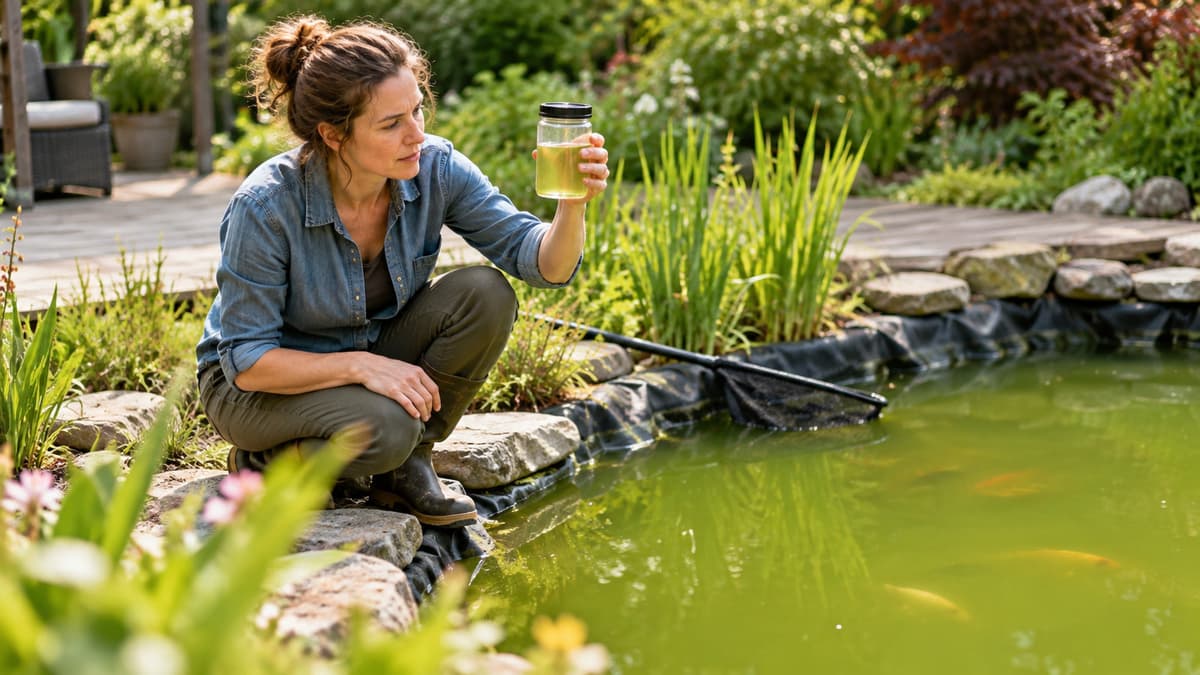
Green water is algae in the column. A new pond can look like soup before the planting settles.

What a garden pond costs before you add fish
Liner, pump, and plants are priced apart, so a single pond-cost figure is easy to invent.