Banned pond plants UK: what you must not buy or dump

Sale bans and special-concern rules differ in England and Wales. Which pond plants you must not buy, share, or tip into a ditch. Trimmings stay off wild water.
On this page
You have a trug of feathery stems on the lawn, and a neighbour with a jam jar. A listing that says oxygenator may never print a species. Banned pond plants UK hides two jobs: sale rules in England, and special-concern rules in England and Wales for planting on purpose and letting plants spread. A cutting in a ditch is a separate problem. Emptying water lettuce into a stream is a poor use of a gap in the lists.
Peter F. used the GOV.UK guidance on invasive non-native plants in England and Wales, last updated 18 November 2024, the England sale order SI 2014/538, and Be Plant Wise from the GB Non-native Species Secretariat. Prices and review counts come from the amazon.co.uk aquatic plant comparison. We have not grown these plants.
In short
Banned pond plants in the UK sit on two lists. Species of special concern in England and Wales must not be sold, planted on purpose, or allowed to spread, and a clump already in your pond is not a licence to share it. The England sale order still covers water fern, New Zealand pygmyweed and water primrose, including Ludwigia uruguayensis. Water lettuce is on neither list. A ditch is the wrong place for the trimmings.
Two lists, and they do different jobs
GOV.UK sets the rules for invasive non-native plants in England and Wales. Thirty-six plants are species of special concern. You must not import, keep, breed, transport, sell, or permit them to reproduce. A seed or cutting counts, and so does a hybrid that might survive and reproduce. From the end of 2020 the page says species of special concern to the UK, not the EU list of Union concern. A later EU listing does not rewrite it.
The older instrument is narrower. The Wildlife and Countryside Act 1981 (Prohibition on Sale etc. of Invasive Non-native Plants) (England) Order 2014, SI 2014/538, came into force on 6 April 2014. It extends to England and Wales and applies in England only. Selling, offering for sale, possessing or transporting for sale, or advertising a listed live plant is an offence. The 1981 Act already bans causing listed plants to grow in the wild. Sale and wild planting are separate offences.
The GOV.UK page applies to England and Wales. The 2014 order applies in England. Be Plant Wise tells retailers that in Scotland it is an offence to allow any non-native plant to grow in the wild. Northern Ireland sits outside both. Use the Northern Ireland rules if you buy, sell, or dispose of plants there. A shop label can be wrong on the day you visit.
Curly waterweed, pennywort, and parrot's feather
Curly waterweed (Lagarosiphon major), floating pennywort (Hydrocotyle ranunculoides) and parrot's feather (Myriophyllum aquaticum) were listed on 3 August 2016. Nuttall's waterweed (Elodea nuttallii) was listed on 2 August 2017. GOV.UK classes all four as widely spread in England and Wales. Curly waterweed and Nuttall's waterweed are absent from the 2014 sale order. You still must not sell them, grow them on purpose, or permit them to reproduce.
Canadian waterweed, Elodea canadensis, is a different species and is absent from those tables. A bundle that says only oxygenator, or only Elodea, does not name the plant. In our aquatic plant comparison, one live listing is 20 unnamed stems in four bunches. Floating pennywort is not native marsh pennywort, Hydrocotyle vulgaris. If the label says only pennywort, wait for the scientific name.
A plant classed as not widely spread should be reported. That status does not make it legal to trade. Water hyacinth (Eichhornia crassipes), fanwort (Cabomba caroliniana), water-primrose (Ludwigia grandiflora) and floating primrose-willow (Ludwigia peploides) were listed on 3 August 2016. Salvinia moss (Salvinia molesta) followed on 15 August 2019. The 12-month public sale window and the 24-month permit window have closed. Report finds on iRecord.
If a listed plant is already in your pond, GOV.UK says Defra does not treat that as intentional keeping. Do not plant more or let it spread. Plants bought before 1 January 2021 must stay contained and must not reproduce. Giving a cutting away is forbidden. Prison can reach three months on summary conviction or two years on indictment. Off your land, take a live plant only for destruction, or under a licence from Natural England or Natural Resources Wales.
The England sale order
Article 3 names plants the special-concern tables do not: water fern (Azolla filiculoides), parrot's feather, floating pennywort, Ludwigia peploides, Ludwigia grandiflora, Ludwigia uruguayensis, and New Zealand pygmyweed (Crassula helmsii). Ludwigia uruguayensis is the older nursery name. If the pot says only water primrose, stay in this group until the scientific name says otherwise.
Water fern and pygmyweed are on this sale list and not in the special-concern tables we used. In England the offence is sale, including advertising. Schedule 9 of the 1981 Act still covers causing the plant to grow in the wild. Pygmyweed grows submerged, on the margin and on damp soil, and a fragment can start again. A neighbour's water butt is not a destruction facility.
Parrot's feather and floating pennywort sit on both lists. Either name is enough to refuse the plant. Be Plant Wise says water primrose is not yet widespread in Britain and will cost millions of pounds to manage if it spreads as it has in parts of Europe. That is their impact warning, not a survey we repeated.
Water lettuce in England
Water lettuce, Pistia stratiotes, still appears in aquarium sales and summer displays. It is absent from SI 2014/538 and from the special-concern tables on the GOV.UK page for England and Wales, last updated 18 November 2024. The Ornamental Aquatic Trade Association noted in July 2024 that an EU limit on Pistia does not by itself become law in Great Britain.
That absence is a weak reason to release the plant. Be Plant Wise asks you to keep aquarium plants out of the pond and out of natural water. Do not rinse waste into a drain that reaches a stream, and do not tip a rosette into a ditch on the chance a British winter will kill it. There is no winter-kill exception. This page records the November 2024 update.
Where the trimmings go
Check what your council accepts, then use a home compost heap or the garden-waste bin for ordinary plants. Unwanted aquatic plants can go on that heap, or as mulch on a dry border, away from water and drains. Tip waste water on the lawn, clear of any drain that reaches a water body. Leave pulled plants on the pond edge for a few hours so animals can crawl back, then move the pile.
A ditch fails those instructions, and so does a hedge bottom that floods. A live piece of a species of special concern may leave your land only for destruction, or under a licence or permit. Be Plant Wise gives Japanese knotweed as a plant with its own disposal rules. Blanketweed is algae. The blanketweed treatment comparison covers that growth. A banned oxygenator stays on its list if you call it blanketweed.
Aquarium plants and a tank you can empty
Aquarium plants are legal to keep when the species is legal to keep. Be Plant Wise says keep them out of the pond. Pouring a tank into the garden is a common way listed species left the indoor trade. For a stem that cannot root, the top pick in our aquatic plant comparison is artificial.
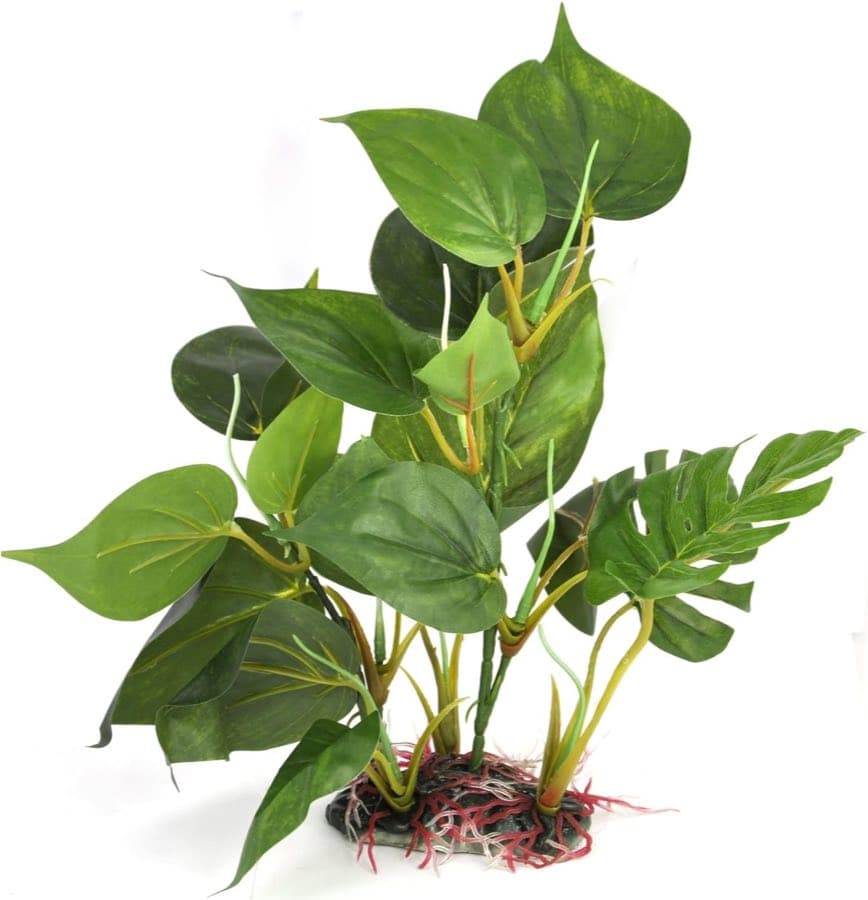
The DIGIFLEX QQ63 is one plastic stem, about 20 cm, with a weighted base, listed at £9.99, at 4.3 from 3,009 amazon.co.uk reviews. The listing claims freshwater and saltwater use and no need for special lighting, pruning, carbon dioxide or fertiliser. Reviews say the base is too light in a water change. It cannot root from a fragment. A qualifying purchase through our link can earn us a commission at no extra cost to you.
Buy allowed live plants bare root when you can. Wash compost into a bucket, rinse the crown, and tip that water on the lawn, away from drains. Ask for the scientific name, and leave a mixed oxygenator bag that withholds it. A listed plant already on your land is not a licence to divide it or carry it to the ditch.
Common questions
Which pond plants are banned from sale in England?
Is water lettuce banned in England?
Can I dump pond trimmings in a ditch?
What is curly waterweed?
May I keep a plant that is already growing in my pond?
Are aquarium plants illegal?
Can I compost pond plants?

Peter F. is the editor for DIY & tools at productscompared.co.uk. Comparisons in this category are checked against amazon.co.uk listings, review evidence and public UK sources.
Related articles
How to plant a small wildlife pond
Which native types suit a small lined pond with no fish, and which aquarium listings to leave indoors.
Why pond water turns green
Green water is algae in the water column. It is a different problem from a banned oxygenator.

What a garden pond costs before you add fish
Liner, pump, and plants are separate buys, so a single pond-cost figure is easy to invent.